The decision, with conditions
- Choose this route when
- Choose one darker or more distinct functional element when table, chair and floor outlines merge, testing the actual view from the doorway and occupied seats in both lighting conditions.
- Use the alternative when
- If the furniture already reads clearly, adjust overly flat lighting or try a removable textile instead of repainting the room or replacing the entire dining group.
- Stop or change the plan when
- Stop adding contrast when it creates a competing pattern, an awkward rug edge or a decorative object that displaces the ordinary meal.
Compare the practical options
| What looks indistinct | First trial | Avoid creating |
|---|---|---|
| Table merges with pale floor | Try a contrasting tabletop textile or timber relationship | A permanent centerpiece that consumes serving space |
| Chair outlines disappear | Test a more distinct frame or seat tone | Several unrelated dark accent objects |
| Room looks flat after dark | Adjust useful table and surrounding light | Glare visible from an end seat |
| Dining zone lacks a boundary | Test a suitable rug with occupied chairs | An edge that chairs repeatedly catch |
Why pale rooms sometimes lose their shape
Look first at the table edge and chair outlines against the retained floor. If these merge, identify the missing boundary before adding decoration elsewhere. One deliberate change near that boundary may do more than a collection of accessories. The objective is a dining arrangement that remains visually understandable with ordinary dishes in place.
This guide suits a dining area that feels washed out despite having enough furniture, especially an open plan room where pale finishes continue from the kitchen. It is less relevant when the real problem is insufficient light or an oversized table; adding contrast will not correct either of those conditions. Begin by identifying what is hard to distinguish from the doorway. You may find that a single element needs definition while the rest of the room can remain quiet.
Read the room without its accessories
Make two comparison views with the table cleared: one in ordinary daylight and one under the evening lights. Identify the particular boundary that disappears, such as chair against wall or tabletop against floor, instead of judging the entire room as too pale. Trial one useful contrasting element at that boundary. A grayscale photograph can assist the comparison, but it is not a contrast measurement or an access assessment. Retain the change only if the actual room becomes clearer without making its working surface or walking route more difficult.
Then sit down at the table and repeat the observation from that lower position. A contrast that seems sufficient while standing may vanish once a pale tabletop fills the foreground. Look at the route to the table as well: furniture edges should be easy to perceive under the lighting normally used for dinner. Where someone in the household has particular visual or mobility needs, involve that person in the trial. Do not assume that your own perception from a bright daytime photograph represents everyone else's experience.
If the light itself makes pale surfaces difficult to judge, compare Making a North-Facing Room Feel Deliberate.
Choose one structural source of contrast
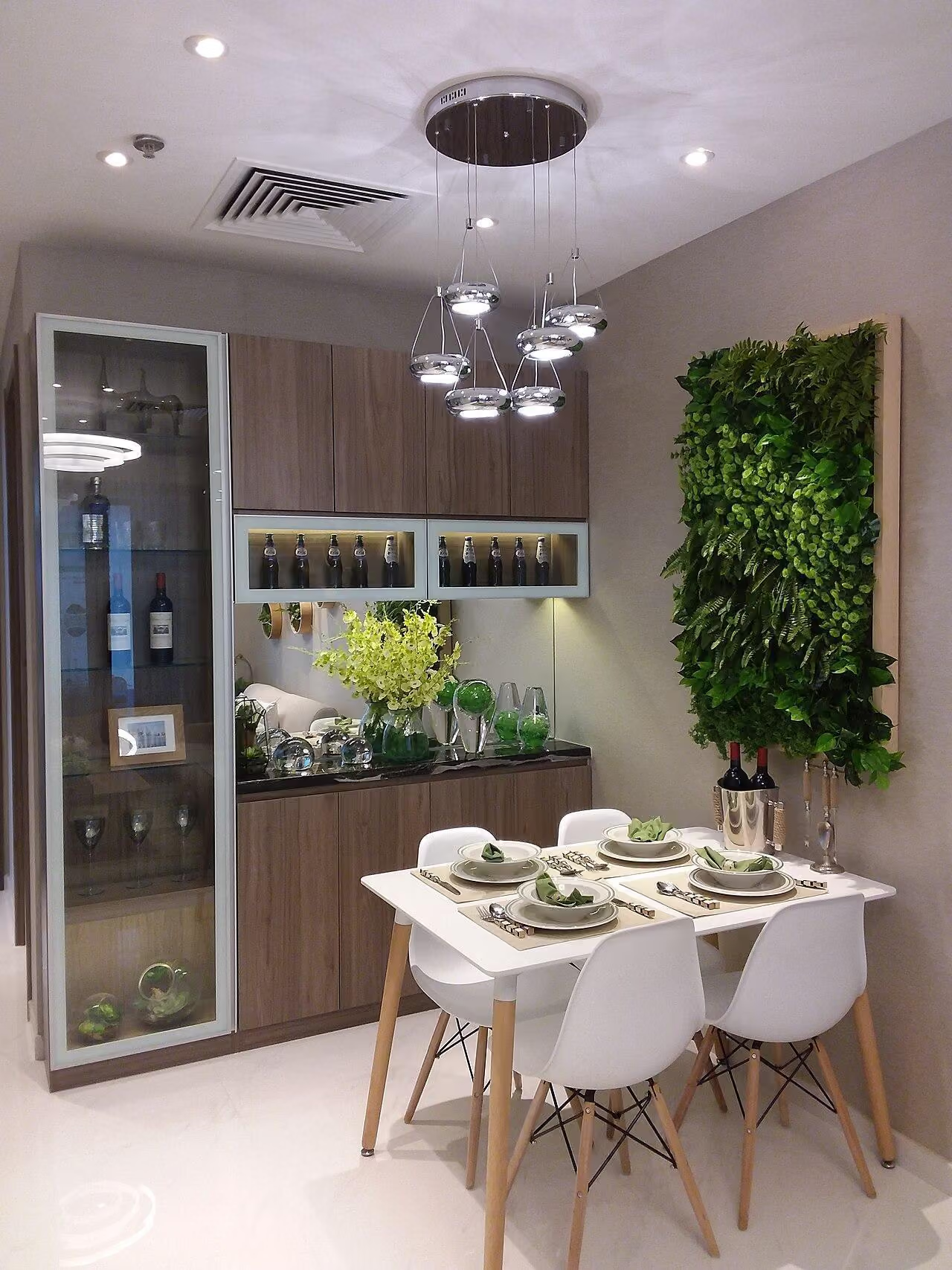
The most useful contrasting element is often something already needed for the meal. A timber table with visible edges can anchor white chairs. Darker chair legs can define pale upholstered seats against a light floor. A framed artwork can give the wall a readable center without covering it in small objects. Choose one primary source of definition and see how much work it does before adding another. Multiple unrelated dark accents can make a gentle coastal scheme feel spotted rather than coherent.
Contrast does not have to mean near black. A medium oak against chalk paint can be enough; so can muted olive beside a pale sand textile. Compare the materials in the actual room instead of deciding from color names. The size of the element matters too: a broad tabletop carries more visual weight than a narrow picture frame in the same tone. If an existing piece is darker than the rest of the room, try giving it a considered role before replacing it simply because it does not match the pale palette.
Let the meal remain the center of the table
A sculptural arrangement can add instant contrast, but it becomes inconvenient if it must be removed for every ordinary dinner. Begin with the place settings and serving habits. Lay out the plates you use, the largest shared dish, drinking glasses, and the objects that remain during the meal. This exercise shows how much of the tabletop is genuinely available for decoration. A room designed around a large permanent vase may look resolved when empty and feel crowded as soon as people sit down.
For a pale table, contrast can come from placemats, a narrow washable runner, or dishes whose edges are distinct. These are movable and useful, making them a sensible first experiment. Avoid assuming that a textured runner will be easy to clean just because it looks casual; read its care information and consider the foods usually served. Keep decorative height low enough that people can see each other comfortably. Store any occasional centerpiece nearby so removing it is a simple action rather than a search for somewhere safe to put it.
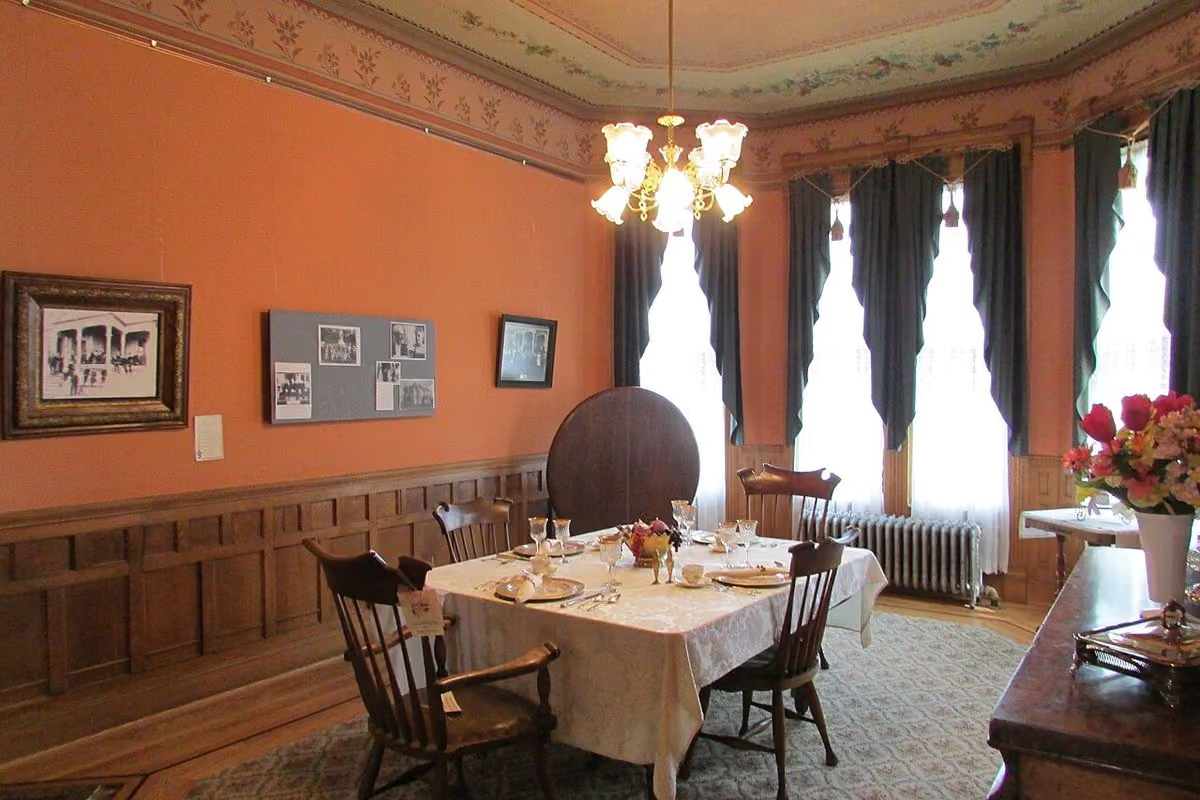
To keep contrast from consuming serving space, read A richly framed dining room where the table stays clear.
Use light to model surfaces rather than flatten them
A single bright ceiling fitting can make every pale surface equally prominent, particularly when its light reaches the walls and tabletop with little variation. The goal for dinner is usually a usable table within a more softly defined room. Experiment with a dimmable existing fitting where compatible, or with additional room lighting that can be controlled separately. Product and electrical compatibility need checking; a lamp described as dimmable is not guaranteed to work well with every control or driver.
Position and shade design influence how much of the table is illuminated and whether a seated person sees a glaring source. Evaluate the proposed fitting from each chair, including the end seats. A large pendant that looks balanced in an elevation drawing may block a view across a small room or hang awkwardly in the line between a kitchen and a window. Use a lightweight temporary outline to judge its bulk before ordering, keeping the mockup clear of hot fittings and everyday circulation.
Decide whether the floor needs a textile boundary
A rug can define the dining zone when a pale floor continues through a larger space, but it introduces practical demands. Chairs should move without repeatedly catching an edge, and cleaning needs to match the household's habits. Test the movement of an actual chair rather than selecting a rug by the tabletop dimensions alone. A rug that accommodates an unoccupied chair may still be too small when someone pulls the chair back to sit or stands up after the meal.
If a suitable rug creates awkward overlap with nearby doors or circulation, leave the floor bare and find contrast elsewhere. A dining room does not need a rug to be complete. The grain of a timber table, the legs of chairs, or a deliberate light pattern can establish the zone without another surface to maintain. This is especially sensible where spills are frequent or where the dining area is also used for crafts. Good design includes the option to omit a familiar styling element when it does not serve the room.
A modest sequence for a stronger result
Try the least permanent intervention first: a table textile, a different arrangement of existing chairs, or a single framed piece moved from another room. Review it during a real meal under evening lighting. Ask whether the important forms are easier to see and whether the room still feels open. If the answer is yes, resist adding more simply to make the change look substantial. A pale room often benefits from one clear decision and enough remaining space for that decision to be legible.
If furniture replacement is still necessary, take the test results into the purchase. Specify the degree of contrast you need, the way chairs move, and the maintenance you will accept. Keep the coastal character in the softened palette and informal material relationships rather than compensating for weak proportions with themed accessories. The result should be a dining room that feels bright in daylight, understandable in the evening, and comfortable once food, people, and conversation have filled the space.
Check, record, then decide.
A proposed worksheet for your own observations. Use consistent units for dimensions and keep the conditions with each record.
Furniture outline visibility
Where to check From the ordinary doorway and each occupied dining seat, with accessories temporarily removed.
- Record
- Photograph table and chair outlines in daylight and evening light; note which edges merge with the background.
- Read the result
- If only the centerpiece defines the table, contrast may be missing from a useful structural element.
- If it does not work
- Try a contrasting textile or chair frame relationship before buying more decorative objects.
Meal space before decoration
Where to check On the tabletop with the regular plates, glasses, shared dishes and expected diners in place.
- Record
- List objects moved for serving and measure remaining clear areas in centimeters.
- Read the result
- Contrast introduced by a permanent object is a poor solution when it interrupts ordinary food movement.
- If it does not work
- Use movable place textiles or let furniture material provide the darker visual boundary.
Rug and occupied chairs
Where to check At every proposed rug edge while chairs are pulled out for sitting and standing.
- Record
- Record chair positions, catching edges and distance from the rug to nearby doors in centimeters.
- Read the result
- A rug that frames the empty table may not support the actual chair movement.
- If it does not work
- Leave the floor bare and introduce definition through tabletop, chair or lighting choices.
A practical trial
- Compare a grayscale doorway photograph with the actual room to locate missing light-and-dark boundaries.
- Trial one contrasting functional element only, then eat and clear a normal evening meal.
- Inspect any pendant or lamp from end seats and record visible glare before changing the palette again.
Compare the same scope
- Area and tone of the contrast element
- Occupied dining arrangement
- Rug coverage under moving chairs
- Lighting viewed from all seats
Cost drivers to discuss: Furniture finish replacement; Suitable rug dimensions; Lighting and control changes.
Choose another route when: Added contrast cannot correct an oversized table, inaccessible seats or insufficient useful lighting for the meal.
The download is a blank record template. Your completed notes remain wherever you choose to keep them; this page has no measurement-submission service.
Sources for this guide
Each reference’s supported point and limits appear beside the relevant passage above. Product documentation applies to the named product, rather than every similar item or the photographed room.
Source text checked November 4, 2026. Specifications can change; confirm the current instructions for the exact item before ordering.
Your questions, considered.
Does a pale dining room need black accents?
No. Medium timber, muted olive or a darker textile may provide enough definition. Compare the scale and actual light rather than choosing contrast by color name.
How can I tell whether the room lacks contrast?
Remove accessories and compare the major furniture shapes from the doorway and seated positions. A grayscale photograph can help reveal merging light and dark values.
Should a pale dining table have a large centerpiece?
Only if it leaves the meal usable. Set out ordinary dishes and shared food first; movable textiles or visible furniture edges may provide contrast without occupying the center.
About this guide: written with AI assistance for TIANLICHUJU. These are general design ideas, not a measured survey or a completed client project. Any domestic vignette is fictional. Confirm product specifications, site dimensions and local requirements before construction; use qualified professionals for regulated work. Read our editorial approach or suggest a correction.