The decision, with conditions
- Choose this route when
- Choose lighter-looking chairs when the actual people can move, sit in and leave them comfortably at the heavy table and their construction and care suit repeated daily handling.
- Use the alternative when
- Keep a sound supportive chair even if its outline is broader, or repair existing seats, when the visually slim candidate is difficult to lift or incompatible beneath the table.
- Stop or change the plan when
- Stop treating catalog appearance or packaged shipping weight as proof of easy handling, and reject damaged or unsuitable seating regardless of its stylistic contrast.
Compare the practical options
| Chair characteristic | Useful comparison | Possible tradeoff |
|---|---|---|
| Slim frame looks light | Lift and move the actual product | Visual delicacy does not guarantee low weight |
| Lightweight construction | Check dependable condition and intended use | Easy carrying is not a substitute for stability |
| Open versus upholstered back | View against the table from the normal approach | Texture and silhouette can compete with strong grain |
| Narrow or splayed feet | Test floor or rug movement | A light chair may catch edges or behave differently |
The table can be heavy without every chair following it
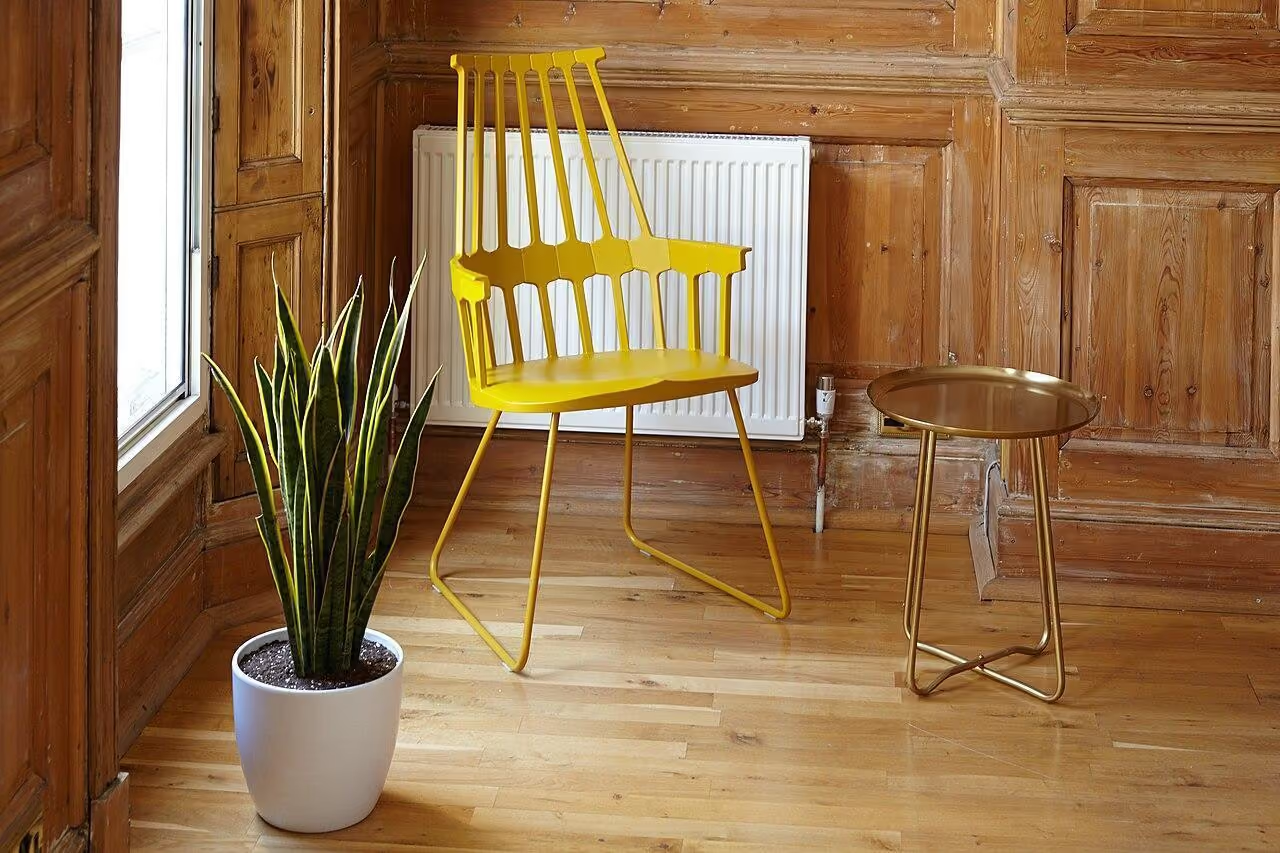
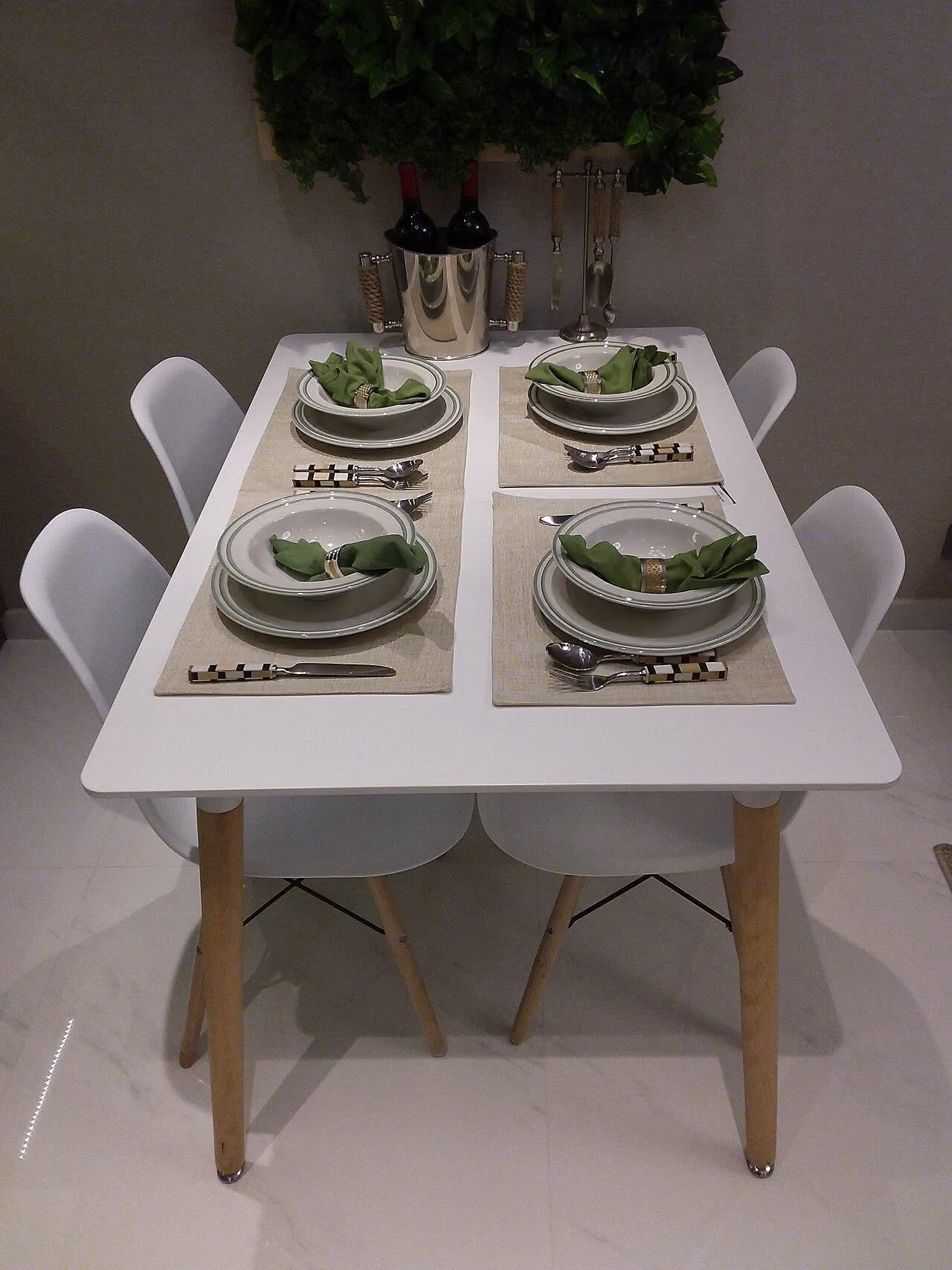
Decide separately what should remain visually substantial and what must be moved often. The table can provide the rustic emphasis while chairs serve everyday sitting, cleaning and rearrangement. Test physical handling as well as appearance; a slender-looking chair is not necessarily easy for the actual user to pull out or carry.
This is a useful strategy when an inherited or already purchased table feels too dominant but is otherwise sound and well sized. Replacing the table is not necessarily the first move. Changing the chairs, reducing the number kept around it, or simplifying surrounding furniture may rebalance the room. The aim is not to disguise the table's character. It is to give the substantial piece enough contrast that the dining group feels deliberate rather than uniformly bulky.
Separate visual lightness from physical lightness
Separate the visual comparison from the handling trial. First view the candidate beside the retained table; then ask its intended user to pull it out, approach, sit, leave and move it for cleaning. Record the step that is difficult rather than estimating ease from thin legs. Check the actual chair's maintenance and connector instructions. Do not substitute shipping-package weight for a handling test: packaging, assembly and the way a person grips the chair all differ from the task being evaluated.
Physical lightness should not come at the expense of a dependable construction. Ask about intended use, assembly, maintenance, and suitable floor protection. A chair that rocks or has loose connections is not improved by being easy to carry. If buying older chairs, inspect their condition and seek competent repair where necessary. The right comparison is between complete usable pieces, not between a sturdy table and a chair whose apparent delicacy is the only quality considered.
When lighter chairs are bought secondhand, check their condition with Buying secondhand dining chairs: condition, fit and repair.
Make the table's underside the compatibility test
Rustic tables often have deep aprons, trestles, or stretchers that affect seating more than the top does. Place the candidate chair at each regular position and move close enough to eat comfortably. Check knees, feet, armrests, and the clearance beneath the apron. A chair may slide under the edge when empty yet hold its seated user too far away. The end positions can differ considerably from the sides, particularly when a trestle projects into the space where feet would normally rest.
Do not rely on the stated number of seats without checking your own chairs. Broad upholstered seats and splayed legs can reduce capacity. Set the table with real dishes and serving pieces, then test the occupied arrangement. If the room is used mainly by a smaller household, keep the everyday number of chairs modest and store occasional seats appropriately elsewhere. An unused chair that constantly obstructs a route does not create hospitality; it merely reserves floor space for a gathering that is not happening.
For the seating consequences of sculptural table supports, compare An organic dining table judged below the tabletop.
Choose a relationship rather than an exact match
Lighter chairs can relate to the table through one shared quality: a compatible timber tone, a repeated curve, or a restrained upholstery color. Exact matching is unnecessary and can be difficult when the table has strongly varied reclaimed boards. Compare samples together in the room rather than trying to match from separate online photographs. A deliberate difference often looks more convincing than two materials that almost match but reveal incompatible undertones in daylight.
Consider how the chair backs appear against the tabletop from the usual approach. Open backs can reveal more of the room, while upholstered backs can form a softer visual band. Neither is automatically better. A very busy chair outline may compete with irregular grain, whereas a plain frame can let the top carry the character. If the chairs are already visually varied, keep the surrounding wall and tabletop relatively restrained so the eye can understand the dining group without too many simultaneous signals.
Plan for food, fabrics, and moving feet
Upholstery can make a hard timber table feel more comfortable, but the fabric needs to suit meals. Read care information and consider the actual pattern of spills, pets, and use. A removable cover can be helpful if removing and refitting it is realistic. A pale seat may be acceptable to someone comfortable with visible wear and frustrating to someone who expects a consistently even surface. Choose according to those expectations rather than assuming that rustic furniture makes every mark welcome.
The floor relationship is just as practical. Test the chair's movement and use protection suitable for both the chair and floor finish. A light chair with narrow feet may behave differently on a soft rug than on a hard floor. If a rug sits beneath the table, confirm that occupied chairs can move without repeatedly catching the edge. Avoid using a rug to conceal an unstable table or chair; resolve the furniture's condition separately before layering additional surfaces beneath it.
Use the room for a complete evening
Arrange the existing table with a borrowed or trial chair of the proposed type if possible. Sit through a meal, bring dishes from the kitchen, and clear the table afterward. Notice the small repetitions: pulling the chair out, reaching a serving dish, stepping around the table end, and lifting the chair to clean. Those actions reveal whether the lighter chair genuinely improves the room. A quick visual comparison in a showroom cannot reproduce them.
After the trial, decide what kind of contrast the room actually needs. If movement becomes easier but the group still feels heavy, the chair back or finish may need a lighter visual treatment. If the room looks balanced but the chairs are awkward to handle, choose a different construction. Keep these judgments separate enough to understand the result. The best chair is the one that contributes both to the appearance and to the ordinary sequence of using the table.
Keep the heavy table accountable
Lighter chairs cannot solve a table that is fundamentally too large, unstable, or badly placed. Revisit the table itself if the occupied route remains cramped or if its base prevents usable seating. Sometimes a shorter top or a different base is the necessary change, and retaining the table at all costs would preserve the wrong constraint. Seek appropriate advice before modifying an existing piece, particularly where its construction or significance is uncertain.
When the proportions do work, the contrast can be satisfying: a strong timber plane above a set of chairs that move easily and leave the surrounding space visible. The room remains rustic without becoming cumbersome. Keep the tabletop available for meals rather than filling it with objects intended to balance its scale. People, dishes, and conversation will supply much of the activity. The furniture's job is to support that activity with enough steadiness from the table and enough flexibility from the chairs.
Check, record, then decide.
A proposed worksheet for your own observations. Use consistent units for dimensions and keep the conditions with each record.
Physical handling weight
Where to check At the actual dining floor while pulling, lifting and replacing each candidate chair as intended.
- Record
- Note the user's effort, required grip and whether ordinary cleanup needs another person.
- Read the result
- A visually slender frame can still be inconvenient to handle every day.
- If it does not work
- Compare another dependable construction rather than judging weight from photographs.
Visual mass against the timber top
Where to check From the normal approach with the proposed number of chairs in occupied positions.
- Record
- Photograph the backs and table together; note competing grain, silhouettes and remaining visible floor.
- Read the result
- Lighter visual treatment works only when the group remains coherent rather than merely mismatched.
- If it does not work
- Relate one tone or shape and simplify nearby furniture instead of matching all timber exactly.
Floor and rug movement
Where to check Across the chair's normal pullout path and any nearby rug edge.
- Record
- Record catching feet, unsuitable protection and collisions with adjacent bases during sitting and clearing.
- Read the result
- Low chair weight does not guarantee smooth movement on the chosen floor surface.
- If it does not work
- Use appropriate protection or compare a better suited foot and base arrangement.
A practical trial
- Borrow or trial a suitable lighter chair through a complete meal and the floor-cleaning routine afterward.
- Set actual dishes and shared serving pieces to check whether the current everyday chair count is necessary.
- Keep visual and handling judgments separate, then reassess the table itself if the occupied room remains cramped.
Compare the same scope
- Actual handling by regular users
- Visual chair-back area and table relationship
- Movement on the intended floor
- Seat care and dependable construction
Cost drivers to discuss: Frame material and construction; Upholstery or removable pads; Floor protection and required repairs.
Choose another route when: Lighter chairs cannot make a fundamentally oversized or badly positioned table compatible with the room's required routes.
The download is a blank record template. Your completed notes remain wherever you choose to keep them; this page has no measurement-submission service.
Sources for this guide
Each reference’s supported point and limits appear beside the relevant passage above. Product documentation applies to the named product, rather than every similar item or the photographed room.
Source text checked November 4, 2026. Specifications can change; confirm the current instructions for the exact item before ordering.
Your questions, considered.
Should dining chairs match a heavy rustic table exactly?
No. A compatible tone, shared curve or restrained upholstery can connect lighter chairs without matching the table's bulk.
How can a chair look light but be hard to move?
Slender proportions describe appearance, not physical weight. Lift and move the actual chair as you would for seating and cleaning.
Will lighter chairs make an oversized table work?
They may help handling, but not an inadequate occupied route or fundamentally unsuitable base. Reassess the table if those constraints remain.
About this guide: written with AI assistance for TIANLICHUJU. These are general design ideas, not a measured survey or a completed client project. Any domestic vignette is fictional. Confirm product specifications, site dimensions and local requirements before construction; use qualified professionals for regulated work. Read our editorial approach or suggest a correction.