The decision, with conditions
- Choose this route when
- Choose a dedicated display and clearer working surfaces when objects remain recognizable, appropriately supported and maintainable without being moved every time an ordinary activity begins.
- Use the alternative when
- Keep a small movable group on a suitable surface when its handling and temporary destination are genuinely simple, instead of buying a large new storage piece for a minor interruption.
- Stop or change the plan when
- Stop placing fragile or valuable objects in a repeated clearing route when handling or the receiving location is unresolved; the household should not need to improvise a safe destination at each meal.
Compare the practical options
| Surface problem | Likely missing decision | Try this first |
|---|---|---|
| A tray moves before every task | Whether the tray helps the surface’s main job | Return only the items needed during normal use |
| A collection feels scattered | Where the collection belongs as a group | Gather and edit one coherent display |
| Small pieces make cleaning difficult | How much exposed maintenance is acceptable | Reduce the open display or use suitable closed storage |
| Paperwork repeatedly returns | A processing place rather than a decoration | Create a defined incoming and follow-up route |
Begin with the surfaces that work
Identify the surface that is cleared most often and name the activity waiting to happen there. Remove its display temporarily and let that activity run normally. Then decide which objects deserve another permanent location and which can return without recreating the interruption. A useful empty area has a purpose and a boundary; it need not become a demand for the entire home to contain fewer meaningful things.
Different kinds of emptiness
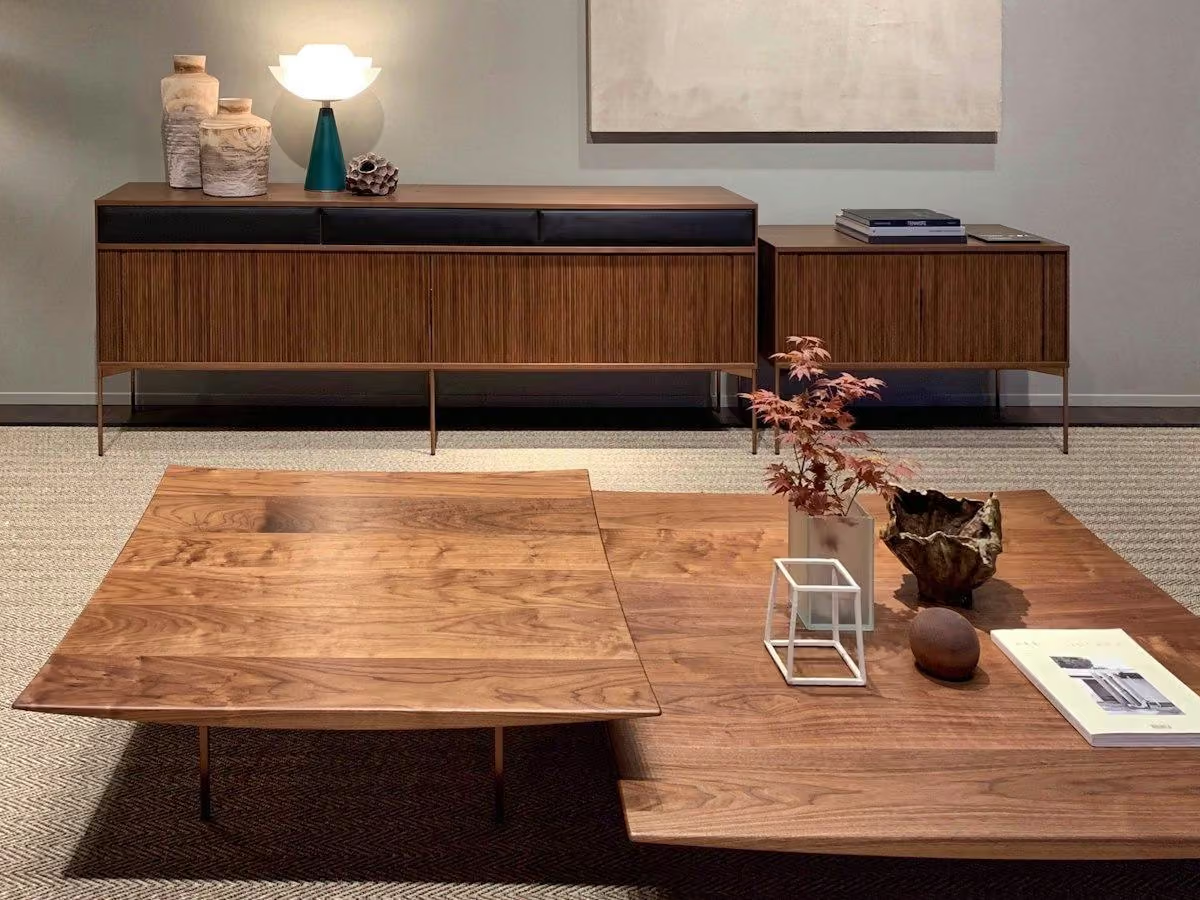
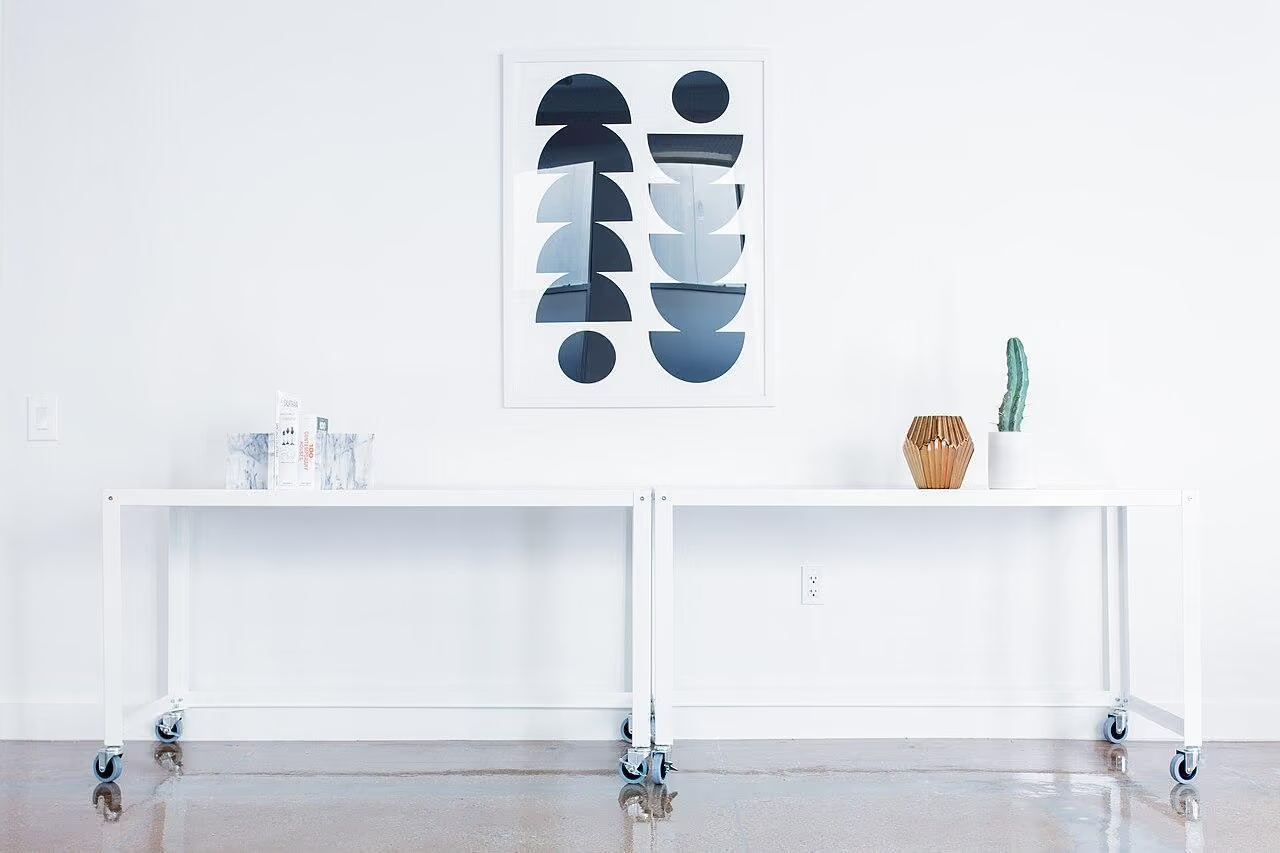
Separate a working surface from a deliberate visual pause. The first needs a location and dimensions that suit a task; the second needs only to give surrounding objects some space. A clear patch on an unreachable high shelf may improve a composition, but it cannot replace a reachable place beside a chair. Similarly, a tray does not automatically solve clutter. If the tray holds decorations and must be lifted every time someone uses the table, it is another obstacle. Test the surface with the actual book, laptop or serving dish normally used there. If a task routinely spills beyond its assigned area, reduce the display or relocate it. An interior feels considered when the useful space survives normal occupation, not when every horizontal plane has an identical arrangement.
Put the collection somewhere it can be understood
Objects often have more presence together than dispersed. A group of ceramics on one stable shelf can reveal differences in profile, glaze and scale; the same pieces scattered through the room may simply look like unfinished tidying. Gather the collection temporarily and identify what connects it: a maker, a family history, a colour relationship or the way the surfaces catch light. Use that connection to choose a location. Do not force a sentimental collection into a colour scheme that erases its meaning. If a group needs more space than is available, rotate pieces rather than packing them tightly. Keep the stored items accessible, labelled and protected in a way appropriate to the material. Rotation should be an occasional pleasure, not a weekly production required to maintain the room's appearance.
For a collection with many different objects, explore A Living Room for Collectors Who Want to See What They Own.
Design the support before the arrangement
A shelf should fit its contents physically, not only stylistically. Measure the deepest object, including a projecting handle, and consider how a hand reaches around it. A narrow ledge may be excellent for securely supported framed pictures yet unsuitable for a broad, top-heavy vessel. Weight ratings depend on the complete installation: shelf material, span, brackets, fixings and the actual wall. Obtain suitable advice rather than assuming a thick-looking board is strong enough. With fragile objects, consider vibration, door movement, pets and children before selecting a location. In a rental, a freestanding cabinet may be more practical than a wall installation requiring permission. Closed glass-front storage can reduce direct dust exposure while allowing visibility, although it introduces reflections and still needs appropriate stability and safe glazing.
Let the background do some of the work
A busy object does not always need a dramatic backdrop. Try it against a quiet, slightly contrasting surface before repainting a wall or adding lighting. A pale ceramic may disappear against a very similar shelf; a small difference in tone can make its edge readable without spotlighting it. Dark shelving may give a collection focus but can also make dust conspicuous and reduce the room's apparent brightness. Neither choice is universally better. Compare samples beside the actual collection in daylight and evening light. If a display includes several materials, use a restrained background so their differences remain legible. Avoid buying matching ornaments merely to connect unrelated shelves. Repetition can come from shelf alignment, spacing or a consistent frame treatment while the objects retain their individual character.
Make maintenance a design decision
Rehearse cleaning with ordinary robust objects first, without lifting anything whose condition makes handling uncertain. Note how many pieces must move, where they wait and what other activity loses its surface. For vulnerable pieces, establish an appropriate handling plan before repeating that routine. If maintenance requires clearing several neighboring shelves, reduce the density or move the display rather than accepting an increasingly complicated reset.
A room with room for an interruption
Imagine a fictional evening in which a friend arrives unexpectedly with a paper bag of pastries. In a usable room, there is a place to put the bag, a place to set out plates and somewhere for two people to sit without moving a collection onto the floor. The decorative objects remain part of the atmosphere because their arrangement has not occupied every useful inch. That is a practical test for a romantic interior: can an unplanned moment happen comfortably? The scene does not describe the photographed home or a completed project. It illustrates why a clear surface can be an active design choice. Leave enough flexibility for a small event to change the room without making it feel as though the styling has been ruined.
A short experiment before buying storage
Choose the most congested surface and photograph it for your own reference. Remove everything, put back only what supports its main task, then choose a single display group from the remaining objects. Live with that arrangement through several normal uses. Note what returns to the surface and why. Repeatedly arriving paperwork may need a processing place, not another decorative box; a cluster of charging devices may reveal a missing power arrangement. Buy storage only after the pattern becomes clear. This approach suits households seeking less visual competition while retaining meaningful possessions. It will feel too restrained for somebody who enjoys a densely layered interior, who can instead preserve a few clearly working tables within a richer display scheme. The aim is a room that permits use, not a universal rule about how many objects a person should own.
When a clear surface keeps filling up, map the activity using Designing a Home Around the Things You Actually Do.
Check, record, then decide.
A proposed worksheet for your own observations. Use consistent units for dimensions and keep the conditions with each record.
The working landing area
Where to check The surface beside the preferred seat, arrival point or other actual task location.
- Record
- The footprint needed for the usual cup, book, tray or bag, in the room’s chosen length unit.
- Read the result
- A clear patch outside reach does not replace a useful landing place.
- If it does not work
- Move the display elsewhere before buying another table to compensate.
Collection grouping
Where to check One proposed shelf or cabinet, using the real objects rather than substitute ornaments.
- Record
- Object depth and height, hand access and which pieces have to move to reach another.
- Read the result
- A coherent appearance does not establish shelf capacity or stability.
- If it does not work
- Reduce the exposed group, rotate items or obtain suitable support advice.
Cleaning sequence
Where to check Around and beneath the display during the household’s ordinary cleaning routine.
- Record
- Each separate lifting action, fragile edge and item with incompatible care instructions.
- Read the result
- This identifies handling burden, not a quantified cleaning-time saving.
- If it does not work
- Use fewer open pieces or appropriate enclosed storage if the routine is unwelcome.
A practical trial
- Clear one congested surface and restore its working items before decorative objects.
- Live through the actual task and record what returns to the surface and why.
- Photograph the arrangement for personal comparison without calling it a tested before-and-after outcome.
Compare the same scope
- Same inventory and working surface
- Exposed versus enclosed display
- Support, fixing and glazing requirements
- Care and rotation access
Cost drivers to discuss: Fragile-object support needs; Cabinet construction and hardware; Any suitable wall installation.
Choose another route when: A restrained display may not suit a deliberately dense interior; preserve clearly usable working surfaces within that richer arrangement instead.
The download is a blank record template. Your completed notes remain wherever you choose to keep them; this page has no measurement-submission service.
Sources for this guide
Each reference’s supported point and limits appear beside the relevant passage above. Product documentation applies to the named product, rather than every similar item or the photographed room.
- Canadian Conservation Institute: Handling Heritage Objects · Read the supported point and its limits
Source text checked November 4, 2026. Specifications can change; confirm the current instructions for the exact item before ordering.
Your questions, considered.
Does every table need an ornament?
No. A reachable surface reserved for a drink, book or task has a clear purpose. Display can be concentrated elsewhere.
How can a large collection work in a small room?
Try one coherent display location, appropriate closed storage and occasional rotation. Do not sacrifice stable support or everyday working surfaces.
Is a tray always the best way to organise a table?
Only if it helps the actual use. A full decorative tray that must be moved every evening may create more work than it resolves.
About this guide: written with AI assistance for TIANLICHUJU. These are general design ideas, not a measured survey or a completed client project. Any domestic vignette is fictional. Confirm product specifications, site dimensions and local requirements before construction; use qualified professionals for regulated work. Read our editorial approach or suggest a correction.