The decision, with conditions
- Choose this route when
- Choose a restrained display when the selected objects have room to be recognized and the remaining meaningful possessions have retrievable, appropriate storage that the household agrees to maintain.
- Use the alternative when
- Use a denser dedicated display or a documented reserve when continuous visibility matters more than a minimal composition, instead of spreading unresolved collections across every working surface.
- Stop or change the plan when
- Pause disposal or irreversible alteration when ownership, emotional importance or preservation needs are disputed; an unfinished aesthetic decision is not a reason to damage a valued object.
Compare the practical options
| Relationship to an object | Useful destination | Design consideration |
|---|---|---|
| Enjoyed visually each day | A stable selected display | Leave enough room to see its form |
| Important record or delicate material | Suitable retrievable storage | Care requirements matter more than palette matching |
| Meaningful and still practical | An appropriate useful role | Assess condition and compatibility before adaptation |
| Decision feels emotionally complicated | A clearly identified temporary holding area | Do not force irreversible choices during styling |
Restraint does not require forgetting
Make three separate decisions for each meaningful group: whether to keep it, how to retrieve it and what to see every day. A family letter can be important without remaining on a coffee table, while an ordinary cup may deserve a daily place because someone uses it. Start with these relationships rather than a target object count. Restraint becomes workable when storage supports memory instead of merely hiding an undecided pile.
This approach is useful for someone who likes visual quiet but finds impersonal interiors uncomfortable. It also helps when a collection has grown through gifts or inheritance and the display no longer reflects personal priorities. The aim is not to assign a numerical limit to memories. It is to give selected objects enough space to be appreciated and to store others appropriately without interpreting storage as rejection. A meaningful object can remain important even when it is not visible every day.
Sort by the relationship you want, not by appearance alone
Bring a manageable group together and ask what each item represents. Some are enjoyable to see, some are useful, some are important records, and some are kept mainly because a decision feels difficult. These are different relationships and may call for different destinations. Do not force every item into the category of decorative object. A document may need suitable archival storage, while a practical inherited tool may be best honored through appropriate use rather than display on a living room shelf.
Avoid making irreversible decisions during a rushed styling exercise. If an object feels emotionally complicated, place it in a clearly identified temporary holding area and set a realistic time to revisit it. The room can improve without requiring a complete decision about every possession in one afternoon. Where care or conservation is relevant, seek guidance suited to the material. The interior design should support the objects' continued condition rather than placing them in a bright or exposed location solely because it completes the composition.
Choose display locations that do not compete with daily tasks
A shelf, cabinet, or limited wall area can provide a stable place for a collection. Avoid relying on the surfaces needed for meals, reading, or setting down a drink. When a sentimental object must be moved repeatedly, it can become associated with inconvenience rather than enjoyment. Give it a location where it can remain secure and visible without obstructing a drawer, switch, or walking route. The quality of the placement matters more than the number of objects removed from the room.
Group objects through a relationship you understand, such as a person, place, material, or shared use. They do not need to match the palette perfectly. A room can remain calm when a few different objects are clearly arranged against a quieter background. Leave enough separation to see their forms. A dense line of small pieces may turn into visual texture, making each less meaningful. Reducing the display can therefore increase attention to the objects rather than diminishing their importance.
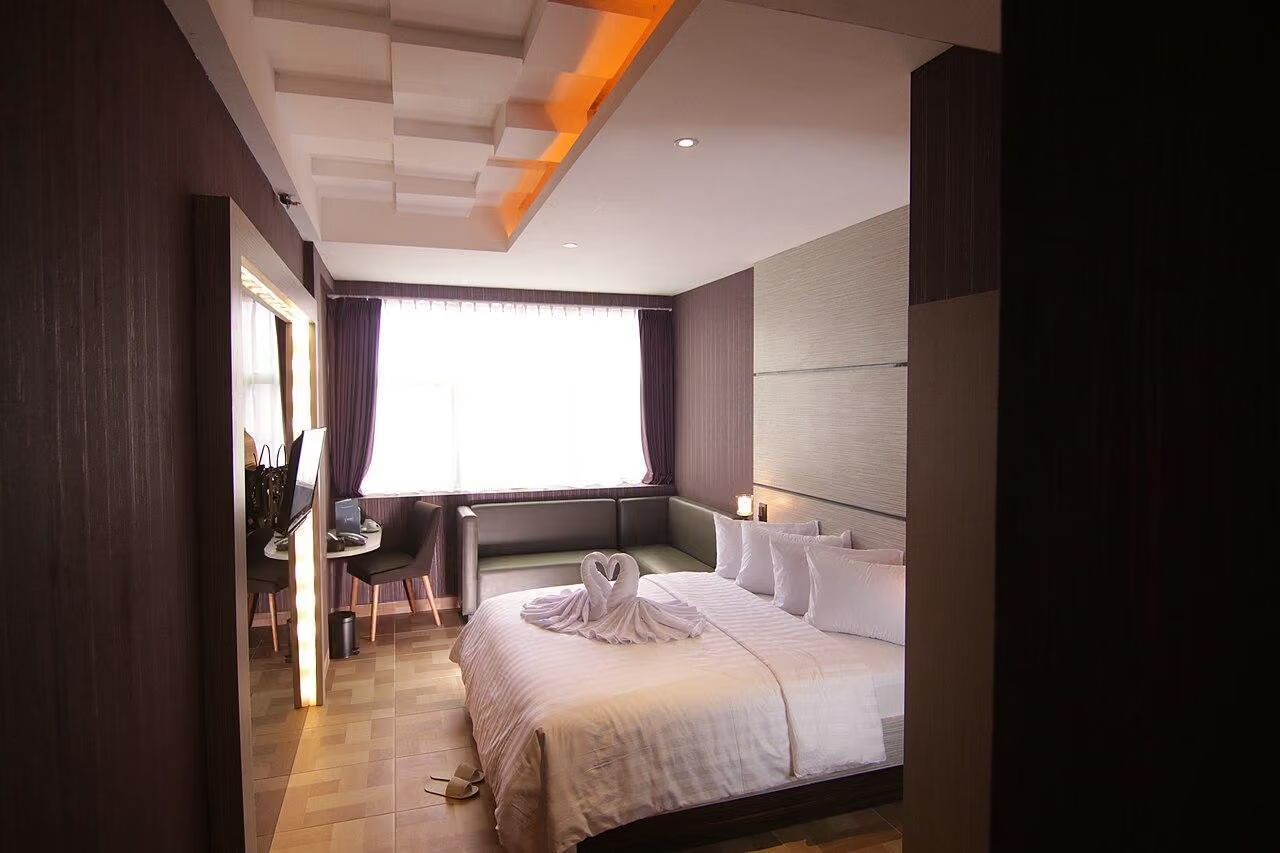
To vary display intensity within a collected bedroom, compare A collected bedroom with a quieter view from the pillow.
Let ordinary furniture provide the quiet background
Large furniture surfaces have a strong effect on the room's visual activity. A simple cabinet front, restrained sofa fabric, or plain curtain can make space for personal objects without requiring the collection itself to be neutral. Warmth can come from timber, texture, and light rather than from adding many accessories. Choose these background pieces for comfort, storage, and care as well as appearance. A minimalist looking cabinet with awkward internal access will not maintain a calm room if belongings remain outside because putting them away is inconvenient.
Keep the furniture arrangement grounded in use. A display cabinet should not occupy the route needed to reach a window, and an inherited chair should not remain in a place where nobody can sit. If a piece has sentimental value but does not fit its current role, consider another room or a suitable adaptation with appropriate advice. Honoring an object does not always mean keeping it in the most prominent position. A useful new role can preserve its place in the home more convincingly than an awkward display.
Make stored objects easy to find again
Give each reserved group a description and an accessible destination. Test retrieval with someone who did not pack it: can they find the requested item without emptying several unrelated boxes? For vulnerable objects, establish appropriate care before choosing the container. If a proposed reserve is too complicated to use, reduce the packing layers or reconsider which items need to remain together.
If you enjoy rotating a display, keep the process modest. Choose a small group and an easy interval driven by interest rather than a rigid decorative calendar. Rotation is optional; it should not become another maintenance duty. Some objects may remain in a stable display for years, while others appear occasionally. The room's warmth comes from an authentic relationship with those objects, not from constantly producing a new arrangement that resembles a styled photograph.
Negotiate gifts and shared memories openly
In a shared home, one person's important object may be another person's visual frustration. Discuss what the object means and what kind of placement would feel respectful. A specific display area or a rotation can be a practical compromise, but the agreement should not imply that one person's belongings are inherently more tasteful. Keep the conversation about space, use, and attention. The room can support different attachments when its storage and display areas are planned rather than contested item by item.
Gifts create a related issue. Receiving an object does not automatically determine where it must live permanently. You can value the relationship without making every gift a central decorative commitment. Decisions about passing on or storing an item are personal and may take time. The design process should allow that flexibility. A warm minimalist home is more sustainable when it fits the household's emotional reality instead of requiring everyone to behave as if objects have no associations beyond their shape and color.
When belongings are being reconsidered during a move or transition, read A Small Home after a Big Life Change.
Test calm through use, not through an empty photograph
Choose one display area and one working surface to improve first. Keep a few meaningful objects in the display and make the working surface genuinely available. Use the room for a week and notice whether the selected pieces are more enjoyable and whether daily tasks are easier. If objects begin returning to the cleared surface, identify why. Perhaps the display location is inconvenient, or an item needs a practical home rather than a decorative one. Adjust the system before removing more possessions.
The finished home can feel restrained without feeling anonymous. A small framed photograph, an inherited bowl, or a familiar textile can carry more presence when the surrounding furniture and surfaces are quiet. Other important objects remain cared for and retrievable. The room does not need to prove a minimalist identity through absence. Its success lies in giving useful space to daily life and considered attention to the belongings that make that life feel personally grounded.
Check, record, then decide.
A proposed worksheet for your own observations. Use consistent units for dimensions and keep the conditions with each record.
Relationship to kept objects
Where to check At a manageable group of sentimental belongings before deciding their display or storage destinations.
- Record
- Note whether each is enjoyed visually, useful, a record or a decision needing more time.
- Read the result
- Keeping does not require every object to become permanent decoration.
- If it does not work
- Use an identified temporary holding area or appropriate retrievable storage without forcing disposal.
Display versus working surface
Where to check At shelves, dining surfaces, bedside tops and cabinet openings used during ordinary routines.
- Record
- List meaningful objects moved repeatedly and the task or opening each obstructs.
- Read the result
- A valued object may be poorly placed when daily use turns it into an inconvenience.
- If it does not work
- Create a stable selected display against a quieter background.
Stored collection retrieval
Where to check At the proposed containers, labels and storage conditions for objects not currently displayed.
- Record
- Record contents, retrieval steps and any material-specific care information still needed.
- Read the result
- Anonymous overflow storage does not preserve meaningful access to the collection.
- If it does not work
- Reduce packing complexity and obtain suitable care guidance before storing delicate materials.
A practical trial
- Improve one display area and clear one working surface, then use the room for a week.
- Check whether displaced objects return because their new destination is inconvenient, and revise that destination first.
- Discuss shared memories and display preferences with other occupants before treating one person's belongings as the visual problem.
Compare the same scope
- Objects kept versus continuously displayed
- Working surfaces genuinely released
- Suitable storage and labeling
- Existing furniture retained or reassigned
Cost drivers to discuss: Appropriate protective storage; Display shelving or cabinet changes; Framing, repair or specialist object care.
Choose another route when: A restrictive minimalist scheme is unsuitable if it requires rushed irreversible decisions or storage conditions that do not suit valued objects.
The download is a blank record template. Your completed notes remain wherever you choose to keep them; this page has no measurement-submission service.
Sources for this guide
Each reference’s supported point and limits appear beside the relevant passage above. Product documentation applies to the named product, rather than every similar item or the photographed room.
- Canadian Conservation Institute: Paper Documents and Newspaper Clippings · Read the supported point and its limits
Source text checked November 4, 2026. Specifications can change; confirm the current instructions for the exact item before ordering.
Your questions, considered.
Can I keep family objects in a minimalist living room?
Yes. A limited deliberate display against quieter surfaces can feel personal. Other objects can remain valued, cared for and retrievable without continuous display.
How do I display memories without losing useful table space?
Give them a stable shelf, cabinet or wall area that does not obstruct daily tasks. A piece repeatedly moved for meals or drinks may need a better location.
Do sentimental objects need to match the room's colors?
No. Clear placement and quiet larger furniture can accommodate differences. Keep objects for their meaning or use rather than forcing every item into a palette.
About this guide: written with AI assistance for TIANLICHUJU. These are general design ideas, not a measured survey or a completed client project. Any domestic vignette is fictional. Confirm product specifications, site dimensions and local requirements before construction; use qualified professionals for regulated work. Read our editorial approach or suggest a correction.