The decision, with conditions
- Choose this route when
- Choose the fitting when its full outline preserves eye contact and serving, while its actual distribution supports food and faces across the useful range of the intended controls.
- Use the alternative when
- Use a quieter or broader arrangement, secondary room-edge light, or revised supply position when the table moves or the existing ceiling point conflicts with the useful meal layout.
- Stop or change the plan when
- Stop the purchase if an unlit product image is the only evidence for glare, distribution, or maintenance access and those questions determine whether the fitting works.
Compare the practical options
| Pendant decision | Best check | Reason to change it |
|---|---|---|
| Size and suspension | Safe full-scale profile viewed from every chair | The shade interrupts faces or serving |
| Moving or extending table | Normal and occasional layouts | The fixed beam serves only one arrangement |
| Light distribution | An illuminated sample or useful technical information | Only the centerpiece is bright while faces remain dim |
| Dimming and secondary light | A full meal scene across the useful output range | Glare, flicker, or an isolated bright table persists |
A pendant belongs to the conversation below it
A sculptural pendant can give a contemporary dining room a clear center. Its shape is visible from adjoining spaces and its light can mark the transition from ordinary daytime tasks to an evening meal. The mistake is to choose it only as an object suspended in an empty room. Once people sit down, its size, source, and height become part of their view of one another.
Set the useful table position first. Assess shape from occupied views and light from the actual fitting; a dramatic shell is not evidence of comfortable distribution.
Establish the normal table position
Decide where the table sits on an ordinary day and whether it extends or moves for visitors. Draw the chairs occupied, including the route used to bring food. If the table is routinely pushed against a wall and pulled out for guests, a single fixed pendant position may suit only one arrangement. Recognize that conflict before choosing a highly directional fitting.
The room's existing electrical point can influence cost, but it need not dictate the whole dining plan. Ask an appropriate professional about feasible changes and local requirements. Sometimes a different fixture or a more flexible light distribution is preferable to moving services. Compare those options against the actual occupied arrangement rather than centering the table where the wire happens to emerge.
For a table that expands only when guests arrive, compare An Extendable Table for a Home That Hosts Occasionally.
Mock up the fixture's outline
Represent the entire pendant or group at full scale using a safely supported lightweight profile. Check every chair and the serving approach before selecting a size or suspension.
A fitting can appear modest from a distant doorway while filling the view at eye level across the table. Multiple pendants may create a rhythm, but they also introduce several objects and light sources into the same sight line. Try the full grouping rather than one representative piece. The visual test should include the real ceiling height and the occupants' seated positions.
Check faces, hands, and food
Dining light should let people see one another comfortably and understand what is on the table. A very narrow beam may illuminate a centerpiece while leaving faces and serving positions dim. A translucent shade may give a softer surrounding glow, but it can also expose a bright source. The appropriate distribution depends on the fitting, room, and intended atmosphere.
Ask to see the fixture illuminated or obtain useful technical information from the supplier. Product photographs may be exposed to make the shade attractive rather than demonstrate the light in a real room. When possible, test a sample or a comparable source. Judge the view from the chairs, including the person sitting directly opposite the brightest part.
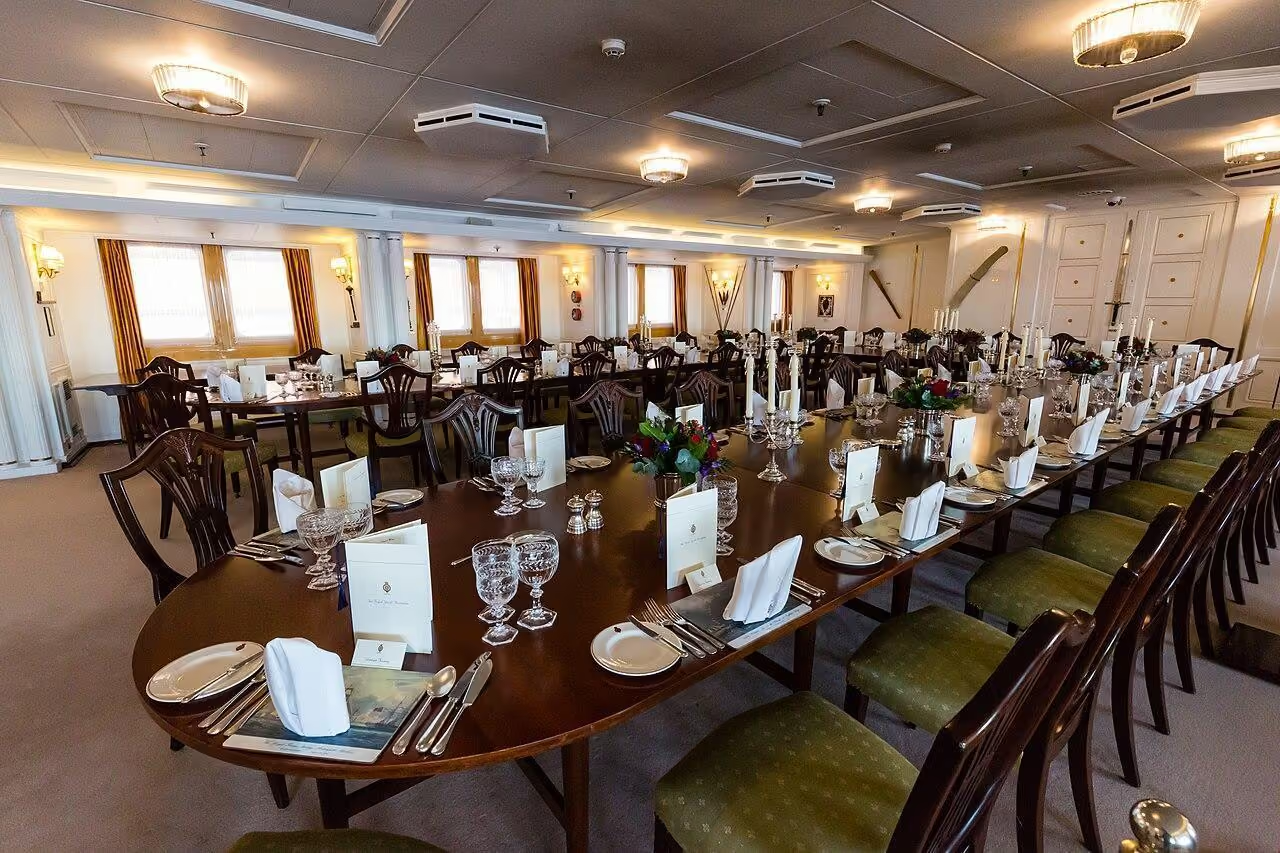
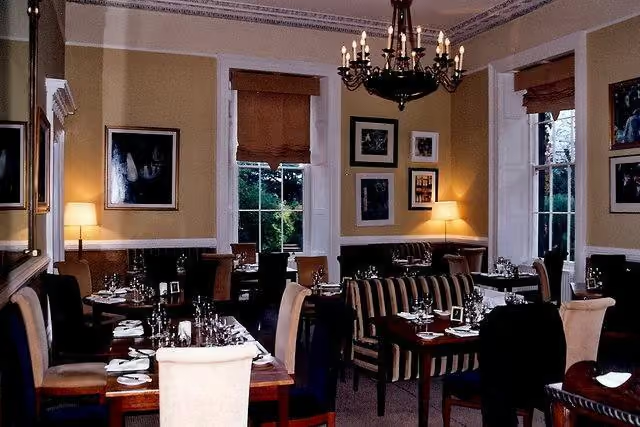
When polished surfaces complicate the light test, examine An intimate Deco dining room without reflected glare.
Treat dimming as a tested system
A dimmer can allow the same fitting to support a brighter task and a softer meal. It must be compatible with the light source and installation. Check the available range, visible flicker, noise, and how the fitting behaves at a low setting. Do not assume that two products described as dimmable will work well together.
Keep the controls easy to find from the room entrance. If the pendant is integrated into a connected scene, retain a clear everyday method of operation. A guest should not need to learn the household's application to sit down comfortably. The evening atmosphere should come from understandable choices rather than an elaborate sequence that only one person can manage.
Give the room edge some presence
When the pendant dims, the surrounding room may disappear into darkness. A modest side lamp or other suitable secondary source can preserve depth and make the serving route easier to read. This layer does not need to compete with the table. Its role is to prevent the room from feeling like an isolated bright island.
The secondary light can also reveal a serving cupboard or useful architectural surface. Avoid adding it solely to illuminate an accessory collection. Test the combined scene with the full table set. The balance should let diners focus on one another while someone can still reach the sideboard or return to the kitchen without crossing an unnecessarily dark boundary.
Relate the form to the furniture hierarchy
If the table base is already sculptural and the chairs have expressive backs, a quieter shade may provide the best balance. If the furniture is deliberately plain, a stronger pendant can carry the main form. Contemporary design does not require every component to announce itself. One leading shape is often easier to live with than several competing statements.
Materials should be judged under their own light. Glass, metal, fabric, and matte coatings can produce different reflections and cleaning demands. A polished fitting may reveal fingerprints or create glare, while a textured shade may be harder to dust. Choose with the room's actual maintenance routine in mind. The most suitable finish is not necessarily the one that looks richest in isolation.
Plan cleaning and replacement
Ask how the shade is cleaned and whether the lamp or LED module can be replaced. A fitting above a large table can be awkward to reach safely, so routine access deserves thought. Do not design a maintenance process that requires balancing on furniture. The product and installation should have an appropriate safe method of servicing.
Include driver access and spare-part availability in the comparison of integrated LED fixtures. A long-lived decorative shell is less useful if a failed component cannot be renewed. Traditional replaceable lamps may be appropriate in some schemes, while other fixtures offer serviceable modules. The decision depends on the actual product, not a general claim that one technology is always better.
Choose the light after the meal test
Set the table with ordinary plates, glasses, and serving dishes. Sit through a meal or a realistic trial under the proposed light where possible. Check reflections in the tabletop, the view of faces, the serving route, and the dimmed scene. These observations can change the preferred shade or location before installation becomes permanent.
In an imagined supper, the pendant is present without demanding attention. The table feels generous, faces remain visible, and conversation continues after the food is cleared. Before purchase, confirm the normal layout, full-scale profile, light distribution, dimming, secondary light, cleaning, and replacement method. A successful dining pendant is an object whose beauty includes the comfort it gives to the people below.
Check, record, then decide.
A proposed worksheet for your own observations. Use consistent units for dimensions and keep the conditions with each record.
Seated fixture outline
Where to check From every dining chair toward the person opposite, with the table at its usual position.
- Record
- Represent the shade with a safely supported lightweight profile; record outline dimensions, proposed suspension, and the views where it interrupts faces.
- Read the result
- The outline tests scale and sight lines, not beam distribution, glare, or the safety of a real suspension.
- If it does not work
- Try a smaller profile, different form, or revised location before accepting a fitting that dominates seated conversation.
Illuminated meal scene
Where to check At the occupied table with normal plates, glasses, serving dishes, and intended secondary lights.
- Record
- With a representative fitting where available, note bright sources, dim food areas, reflections, and behavior across the compatible dimming range.
- Read the result
- The scene records that fitting in that setup; a cardboard mockup or product photograph cannot supply equivalent light-performance evidence.
- If it does not work
- Change source shielding or distribution, then add appropriate room-edge light if the route disappears when the table dims.
Moving table and servicing
Where to check Across normal and extended table positions and at the fixture's proposed maintenance access point.
- Record
- Draw both table centers, active seats, and the safe access method for cleaning or component replacement; identify any unresolved cable position.
- Read the result
- A fitting centered over one layout may serve another poorly; the drawing does not establish a safe electrical alteration.
- If it does not work
- Compare a broader or flexible arrangement with an appropriate installer rather than forcing the table under the existing point.
A practical trial
- Test the full group if several pendants are proposed, not one isolated shade.
- Ask to see the light operating rather than judging only its unlit shell.
- Check manual controls from the room entrance before ordering connected features.
Compare the same scope
- Fixture size, distribution, and compatible controls
- Secondary light and actual table configurations
- Electrical work, safe maintenance, and replaceable components
Cost drivers to discuss: Moving the ceiling supply or making good; Multiple pendants and control compatibility; Special access or proprietary replacement modules.
Choose another route when: A low sculptural fitting is unsuitable when it blocks faces, serving, or changing table layouts and cannot be adjusted without compromising useful light.
The download is a blank record template. Your completed notes remain wherever you choose to keep them; this page has no measurement-submission service.
Sources for this guide
Each reference’s supported point and limits appear beside the relevant passage above. Product documentation applies to the named product, rather than every similar item or the photographed room.
Source text checked November 4, 2026. Specifications can change; confirm the current instructions for the exact item before ordering.
Your questions, considered.
Is there one correct height for a dining pendant?
No single number resolves every fixture, ceiling, table, and occupant. Use a full-scale outline and seated test, then verify the actual illuminated behavior.
Should the pendant follow the ceiling point or the table?
Start with the useful occupied table position. Ask an appropriate professional about feasible electrical changes or a different lighting arrangement when the existing point conflicts with it.
Why add light away from the dining table?
A gentle secondary source can preserve room depth and reveal the serving route when the pendant dims, without competing with the table as the main focus.
About this guide: written with AI assistance for TIANLICHUJU. These are general design ideas, not a measured survey or a completed client project. Any domestic vignette is fictional. Confirm product specifications, site dimensions and local requirements before construction; use qualified professionals for regulated work. Read our editorial approach or suggest a correction.