The decision, with conditions
- Choose this route when
- Choose the combination when faces, food, and serving remain clear from every occupied place and the limited reflective accents do not repeat intrusive sources toward diners.
- Use the alternative when
- Move or shield a source, reduce a mirror, or compare a less-polished finish before lowering all light and losing useful visibility around the table.
- Stop or change the plan when
- Stop approving the scene from the entrance photograph alone when one seated view remains uncomfortable or component care and replacement cannot be sensibly performed.
Compare the practical options
| Uncomfortable reflection | Test from the affected seat | Adjustment to compare |
|---|---|---|
| Pendant in a glossy tabletop | Actual source and normal tableware | Shade, position, distribution, or a different surface finish |
| Mirror shows a bright lamp | Its complete reflected view | Move, reduce, or replace the mirror |
| Metal edges sparkle in every direction | Combined daylight and evening sources | Use fewer polished accents or test a brushed finish |
| Very dim table with dark serving route | A full meal at the useful dimming range | Gentle secondary light rather than simply reducing output |
A glamorous dining room still needs comfortable eyes
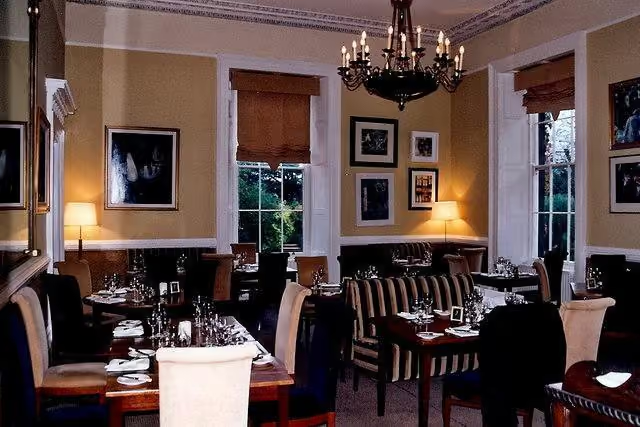
Brushed metal, glass, rich fabric, and geometric forms can give an Art Deco-inspired dining room a distinct evening mood. Reflective surfaces are part of that vocabulary, but their behavior depends on light and viewpoint. A bright source reflected in a polished tabletop or mirror may be barely noticeable from the doorway and intrusive from a seated position. The useful design task is to control the reflections rather than simply reduce or increase sparkle.
Begin with faces, food, and the serving route from each chair. Limit reflection to deliberate places; one controlled highlight can provide the mood without turning every surface into another source.
Map the sources and reflective planes
List windows, pendants, wall lights, table lamps, and any visible lamps in adjoining spaces. Then note mirrors, glass, polished metal, glazed artwork, and glossy furniture. The interaction between these two groups creates the effect. A surface that is quiet under daylight may become much brighter when an evening lamp is switched on.
Sit at every intended place and look naturally around the table. Do not test only the host's seat or the view used for the room photograph. A reflected source may affect one diner more than others. Mark the problem and change one element at a time: source position, shade, surface angle, or finish. This makes the cause easier to understand.
Choose the pendant by its illuminated behavior
A sculptural fitting can support the room's geometry, but its light distribution matters as much as its shell. Ask to see it lit or obtain useful technical information. A product image may be exposed to show the material rather than demonstrate glare. The view from below and across the table should be part of the decision.
Test the fitting with the actual tabletop finish and glassware when possible. A glossy dark top can behave differently from a honed-looking pale one. The correct height and size depend on the fixture, ceiling, table, and occupants, so avoid copying a number without context. A full-scale lightweight outline can help assess shape before installation, but it cannot replace a light test.
For the pendant's full-scale shape and conversation test, review Choosing a dining pendant that leaves faces visible.
Use dimming without making the room unusable
A compatible dimmer can change the meal's atmosphere, but low output is not a cure for a poorly placed exposed source. Check the fitting through its useful range for flicker, noise, and uncomfortable bright points. Compatibility depends on the actual components and installation. Appropriate electrical professionals should coordinate the system.
Keep enough light for food and movement. A room that becomes so dark that serving is awkward has exchanged one problem for another. A secondary lamp or other suitable source at the edge can preserve depth and useful visibility. The table can remain the center without being the only illuminated surface in the room.
Limit the mirror to a useful view
Choose the mirror by its complete reflected view from the chairs. Compare what it repeats before selecting the frame; a bright lamp or busy service area may make another location preferable.
Avoid positioning a mirror solely to make the empty room look larger in a photograph. If diners see a distracting lamp or busy service area behind themselves, another location may be better. A smaller mirror or a nonreflective artwork can provide a more comfortable composition. The style does not require reflection in every major wall plane.
Let brushed finishes replace some polished ones
Brushed or matte metal can provide a warm accent with a different reflection pattern from a highly polished surface. The actual finish should be sampled under the intended light. It may still show fingerprints or require specific care. A material described as brass-colored does not establish its construction, coating, or maintenance requirements.
Use the metal selectively at a handle, lamp, or table detail. Repeating a narrow accent can connect the room without turning every furniture edge into a highlight. Rich fabric and warm timber can carry much of the atmosphere. This balance lets the room feel expressive while giving the eye places to rest between reflections.
To keep a warm metal note with less visual competition, compare Brass Details That Feel Warm Rather Than Showy.
Keep table decoration from multiplying glare
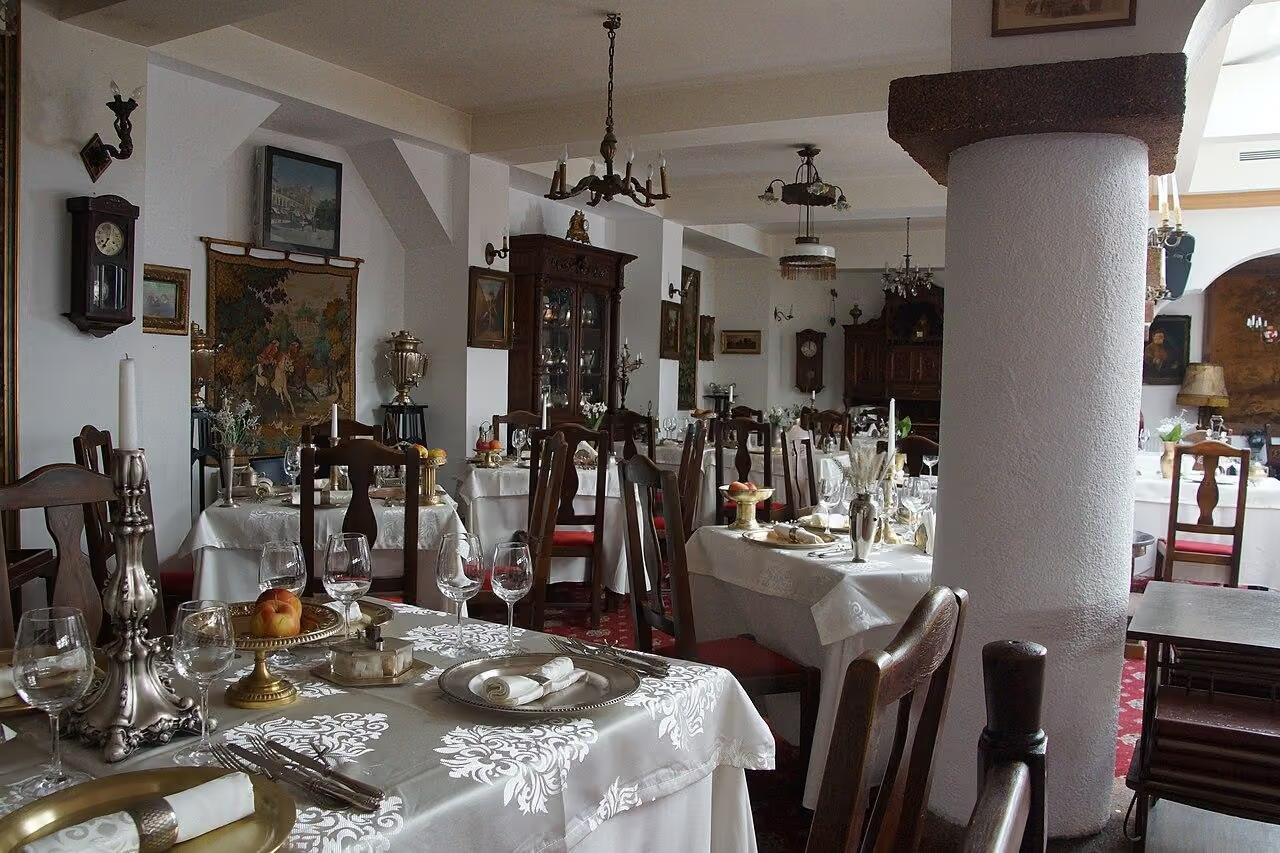
Glassware, cutlery, serving dishes, and food add their own visual activity. Test the room with a complete ordinary setting rather than an empty tabletop. A permanent mirrored tray or shiny centerpiece may be unnecessary once dinner arrives. The table should remain a useful surface, not a display that guests must navigate carefully.
If candles or portable decorative lights are considered, follow the product and fire-safety requirements appropriate to the setting. Do not place them merely to create a reflection without considering safe use and surrounding materials. The atmosphere can be achieved through fixed lighting and finish relationships without depending on an extra hazard or maintenance ritual.
Compare care and replacement before purchase
Reflective surfaces reveal fingerprints, dust, and scratches differently. Ask how the table, mirror, and metal coating are cleaned and whether damaged components can be renewed. A large polished piece may be attractive but incompatible with the household's tolerance for visible marks. The right finish is one that remains welcome after ordinary use.
For lighting, ask about source and driver replacement, not just the decorative shell. A fitting should have an appropriate safe maintenance route. Keep component information and installation records. A rich evening room does not become more lasting through inaccessible technology; repairable ordinary parts can support an equally considered atmosphere.
Approve the evening from every seat
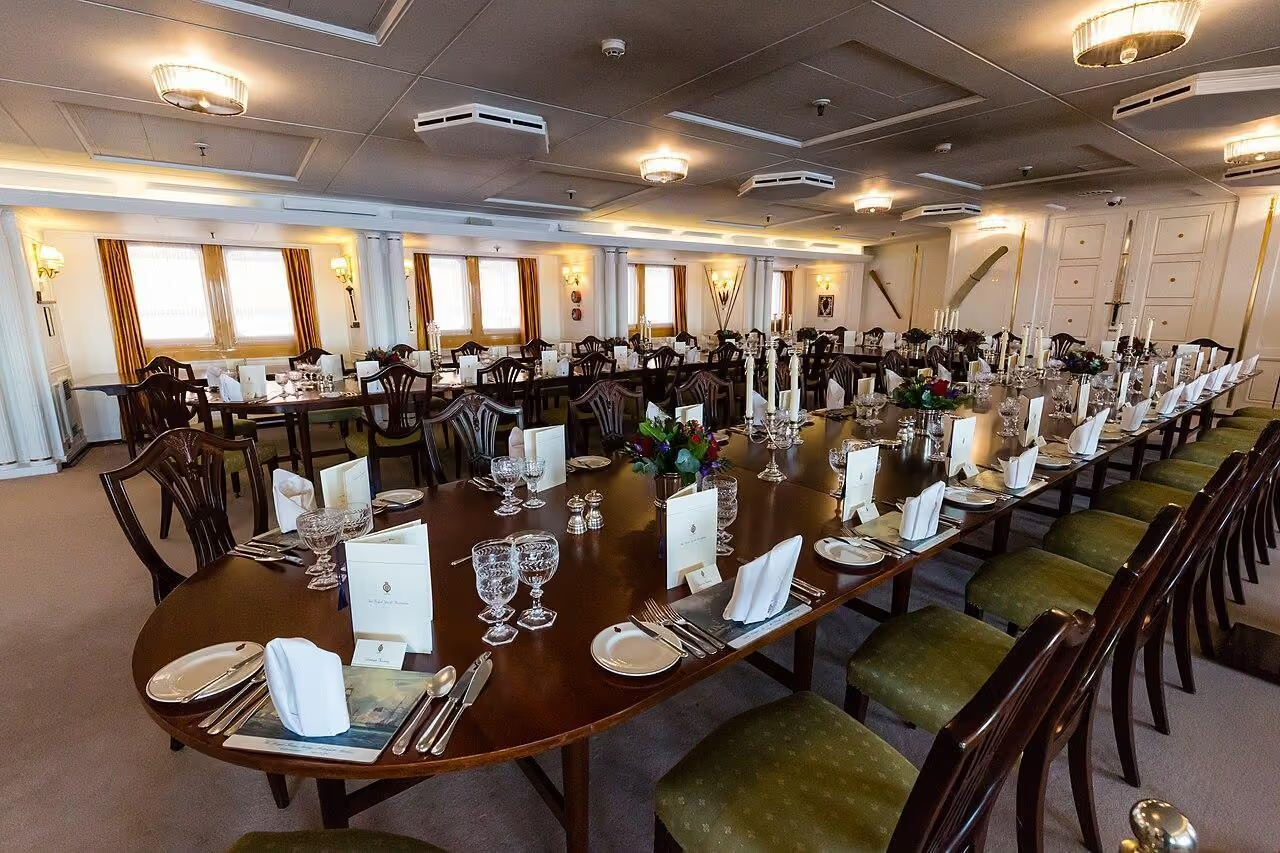
Run a meal trial with the intended layers of light and normal tableware. Look at faces, reflections, and the serving route. Adjust the most intrusive source before adding another accessory. The aim is a room whose richness feels comfortable over time, not a moment of brightness that photographs well but tires the occupants.
In a fictional supper, a small metal detail catches the light while conversation remains easy and faces stay clear. The room has glamour because its contrasts are controlled. Confirm the source map, seated reflections, pendant behavior, dimming, mirror view, finish care, and service access. The most successful Deco dining room gives its light to the gathering rather than asking the gathering to work around it.
Check, record, then decide.
A proposed worksheet for your own observations. Use consistent units for dimensions and keep the conditions with each record.
Seat-specific reflected source
Where to check At every occupied dining eye position facing the tabletop, mirror, glass, and polished metal.
- Record
- Number seats and map the source seen in each reflection, its active setting, and whether the effect changes when the diner moves normally.
- Read the result
- One comfortable viewpoint cannot establish a glare-free room, and subjective brightness is not a calibrated discomfort rating.
- If it does not work
- Change source, shade, angle, or surface location one at a time before merely dimming every light.
Useful dimmed scene
Where to check Across the fully set table and the serving route with intended secondary lights active.
- Record
- Note food visibility, faces, bright points, dark movement areas, and flicker or noise across the actual compatible control range.
- Read the result
- A low setting may hide one problem while creating another; the trial does not prove electrical compatibility beyond the installed products.
- If it does not work
- Improve shielding or distribution and add appropriate room-edge light rather than accepting a dark route as the price of atmosphere.
Mirror's complete view
Where to check From seated positions and the room entrance at the proposed mirror plane.
- Record
- Represent its full outline and record which lamps, service areas, and objects it would repeat; compare with a smaller or nonreflective alternative.
- Read the result
- The reflected composition is distinct from the beauty of the frame; a mock outline cannot reproduce all glass behavior.
- If it does not work
- Relocate or omit the mirror when it doubles a distracting source or busy view that cannot otherwise be resolved.
A practical trial
- Include ordinary glassware and cutlery rather than testing an empty tabletop.
- Ask to see the pendant lit before purchasing its decorative shell.
- Compare a brushed finish sample under the actual source instead of assuming it removes all glare.
Compare the same scope
- Actual source distribution and seated reflections
- Compatible dimming and secondary lighting
- Mirror placement, surface care, and replaceable components
Cost drivers to discuss: Relocating fixed light sources; Replacing large reflective surfaces; Special access or proprietary lighting modules.
Choose another route when: A highly reflective scheme is unsuitable when several occupied seats retain intrusive bright sources that cannot be resolved without making the meal and route too dark.
The download is a blank record template. Your completed notes remain wherever you choose to keep them; this page has no measurement-submission service.
Sources for this guide
Each reference’s supported point and limits appear beside the relevant passage above. Product documentation applies to the named product, rather than every similar item or the photographed room.
Source text checked November 4, 2026. Specifications can change; confirm the current instructions for the exact item before ordering.
Your questions, considered.
Will dimming fix glare in a dining room?
Not always. An exposed source or its reflection can remain intrusive at low output. Test source position, shade, reflective angle, and finish as separate causes.
Where should a dining-room mirror go?
Choose it by the view it reflects from occupied chairs, not only its frame or an empty-room photograph. Avoid doubling a distracting lamp or busy service area.
Can an Art Deco dining room use mostly matte finishes?
Yes. Warm timber, rich fabric, controlled geometry, and a limited reflective note can retain character without multiplying bright highlights around every diner.
About this guide: written with AI assistance for TIANLICHUJU. These are general design ideas, not a measured survey or a completed client project. Any domestic vignette is fictional. Confirm product specifications, site dimensions and local requirements before construction; use qualified professionals for regulated work. Read our editorial approach or suggest a correction.