The decision, with conditions
- Choose this route when
- Choose a quieter table and compatible seating after the everyday meal, work reset, serving route, and useful light function comfortably within the decorated room.
- Use the alternative when
- Retain varied suitable chairs connected through a limited material or textile when a new matching suite would add visual weight without improving the meal.
- Stop or change the plan when
- Stop decorative additions when they occupy serving surfaces, fill every wall panel, or conceal poor chair fit and a weekday transition that still has nowhere to put work.
Compare the practical options
| Formal room pressure | Relaxed practical choice | What still needs testing |
|---|---|---|
| Detailed walls and doors | A quieter table and limited centerpiece | Space for normal food and place settings |
| A rigid matching furniture suite | Compatible related or mixed chairs | Height, apron fit, and support for actual diners |
| Weekday work on the table | A nearby tray, drawer, or cupboard | A meal reset that does not displace equipment onto chairs |
| Every wall panel seems to need an object | Leave selected fields clear | The room's proportions from occupied views |
Let the architecture be formal so the meal can be relaxed
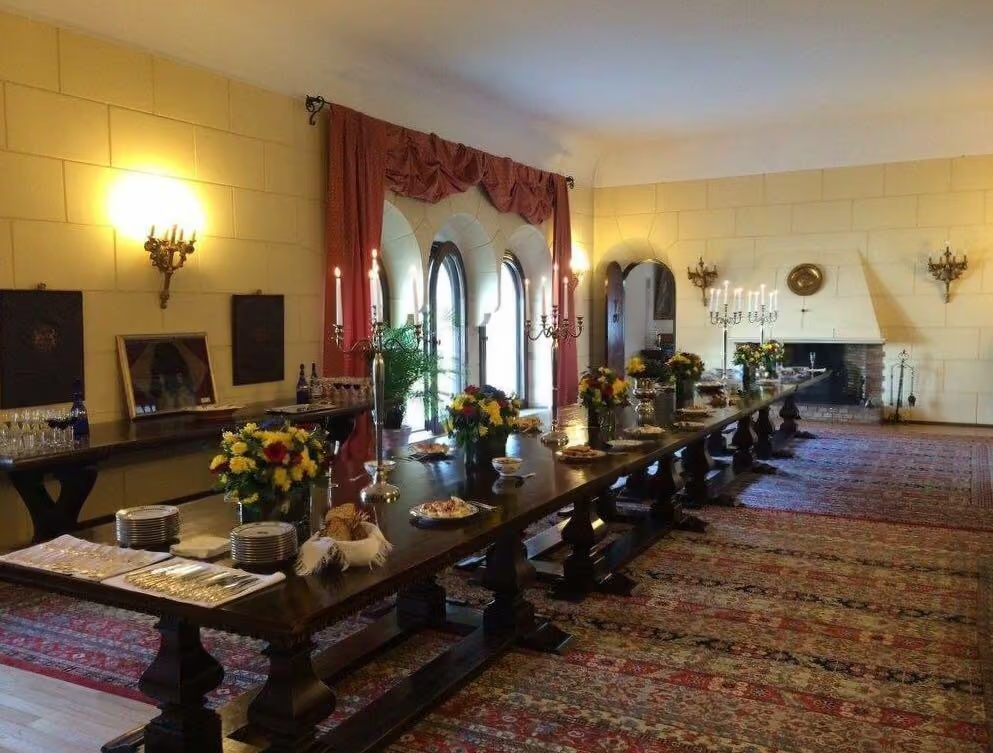
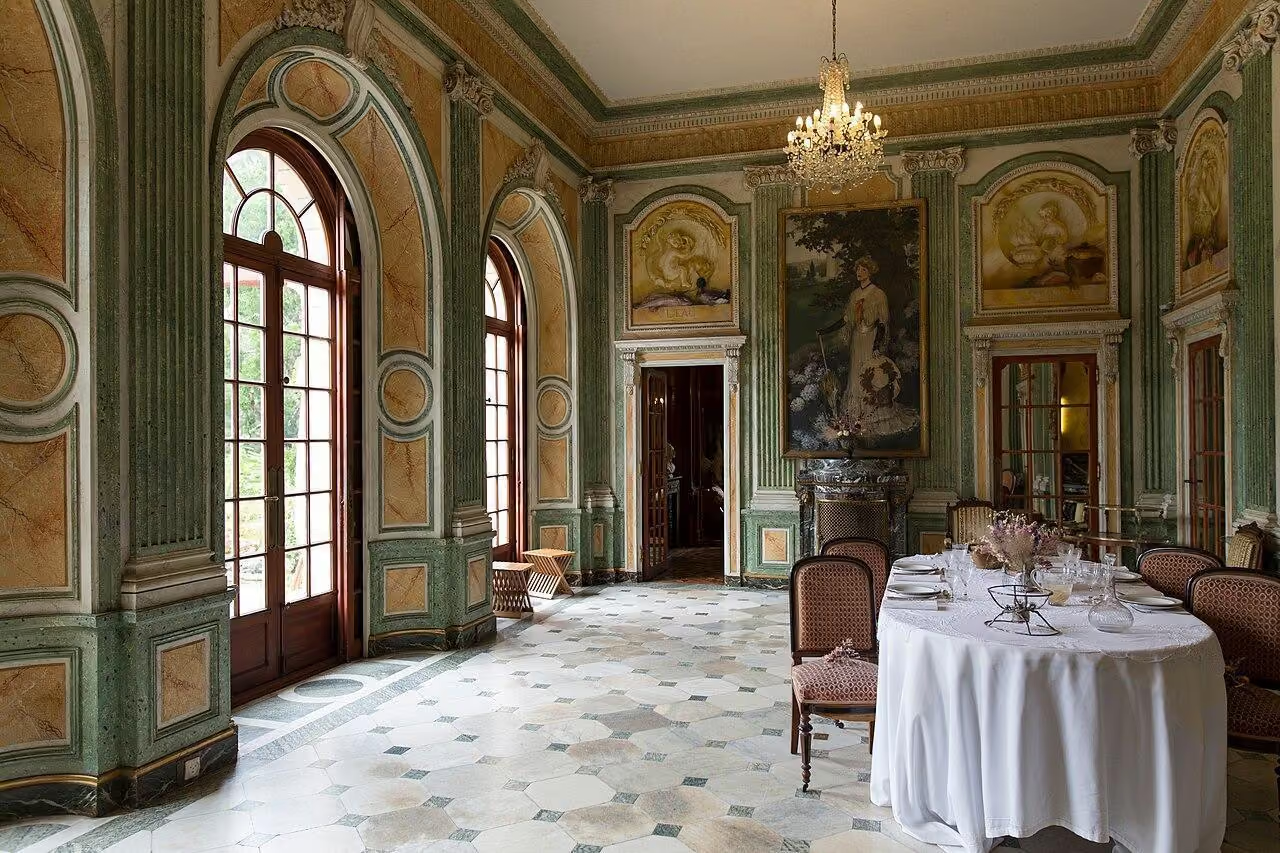
A dining room with molding, tall doors, or a clear architectural frame may already have enough visual ceremony. Adding a highly formal table setting, matching ornate chairs, and several decorative features can make everyday meals feel staged. A more relaxed approach lets the building provide the order while comfortable furniture and a limited palette give the room a human scale.
Give the architecture the formal role and let the furniture serve ordinary meals. Informality comes from comfortable fit and an easy reset, not from adding an unresolved assortment of objects.
Decide how the room is used on a weekday
List the normal diners, the way food is served, and any work or homework that happens at the table. A room used only for special occasions may reasonably have a different reset from one serving every meal. Plan the common day first so that the furniture does not feel like an event to be prepared before use.
Give papers, devices, and cables a defined nearby home. Test clearing the table without displacing work onto chairs or the only serving surface before choosing finishing accessories.
For a repeatable homework-to-dinner transition, compare A Homework Corner That Can Become a Dining Space Again.
Give the table enough visual quiet
A plain timber or appropriately specified painted table can sit comfortably within a detailed room. Its surface provides a calm center for food and faces. That does not mean it must be anonymous or inexpensive. A well-judged edge, base, and proportion can give it character without competing with the wall's ornament at the same intensity.
Draw the table with occupied chairs and the serving route before centering it on a ceiling feature. A formal room can still have an awkward doorway or asymmetrical window. The useful arrangement should not be sacrificed to perfect alignment. Visual balance can be adjusted through light and furniture relationships while the path around the table remains comfortable.
Mix chairs through a practical common ground
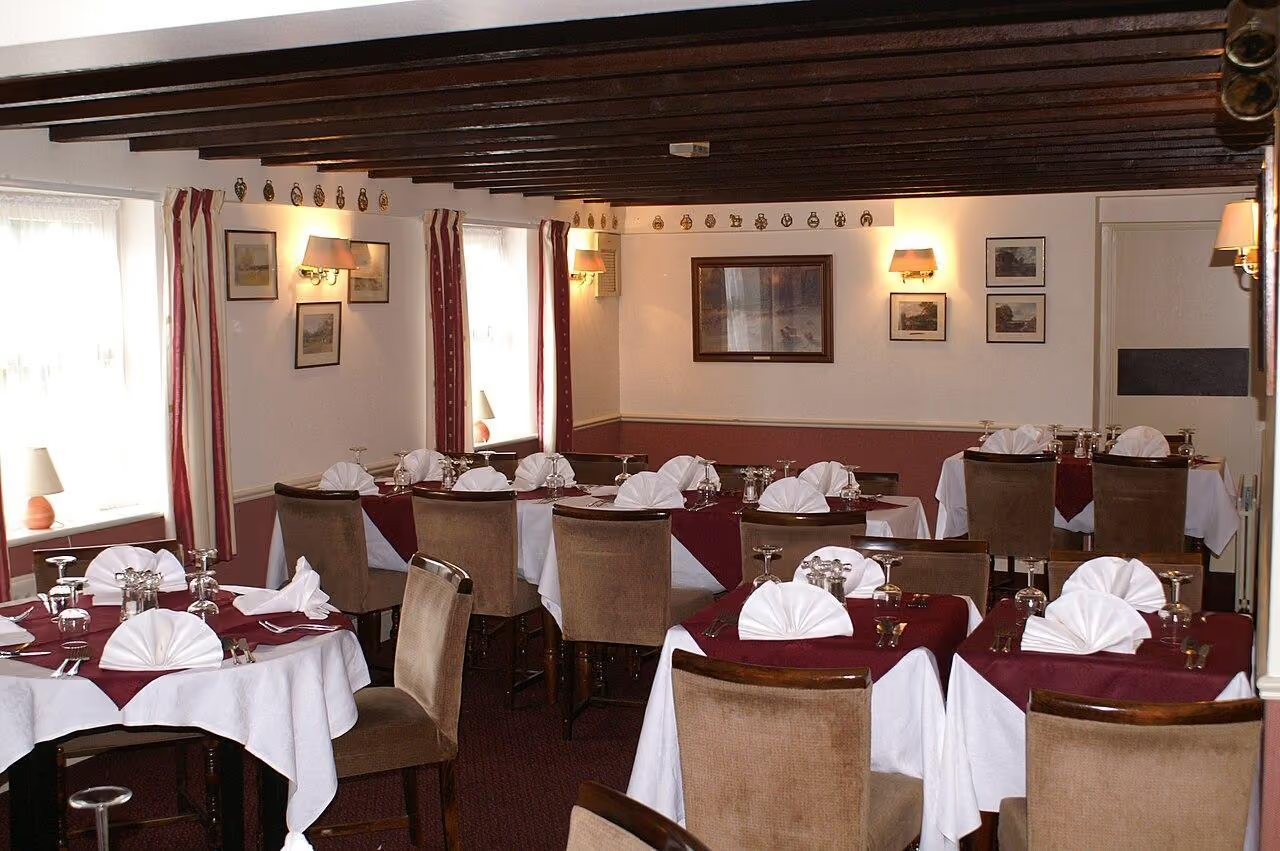
Different chairs can make a formal background feel less rigid, especially when they share compatible seat heights and a related material or color. Test every model with the table apron and base. An interesting silhouette is not enough if the armrest cannot approach the table or the diner has no comfortable knee position.
Start with a limited mix rather than a different statement at every place. Two related types or a repeated textile can provide variety while keeping the group readable. Retain different support options for occupants or guests who need them. The room becomes welcoming when everyone can choose a suitable seat, not merely when the arrangement looks intentionally eclectic.
Before styling a mixed group, check its occupied heights through Mixing dining chairs without mixing incompatible heights.
Use fabric to connect rather than disguise
A quiet upholstered seat can soften the room visually and physically. Its color might relate to the wall, curtain, or a single artwork without matching them exactly. Warm cream, faded rose, muted blue, or another restrained tone can work according to the local light. Compare full samples in the room before committing to several chairs.
Read cleaning and replacement information. A fabric that looks relaxed may still need specialist care. If recovering older chairs, inspect the underlying structure and padding as well as the visible cloth. Reupholstery can be useful, but it should not conceal a repair issue. Compare the complete usable chair with alternatives rather than treating the fabric change as purely decorative.
Keep the table setting proportional to the meal
Everyday dining does not need a permanent centerpiece that occupies the serving space. A small object can move to a side surface when food arrives. Set out a normal meal to check the actual footprint of plates, glasses, and shared dishes. The table should remain generous once it is doing its job.
If linens or protective mats are needed for the finish, store them conveniently. A simple practical textile can belong to the room without becoming another elaborate layer. Guests should not have to guess which surface can receive a warm dish or a drink. Clear care habits can make a refined room feel more relaxed than an apparently casual but delicate one.
Choose light for faces rather than spectacle
A pendant can relate to the architecture while remaining modest enough for the room's scale. Check its view from seated positions and the way it lights the table. A dramatic fitting may be attractive but should not block eye contact or produce uncomfortable reflections in glassware. The correct relationship depends on the actual fixture and occupants.
A side lamp can give the room depth when the table light is lower. It may also reveal the molding gently without turning every profile into a feature. Keep lighting controls understandable and components accessible. Appropriate electrical work should be coordinated before the furniture arrangement is finalized, especially if the table moves or extends.
Leave architectural details room to be noticed
Do not fill every wall panel with a small artwork or shelf merely because the frame exists. A clear field can allow the room's proportions to read. One substantial work or a simple mirror may be enough, provided reflections and fixing requirements are considered. The wall treatment should support the meal rather than become a grid demanding objects.
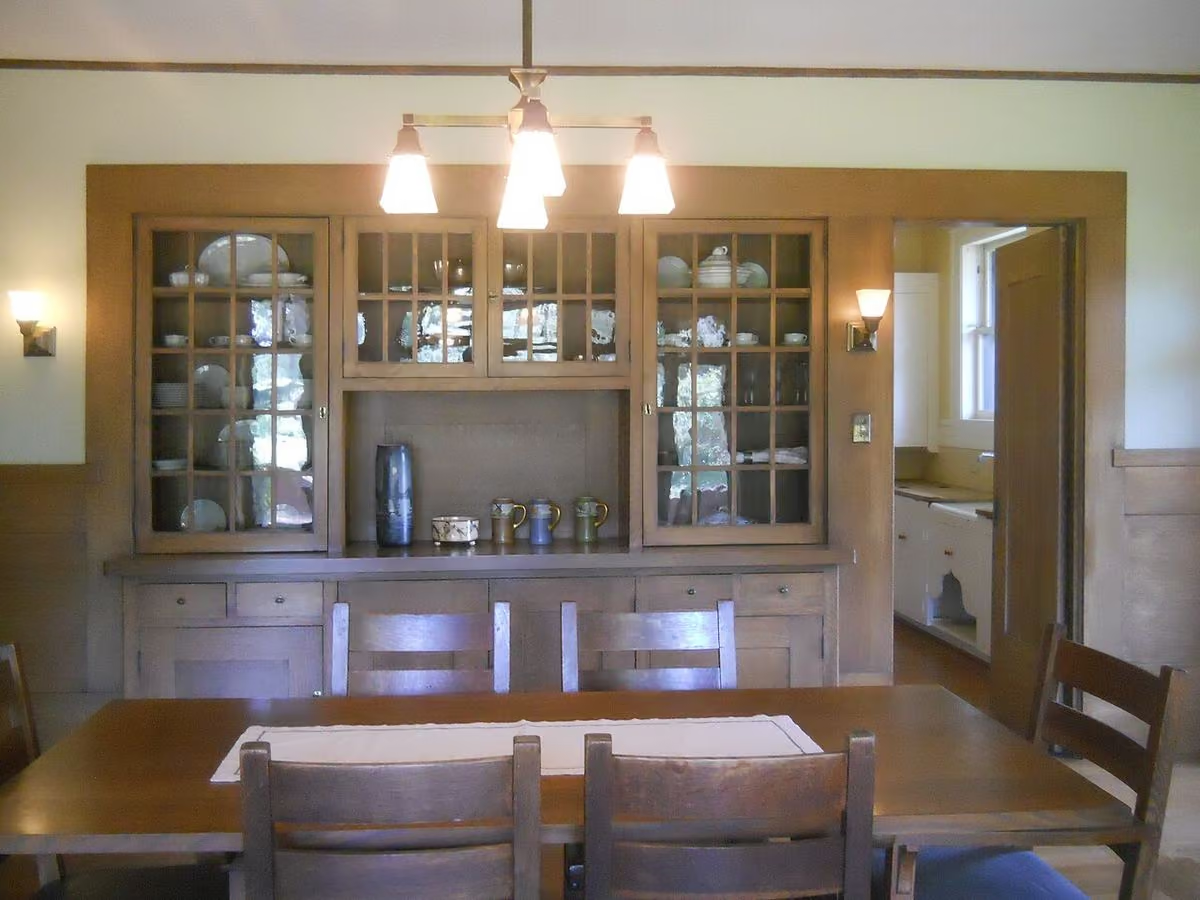
Likewise, a sideboard can be useful without completing a matching suite. Measure its inventory and check doors during a seated meal. If it crowds the serving route, choose a smaller or movable support. The room's formal background can tolerate an informal furniture relationship when the scale and practical roles are clear.
Test hospitality, then finish the composition
Use the arrangement for an ordinary dinner before adding the final accessories. Notice whether people remain comfortably, where serving dishes accumulate, and what gets moved. Resolve those observations first. The most successful finishing decision may be removing an object that occupies a useful surface rather than buying another detail.
In a fictional evening, the room retains its architectural grace while chairs are pulled out easily and the table welcomes a simple supper. Nobody needs to behave as though they are visiting a display. Confirm weekday use, occupied circulation, chair fit, fabric care, serving space, light, and the amount of ornament. A refined dining room feels most personal when its formality makes room for ordinary company.
Check, record, then decide.
A proposed worksheet for your own observations. Use consistent units for dimensions and keep the conditions with each record.
Weekday table transition
Where to check At the dining table during its ordinary work, homework, and meal sequence.
- Record
- List what must leave the top before dinner, where it actually goes, and whether a chair or serving surface becomes temporary storage.
- Read the result
- The reset reveals an everyday support need; architectural formality does not itself explain or resolve displaced work equipment.
- If it does not work
- Provide a practical nearby tray or compartment before adding a more formal furniture suite.
Mixed seating within a formal frame
Where to check Around the actual table with the room's molding, doors, and normal serving route included.
- Record
- Check each chair's occupied height, apron approach, support, and movement; photograph the usable group rather than only a neatly parked arrangement.
- Read the result
- A repeated textile can connect suitable seats, but visual coherence cannot repair incompatible height or inferior support.
- If it does not work
- Use a limited compatible mix and relocate an unsuitable outlier instead of retaining variety at a diner's expense.
Architecture versus added display
Where to check From seated and entrance views across wall panels, sideboard top, table setting, and pendant.
- Record
- Compare the full meal with selected nonessential objects removed; note where faces, food, and serving space become easier to read.
- Read the result
- A clearer preference is a local compositional judgment, not proof that every formal room needs minimal furniture or empty wall panels.
- If it does not work
- Let the existing detail carry more of the ceremony and keep new furniture quieter when several equal focal points compete.
A practical trial
- Test a weekday meal before styling the room for an occasion.
- Open the sideboard while diners remain seated and dishes are being served.
- Check pendant glare and faces instead of judging the fixture as an unlit object.
Compare the same scope
- Everyday transition and storage for current work
- Physical chair fit before fabric coordination
- Serving capacity, useful light, and restrained display
Cost drivers to discuss: Recovering or restoring varied chairs; New storage for multipurpose table use; Lighting changes to match the useful table position.
Choose another route when: A fully formal matching suite is unsuitable when its footprint, care, or visual weight makes routine meals and shared work harder than the current arrangement.
The download is a blank record template. Your completed notes remain wherever you choose to keep them; this page has no measurement-submission service.
Sources for this guide
Each reference’s supported point and limits appear beside the relevant passage above. Product documentation applies to the named product, rather than every similar item or the photographed room.
Source text checked November 4, 2026. Specifications can change; confirm the current instructions for the exact item before ordering.
Your questions, considered.
Do ornate dining-room walls need ornate furniture?
No. A simpler table and comfortable seating can let the architecture provide the ceremony while keeping ordinary meals relaxed.
Can mixed dining chairs work in a formal room?
Yes, when actual table fit and comfort work first. A limited mix connected by material, color, or fabric can provide variety without an unresolved assortment.
How can a formal dining room also support weekday work?
Give current papers, equipment, and cables a nearby home. Test the transition to a meal so the table can clear without moving work onto seating or another activity area.
About this guide: written with AI assistance for TIANLICHUJU. These are general design ideas, not a measured survey or a completed client project. Any domestic vignette is fictional. Confirm product specifications, site dimensions and local requirements before construction; use qualified professionals for regulated work. Read our editorial approach or suggest a correction.