The decision, with conditions
- Choose this route when
- Choose one material, curve, or upholstery relationship when the occupied combination already works and the real pieces form a clear group beside the existing floor and lighting.
- Use the alternative when
- Keep a deliberate timber contrast or change one conflicting accessory when matching finishes would require irreversible work to otherwise useful furniture.
- Stop or change the plan when
- Stop cosmetic unification if seat height, apron clearance, support, or frame condition remains wrong; a shared textile cannot supply the missing physical compatibility.
Compare the practical options
| Possible visual link | Room-scale trial | Pitfall to avoid |
|---|---|---|
| Timber value | Actual pieces with the floor under daylight and lamps | Several accidental near-matching browns |
| A related curve | Table edge, base, and chair silhouette together | Copying every motif at equal intensity |
| Repeated upholstery | Fabric comfort, care, and the whole chair group | Cosmetic recovering over unresolved frame damage |
| A supporting pendant | Occupied light and furniture hierarchy | Another expressive object competing with both pieces |
Connect the table and chairs through one honest relationship
A contemporary table and a more familiar chair profile can work comfortably together without coming from the same furniture range. A transitional dining room benefits from that freedom, especially when pieces arrive through different households or stages of life. The challenge is to find a clear relationship without forcing every timber, curve, and finish into an exact match. One useful connection can be enough.
Confirm usable table and chair fit before styling the difference. Once the pieces work, choose one clear relationship rather than forcing all timber, curves, and finishes toward an exact match.
Test the combination below the tabletop
Measure and try seat height, armrest clearance, table apron, and base positions. Sit in each intended place, including the ends and the most constrained side. A table advertised for a certain number of diners may not suit every chair width. The occupied arrangement matters more than the nominal capacity.
If the table extends, repeat the test in its larger configuration. A moving leg or additional support can change which chair fits where. Check the storage and safe handling of leaves according to the product instructions. The occasional guest plan should be practical rather than an assumption that an extra chair can always be added somewhere.
For the under-table apron and knee-space check, use Mid-century dining chairs that fit the table apron.
Choose the visual bridge from what already exists
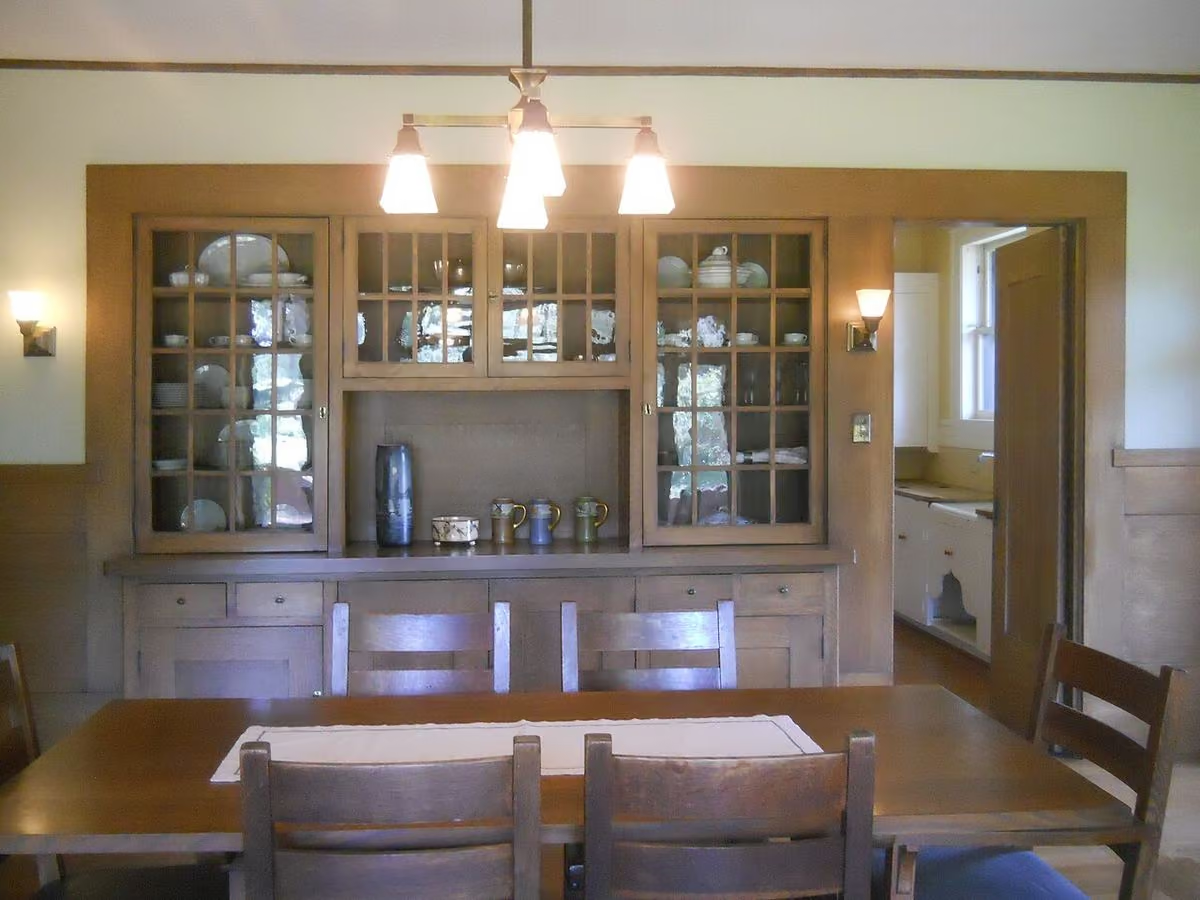
Look for a shared timber value, a related curve, or a similar degree of visual weight. The relationship need not be exact. A warm table can connect to a chair's timber frame while its upholstery introduces another tone. A simple curved table edge can acknowledge a rounded chair back without repeating the entire silhouette.
Avoid adding a new major piece solely to mediate between the first two. A modest textile or light may help, but it should have a useful role. The strongest bridge often comes from editing a competing element rather than buying another one. Remove unnecessary accessories during the trial so that the furniture relationship can be judged clearly.
Compare timber tones at room scale
Small samples can make different woods appear closer than they do across a full table and several chairs. Place the actual pieces together where possible, under daylight and evening light. Note the floor as a third major timber or color field. The room needs a coherent relationship among all three, not just a match between furniture samples.
Compare an acknowledged light-dark contrast with the attempted near-match before altering finishes. Include the actual floor; do not stain several sound pieces merely because small swatches looked close.
Use upholstery as a flexible connection
A repeated seat textile can connect chairs to the surrounding room while allowing their frames to differ from the table. Choose the fabric by comfort and cleaning requirements as well as color. A quiet warm neutral or muted accent may be enough. Pattern can work too, but it should not compete with an already expressive table base or strong wall detail.
If recovering older chairs, inspect the underlying frame and support. New fabric should not conceal unresolved damage. Ask how the seat is removed, what work is included, and whether future recovering remains straightforward. Compare the full usable chair with alternatives rather than treating upholstery as a cosmetic cost separate from the furniture's condition.
If the upholstery is joining a mixed-height chair group, check compatibility through Mixing dining chairs without mixing incompatible heights.
Let the light connect the group without dominating it
A pendant with a related material or a modest repeated curve can support the bridge. It does not need to duplicate the table base or chair back exactly. Check its outline from the seats and its light on faces and food. The dining arrangement should remain the main purpose of the fitting.
If table and chairs are both expressive, a simpler light may provide the necessary rest. Conversely, plain furniture can support a stronger fixture. Test glare and reflections with normal glassware and the actual tabletop finish. Appropriate electrical installation, compatible dimming, and replacement access belong in the product decision, not merely in a final technical stage.
Keep the surrounding architecture from taking sides
The room's wall treatment can provide a calm shared background rather than reinforce only the traditional or contemporary element. A restrained painted field, simple trim, or modest artwork can help the furniture read as one group. Avoid adding ornament just to justify the familiar chairs or stripping all detail merely to validate the table.
Consider the view from adjoining rooms. The dining group may be seen beside a kitchen or living area with its own materials. Repeat one limited relationship across that transition where useful, but do not require every room to match. Coherence can survive differences when the main paths, proportions, and material roles are clear.
Plan serving and care around the actual meal
The combined furniture must still leave room for plates, shared dishes, and movement. Set a normal meal and test the route from the kitchen. A sideboard or small landing surface may be useful, but it should not be added simply to complete a set. Measure its inventory and check doors with diners seated.
Read the finish instructions for both table and chairs. Different pieces may need different care, and that information should remain available. Store protective items conveniently if required. A room feels more relaxed when the household knows how to use it confidently rather than hoping that a mixed collection happens to tolerate the same cleaning treatment.
Evaluate change before replacing the whole group
If the arrangement remains visually unsettled, identify the specific conflict. It may be one outlying chair, an overly busy rug, or a pendant at the wrong scale. A targeted change can preserve useful furniture. Replacing everything with a matching set is one option, but it is not the only route to clarity and may discard pieces that already work well.
In a fictional dinner, an older chair and a newer table feel naturally related through warm material and comfortable proportions. Their difference adds interest without becoming the subject of the room. Confirm physical fit, one visual bridge, room-scale tones, upholstery care, light, background, serving, and targeted alternatives. A transitional dining room succeeds when its connections are clear enough to let the people at the table take the attention.
Check, record, then decide.
A proposed worksheet for your own observations. Use consistent units for dimensions and keep the conditions with each record.
Physical combination before styling
Where to check At every intended chair position around the actual table, including its expanded configuration if used.
- Record
- Record seat and apron relationships in centimeters, arm interference, base conflicts, and whether each diner can approach and rise naturally.
- Read the result
- A matching timber tone cannot resolve incompatible occupied fit, and nominal dimensions alone do not establish comfort.
- If it does not work
- Change an unsuitable chair or assigned place before spending on upholstery or refinishing intended only to connect appearances.
Room-scale timber relationship
Where to check With the actual table and chairs on the existing floor in daylight and evening light.
- Record
- Photograph deliberate contrast and any attempted near-match; note which material dominates and whether a shared curve or value is already present.
- Read the result
- A local preferred relationship is not evidence that all different timber species need matching stain or that small swatches predict whole pieces.
- If it does not work
- Keep an honest contrast or simplify a competing rug rather than irreversibly treating sound furniture to chase an uncertain match.
Flexible textile connection
Where to check At the proposed chair upholstery, surrounding wall, and occupied pendant view.
- Record
- Try a large fabric sample, record touch and care requirements, and inspect the underlying chair support before including recovering in the plan.
- Read the result
- Repeated cloth can link suitable furniture, but it does not repair frame damage or guarantee the room needs another strong decorative element.
- If it does not work
- Restore the chair appropriately first or use a smaller supporting color when upholstery would be an expensive cosmetic cover for incompatibility.
A practical trial
- Identify one specific visual conflict before replacing the entire dining group.
- Set a real meal to include food and tableware in the material comparison.
- Test the pendant from the seats after the furniture relationship is established.
Compare the same scope
- Physical table-chair compatibility before visual work
- One material, curve, or upholstery connection
- Condition, recovering, lighting, and targeted alternatives
Cost drivers to discuss: Structural seat repairs beneath new cloth; Refinishing multiple unrelated existing coatings; Replacing a large table instead of one outlier.
Choose another route when: A material-bridge strategy is unsuitable as the sole solution when the pieces do not physically fit or a retained chair needs unresolved structural work.
The download is a blank record template. Your completed notes remain wherever you choose to keep them; this page has no measurement-submission service.
Sources for this guide
Each reference’s supported point and limits appear beside the relevant passage above. Product documentation applies to the named product, rather than every similar item or the photographed room.
- U.S. Access Board: ADA Chapter 9, dining and work surfaces · Read the supported point and its limits
Source text checked November 4, 2026. Specifications can change; confirm the current instructions for the exact item before ordering.
Your questions, considered.
Must dining chairs match the table's wood?
No. A deliberate contrast or related value can be clearer than an attempted exact match. Compare the real pieces with the floor rather than tiny isolated samples.
Can fabric connect older chairs with a contemporary table?
Yes, if the chairs are sound and fit the table. Choose upholstery for touch, cleaning, and renewal as well as a color that relates to the room.
What if one piece still makes the dining group look wrong?
Identify the specific conflict, such as an outlying chair, busy rug, or oversized pendant. A targeted change may preserve useful furniture without buying a matching set.
About this guide: written with AI assistance for TIANLICHUJU. These are general design ideas, not a measured survey or a completed client project. Any domestic vignette is fictional. Confirm product specifications, site dimensions and local requirements before construction; use qualified professionals for regulated work. Read our editorial approach or suggest a correction.