The decision, with conditions
- Choose this route when
- Choose the conversation arrangement when both people can settle, see each other and use nearby surfaces without competing with a regular noisy activity or blocking the room's circulation.
- Use the alternative when
- Move the conversation area or agree on quieter times when furniture changes cannot separate it from a persistent appliance, television or neighboring activity that must continue.
- Stop or change the plan when
- Stop treating rugs or cushions as a complete solution when the actual problem is sound transmission through the building; identify the noise route and an appropriate intervention first.
Compare the practical options
| Conversation friction | First adjustment | Test |
|---|---|---|
| Seats point only at a screen | Angle the regular seats into a shared field | Talk without twisting or raising the volume unnecessarily |
| Drinks interrupt the exchange | Add a stable reachable surface | Use it without moving decorative objects |
| Faces are backlit or obscured by glare | Review window and lamp relationships | Observe from each seat at the usual hour |
| Background sound dominates | Identify the source before adding textiles | Do not confuse reflection changes with sound isolation |
Conversation needs a physical arrangement
Set up the conversation you want to have before styling the corner. Put two people in the proposed seats with their usual cups, bags or reading material and leave the normal route through the room active. Observe what makes either person turn, lean, raise their voice or move an object. Those interruptions define the brief more clearly than an empty pair of chairs photographed at a pleasing angle.
This guide is useful when the room feels visually calm but socially awkward. It does not promise that furniture will resolve difficult conversations or create relaxation for everyone. It can remove some practical interruptions and make the preferred activity easier. The goal is an environment with fewer small negotiations over where to sit, what to move, or how to find a comfortable light. Quietness then comes partly from the room's readiness rather than from an image of perfect stillness.
For a whole-room layout organized around activities, see A Living Room with No Obvious Focal Wall.
Bring the seats into a shared field
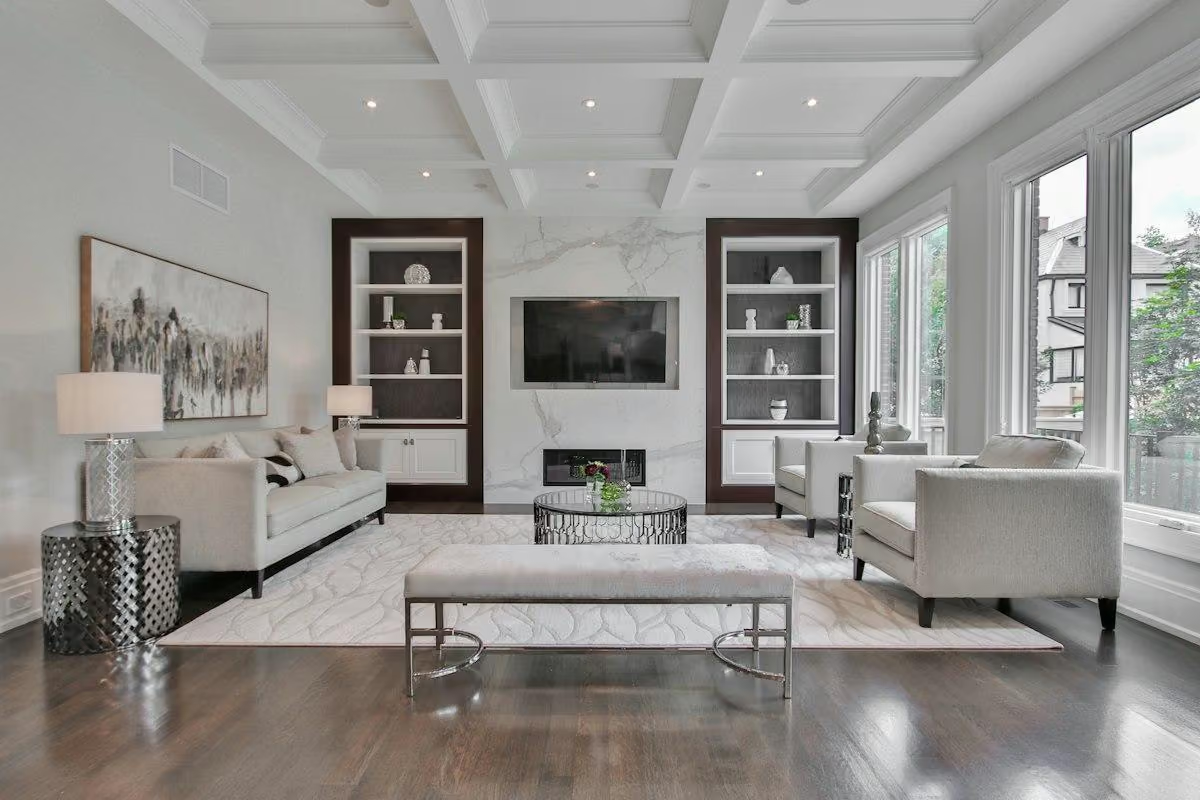
Place the regular seats so people can look toward each other without sustained twisting. A slight angle can feel more natural than a rigid face to face arrangement, but test it with the actual users. The distance should allow ordinary conversation at a comfortable volume without making the group feel crowded. Do not adopt a fixed measurement without considering the room, hearing preferences, and the number of people. The useful test is sitting and talking, not viewing the furniture from the doorway.
Include the seats that are used most often rather than the decorative chair that is easiest to move for a photograph. If one person always takes the sofa corner and another uses an armchair, make that relationship work first. A movable occasional seat can expand the group for visitors where its footprint and construction suit the room. Keep the main route outside the conversation area if possible, so someone passing through does not repeatedly divide the group or require another person to stand.
Support different ways of sitting
Comfort is not uniform. A deep soft sofa may suit one person and leave another without useful support. Provide a credible choice where the room permits, and test the actual seat with the household rather than assuming a luxurious appearance means long term comfort. Check how people stand up, where their feet rest, and whether cushions are needed to make the seat usable. A conversation space should not depend on every person adapting to the same furniture preference.
Give each regular seat access to a stable surface for a cup, glasses, or a book. A large central table may be too far from the chairs or may obstruct movement. Small side tables can provide a more direct solution, but their bases and edges should not crowd the route. The surface needs to be useful in the occupied arrangement. If someone must lean across another person or move a decorative object every time they set down a drink, the room is adding unnecessary interruptions.
Make faces visible without creating glare
Lighting should allow people to see one another comfortably. A bright window behind one seat can make that person harder to see, while an exposed lamp near eye level can be distracting. Observe the room at the time conversation usually happens. Adjust a shade, move a lamp, or try a different seat orientation before buying a new fitting. The problem may be the relationship between light and people rather than the total amount of illumination.
Several modest sources can provide flexibility where the products and installation support it. A useful reading lamp may remain available while the rest of the room has a gentler level. Avoid making quiet conversation dependent on very dim light that leaves the route or faces unclear. If controls are awkward, the household may leave an unsuitable setting unchanged. Put the ordinary adjustment within easy reach and keep its operation understandable, using appropriate installation advice where changes to fixed lighting are needed.
To explore gentle shared light without filling useful surfaces, compare A Candlelit Mood without Depending on Open Flames.
Notice the background sound honestly
Record the particular sound interrupting the trial, its location and whether it stops when a local activity stops. Compare a nearby alternative position before purchasing new soft furnishings. If the noise remains across locations or comes through the building, separate that problem from the seating project. A practical conversation plan may involve timing or a different room rather than further decorating the same corner.
For modest changes, test what is already available. Closing a suitable curtain, moving a seat away from an appliance, or choosing a different time for background audio may help. Keep practical and access requirements in mind; do not obstruct ventilation or cover equipment to reduce sound. If music is part of the atmosphere, set it at a level the occupants actually find compatible with conversation. A room is not more welcoming because it contains background audio if people repeatedly need to speak over it.
Remove tasks from the immediate view where practical
A pile of work papers or a half packed bag may draw attention because it represents something unfinished. Give those items a usable destination if you want the room to support a different activity in the evening. This is not a demand to erase evidence of life. It is a practical choice about what occupies the shared view. A small nearby storage place can make the transition easier than a rule that everything must be carried to a distant room.
Keep meaningful objects and reading material if they make the space feel personal. The aim is not visual emptiness. Concentrate display where it can be enjoyed without occupying the surfaces needed during conversation. A few objects with room around them can provide interest while leaving the seating group ready. If clearing the room requires a long reset every evening, reduce the complexity of the arrangement. The room should make the desired activity easy to begin, especially at the end of a busy day.
Try an ordinary evening with no demonstration
Use the revised arrangement without explaining how it is supposed to feel. Sit, talk, get a drink, and allow someone to leave and return. Notice which seat is avoided, where a lamp is uncomfortable, and whether a route interrupts the group. Those observations are more valuable than a photograph of symmetrical chairs. Make the smallest useful adjustment and test again. The design can remain informal while still being precise about the actions it supports.
The final room may contain familiar furniture in a better relationship: seats within comfortable conversation range, useful surfaces, clear routes, and light that lets people see each other. It does not need a dramatic new style. Its calm comes from the absence of small physical obstacles and from the sense that the space is ready for people. Conversation remains a human activity with its own unpredictability; the room's contribution is simply to give it a considerate, usable setting.
Check, record, then decide.
A proposed worksheet for your own observations. Use consistent units for dimensions and keep the conditions with each record.
Natural conversation orientation
Where to check In the seats regular users actually choose, with the room's main passing route active.
- Record
- Note twisting, avoided positions, interruptions through the group and whether ordinary speech feels comfortable to those users.
- Read the result
- A symmetrical arrangement may still fail the preferred conversation scale.
- If it does not work
- Angle or regroup the regular seats before buying atmospheric accessories.
Support, drink surface and light
Where to check At each occupied seat with normal clothing, cushions and evening lamps.
- Record
- Record unsupported positions, unreachable cups and bright sources or backlighting that obscure faces.
- Read the result
- Small practical interruptions can undermine an otherwise visually calm group.
- If it does not work
- Provide a suitable chair alternative, reachable surface or revised source position.
Background sound source
Where to check At the conversation group during normal appliance, adjacent room and traffic activity.
- Record
- Describe the source and timing of interference rather than assigning an unmeasured sound rating.
- Read the result
- Reflected room sound and noise entering from elsewhere are not the same problem.
- If it does not work
- Try source or seat changes; seek suitable assessment for substantial persistent issues.
A practical trial
- Talk in the proposed occupied arrangement without coaching people into the positions a photograph would favor.
- Bring drinks, leave the group and return several times, noting every surface or route that interrupts the exchange.
- Clear only task-related backlog from the immediate view and check whether its new destination remains convenient.
Compare the same scope
- Regular user positions and conversation scale
- Seat support and reachable surfaces
- Actual evening light relationships
- Identified sound sources and timing
Cost drivers to discuss: Suitable alternative seating; Local tables and lighting; Source-specific acoustic or building work if established.
Choose another route when: Decorative calm alone is unsuitable as a remedy when the room lacks usable seating, clear routes or appropriate response to a substantial noise source.
The download is a blank record template. Your completed notes remain wherever you choose to keep them; this page has no measurement-submission service.
Sources for this guide
Each reference’s supported point and limits appear beside the relevant passage above. Product documentation applies to the named product, rather than every similar item or the photographed room.
Source text checked November 4, 2026. Specifications can change; confirm the current instructions for the exact item before ordering.
Your questions, considered.
Should conversation chairs face directly toward each other?
Not necessarily. A slight angle may suit the users better. Test real sightlines, comfortable speech and movement rather than imposing one symmetrical layout.
Why does a visually calm room still feel awkward for talking?
Seating may face away, surfaces may be hard to reach, or glare and sound may interfere. Diagnose those occupied conditions rather than changing the palette first.
Will adding a rug solve conversation noise?
It may change some reflected sound, but it does not automatically isolate external noise or solve a substantial acoustic problem. Identify the source and seek suitable advice when needed.
About this guide: written with AI assistance for TIANLICHUJU. These are general design ideas, not a measured survey or a completed client project. Any domestic vignette is fictional. Confirm product specifications, site dimensions and local requirements before construction; use qualified professionals for regulated work. Read our editorial approach or suggest a correction.