The decision, with conditions
- Choose this route when
- Choose a less visible screen arrangement when ordinary viewing remains comfortable and the actual equipment can operate, connect and be serviced as instructed in that configuration.
- Use the alternative when
- Retain a visible fixed screen with a quieter surrounding composition when concealment adds daily handling, obstructed connections or a cabinet larger than the visual problem it solves.
- Stop or change the plan when
- Stop a concealment proposal that depends on operating equipment behind unverified closed panels or compromising its installation instructions; resolve the equipment conditions before commissioning joinery.
Compare the practical options
| Screen situation | First option | Tradeoff to check |
|---|---|---|
| Laptop stays on the dining surface | A nearby suitable storage and closing routine | An inconvenient return route will be avoided |
| Every chair faces the television | Support conversation or reading in the layout | Retain comfortable viewing when it is wanted |
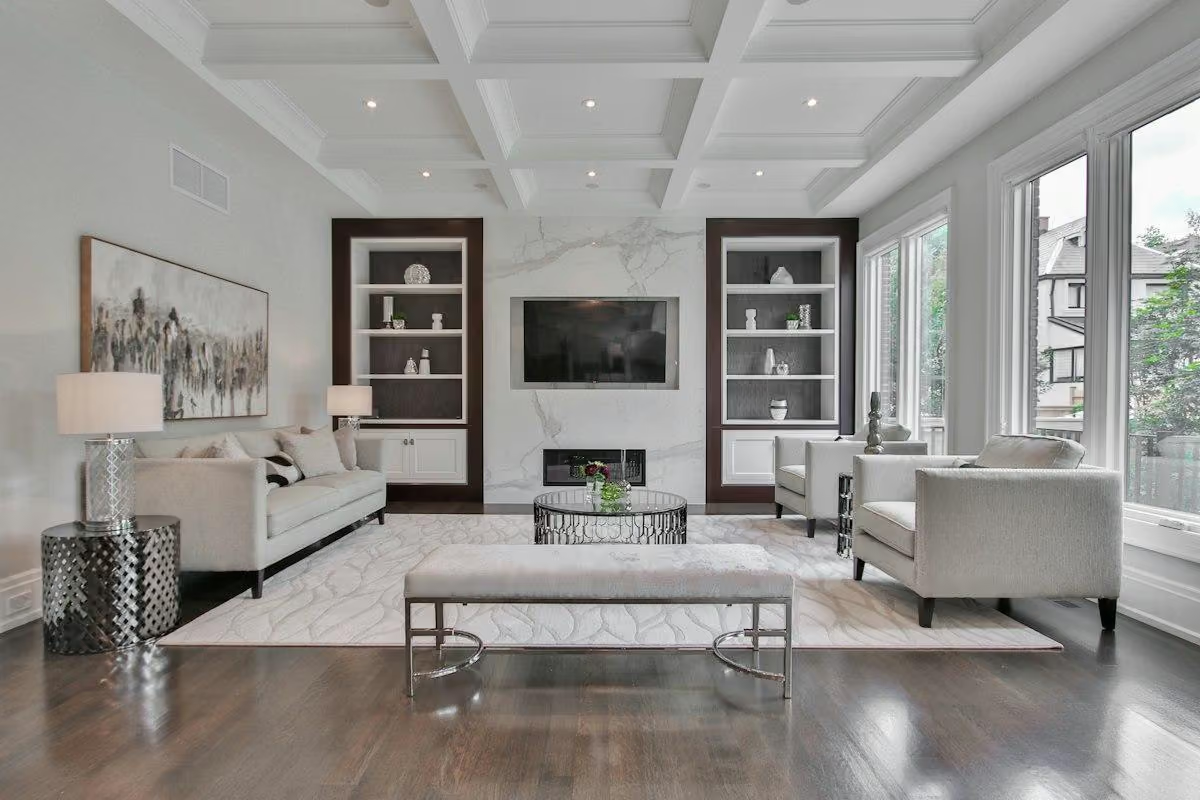
| Fixed screen dominates a pale wall | Compare background and placement adjustments | Less emphasis may not require concealment |
| Doors or sliding panels are proposed | Test the open operating arrangement | Ventilation, signal, speakers and circulation must still work |
Choose when a screen should be present
Decide which views of the screen trouble you: the entrance, the main seat or the wall after work. Then list the viewing sessions worth retaining. A smaller visual role might come from changing the surrounding composition or choosing a different device, rather than adding doors. Compare proposals in both their idle and working states so a tidy photograph does not conceal an inconvenient daily sequence.
This approach suits people who want more control over the room's visual emphasis, particularly where work, entertainment, and social life share one space. It does not assume that screens are inherently harmful or that hiding them improves health. The goal is a practical preference: the room should not advertise one activity continuously when the household uses it for several. Begin with the devices you actually use, how often they move, and the moments when their visibility feels intrusive.
Separate fixed equipment from portable equipment
A portable device can have a deliberate storage and charging location, while a fixed display needs a different strategy. List the screens and their supporting equipment, including controllers, keyboards, chargers, and accessories. Hiding the main rectangle while leaving all its associated objects scattered may not change the room's visual character much. Conversely, giving small equipment a dependable home can make a large visible screen feel less dominant. Diagnose the complete activity zone rather than focusing on the display alone.
For portable devices, make the return path simple. A laptop stored far from its usual work surface may remain out because putting it away feels inconvenient. A nearby cabinet can help if it suits the equipment and does not encourage unsuitable operation or charging in an enclosed space. Follow the device and charger instructions for ventilation and use. Storage and active operation are different states, and a tidy looking compartment should not be assumed appropriate for both.
Give the room another credible center
A television becomes dominant partly because the furniture points toward it and no other activity has comparable support. If conversation matters, arrange seats so people can see one another without twisting away from the screen wall. If reading matters, provide a comfortable chair, useful light, and a reachable surface. These are positive alternatives rather than decorative distractions. A room will not become less screen centered merely because a plant is placed beside the television while every seat still faces it exclusively.
Consider multiple modest anchors instead of one large focal wall. A window, a bookshelf, or a shared table can give different parts of the room a purpose. The arrangement should still support viewing when desired; nobody needs to sit in an awkward position to prove the room has another identity. Movable chairs or a swivel seat can offer flexibility where their construction and footprint suit the room. Test the occupied routes so adaptability does not become a need to rearrange heavy furniture before every activity.
To build credible alternatives to a screen-focused arrangement, read A Living Room with No Obvious Focal Wall.
Conceal only when the mechanism is worth using
Treat a proposed enclosure as an operating arrangement with several states: idle, viewing, cleaning and repair. Ask the supplier to show how each state is reached and what must be moved first. Check the actual equipment instructions before approving the construction. If the demonstration relies on a panel being left open, include that open panel in the room layout and everyday visual comparison.
Compare concealment with less elaborate options. A darker background may reduce the visual contrast of a screen, while a lower position or a quieter surrounding arrangement can reduce its dominance. These approaches do not make the device invisible, but they may achieve the desired balance with fewer moving parts. Avoid buying artwork or decorative panels solely to disguise equipment if the result requires frequent handling or compromises use. The best solution is the one the household will operate consistently because it is genuinely easy.
Before commissioning a concealed equipment cabinet, continue with A Living Room with Hidden Technology and Obvious Controls.
Keep controls and connections understandable
When equipment is visually discreet, its controls should become clearer rather than more mysterious. Identify the basic actions and keep a small accessible set of controls for them. A guest should not need to open several cupboards to find the correct remote. Labeling or a simple household note may be useful where the system is complex. The aim is to reduce visible clutter without transferring that complexity into a hidden operational puzzle that only one person can solve.
Plan service access and cable routes deliberately. A cabinet should allow the equipment to be inspected and replaced as required without damaging the room. Follow actual product requirements and use appropriate installation help. Keep model information and a basic connection record. A system that can be understood and maintained is easier to simplify later. Concealment should be a reversible visual choice, not a commitment to keeping a particular collection of devices because the furniture has been built too tightly around them.
Create a practical end to the workday
In a shared living space, the work screen often remains visible because the work materials have no stopping place. Provide a short closing sequence: save and shut down as appropriate, collect the few accessories, and return them to an identified location. The storage should accept the actual equipment without elaborate folding or stacking. If the process takes too long, revise the setup. The design should make the preferred transition easier rather than relying on a daily act of exceptional discipline.
Leave the room ready for the next activity. A clear table, a lamp switched to a useful evening setting, or a chair returned to the conversation group can provide a tangible change without requiring a complete reset. This is especially helpful when the home has no separate office. The screen's disappearance is only one part of that change. The room should gain a usable surface or a more welcoming arrangement, giving the household a reason to complete the routine beyond achieving a tidy appearance.
Judge the result by flexibility
Try a reversible version for a week before commissioning cabinetry. Move portable equipment to its proposed storage place and rearrange one seating position to support another activity. Notice whether screens are less visually dominant and whether the room remains easy to use for viewing or work. If the new arrangement adds daily friction, identify where. The answer may be a nearer storage compartment, a better cable route, or acceptance that one frequently used screen should remain visible.
A successful room offers choice. The household can watch, work, read, or talk without the furniture insisting that one activity defines the space at all times. Some screens may be concealed, others simply placed more quietly. The practical improvement is a room that changes state with modest effort and retains understandable controls and service access. Fewer visible screens then becomes a considered spatial preference, supported by useful alternatives rather than by the constant work of hiding ordinary life.
Check, record, then decide.
A proposed worksheet for your own observations. Use consistent units for dimensions and keep the conditions with each record.
Device presence by activity
Where to check Across the shared living or dining space during work, viewing, conversation and the transition between them.
- Record
- List each screen and accessory, when it is needed and the objects left visible afterward.
- Read the result
- Hiding one display may not reduce dominance if the activity layout and supporting inventory remain unchanged.
- If it does not work
- Give accessories a destination and support a credible alternative activity.
Portable equipment return route
Where to check Between the normal work surface and the proposed storage or suitable charging location.
- Record
- Time the ordinary closing sequence if useful and note repacking, cable or access steps that discourage return.
- Read the result
- A distant or elaborate destination is likely to leave equipment on the shared surface.
- If it does not work
- Simplify the inventory or provide a nearer appropriate home.
Concealment in its open state
Where to check At proposed television doors or panels while the system is operating as intended.
- Record
- Mark blocked routes, speaker positions, product ventilation needs and control access.
- Read the result
- The attractive closed elevation is insufficient when ordinary open operation becomes awkward.
- If it does not work
- Reduce visual contrast or adjust seating without full concealment.
A practical trial
- For one week, trial a return location for portable equipment before commissioning permanent media cabinetry.
- Use conversation and reading seats with suitable light to confirm the room offers more than an empty alternative to viewing.
- Compare the preferred non-screen state with the viewing state and record the effort required to switch between them.
Compare the same scope
- Devices and accessories included
- Actual activity states supported
- Return and control sequence
- Open and closed concealment footprint
Cost drivers to discuss: Equipment storage and cable management; Custom doors or moving panels; Alternative activity furniture and lighting.
Choose another route when: Concealment is unsuitable when it makes frequent viewing or work unnecessarily difficult without providing a useful alternative room state.
The download is a blank record template. Your completed notes remain wherever you choose to keep them; this page has no measurement-submission service.
Sources for this guide
Each reference’s supported point and limits appear beside the relevant passage above. Product documentation applies to the named product, rather than every similar item or the photographed room.
Source text checked November 4, 2026. Specifications can change; confirm the current instructions for the exact item before ordering.
Your questions, considered.
Can I make a television less dominant without hiding it?
Yes. Furniture orientation, background contrast and useful alternative activity areas can reduce its emphasis while leaving viewing straightforward.
Why does a hidden screen still leave the room looking technical?
Accessories and activity layout may remain unchanged. Include controllers, keyboards, chargers and the direction of seating in the diagnosis.
What makes a workday closing routine easier in a shared room?
Give actual equipment a nearby suitable home and leave the surface ready for its next use. Avoid a return process that requires elaborate packing every evening.
About this guide: written with AI assistance for TIANLICHUJU. These are general design ideas, not a measured survey or a completed client project. Any domestic vignette is fictional. Confirm product specifications, site dimensions and local requirements before construction; use qualified professionals for regulated work. Read our editorial approach or suggest a correction.