The decision, with conditions
- Choose this route when
- Hide equipment when a newcomer can find the intended controls and complete ordinary tasks, while the owner can reach connections and remove components without dismantling finished surfaces.
- Use the alternative when
- Leave a small visible control or component when concealment would make basic actions dependent on explanations, an unavailable phone or a sequence that occupants regularly forget.
- Stop or change the plan when
- Stop before closing a compartment if instructions, operating conditions or service removal are unresolved, or if users cannot recover from an ordinary mistaken command without specialist intervention.
Compare the practical options
| Hidden system detail | Verify | Reason |
|---|---|---|
| Equipment behind closed doors | Actual airflow, signal and operating requirements | A clean elevation does not prove working performance |
| Speaker behind a decorative front | Suitability of product and cabinet arrangement | Concealment can alter sound behavior |
| Several remotes and apps | A clear basic sequence and accessible control location | Ordinary use should not require the expert occupant |
| Sealed cabinet back or tiny openings | Inspection, plug passage and replacement routes | Hidden complexity should remain understandable |
Hide the equipment, not the way to use it
Write down the three actions people perform most often before deciding what disappears. For each action, specify where a person stands, what they touch and how they know it worked. A discreet installation succeeds when those actions remain obvious. If removing one visible component makes the household explain the room every time a guest arrives, consider a quieter visible position instead.
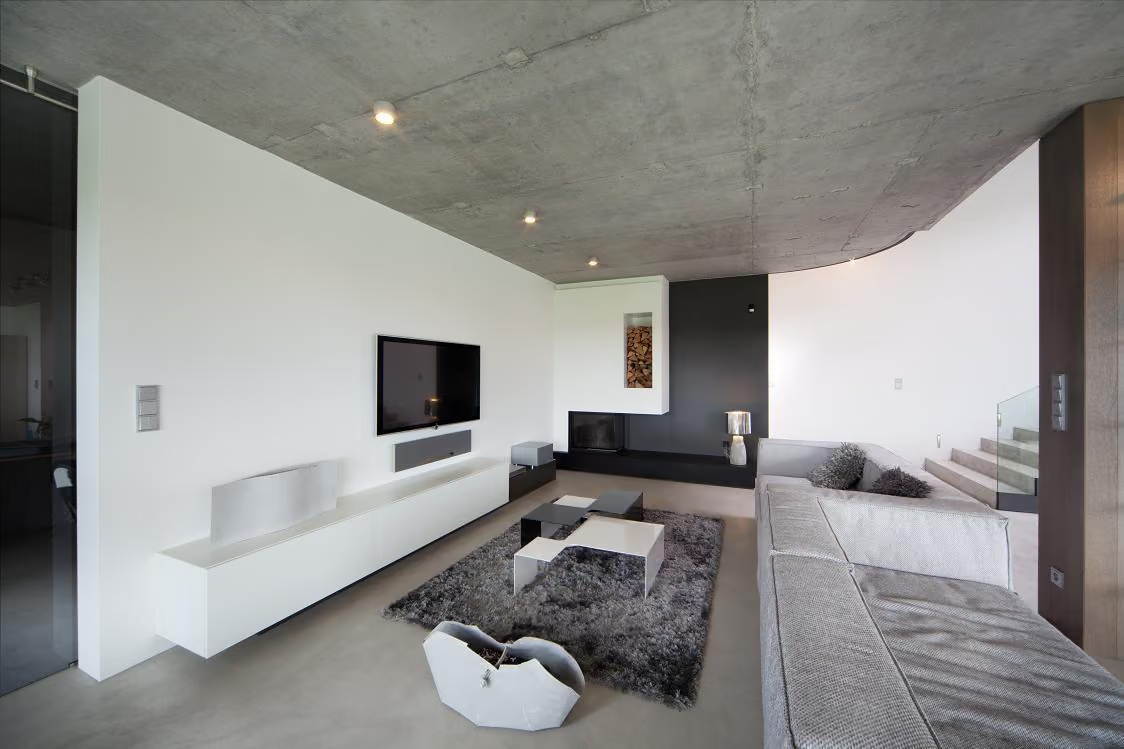
This is particularly useful in a room shared by people with different levels of interest in technology. A system should not require its most enthusiastic user to be present for everyone else to watch, listen, or obtain ordinary light. The aim is a modest visible interface supported by a clear hidden arrangement. A discreet cabinet can be successful, but only when its open state, operating conditions, and service access are as carefully considered as the clean elevation shown when everything is switched off.
Write a short user journey in ordinary words
Choose the three most common activities, such as listening to music, watching a program, and ending the session. Describe the steps without using product names or technical shorthand. If the sequence needs several changes of input, volume controls, or accounts, ask whether it can be simplified. The exercise reveals complexity before it is built into cabinetry. The room should be designed around the desired activity, not around preserving every device accumulated from earlier systems.
Include a visitor or less familiar occupant in the test. Ask them to begin an activity from the room's normal resting state using only the controls you plan to leave available. Observe where they hesitate. A label, a simpler remote arrangement, or a more logical storage position may solve the problem. Avoid explaining every step immediately, because the uncertainty is useful evidence. A polished system is one whose ordinary behavior is clear, not one whose owner can demonstrate an impressive sequence after extensive practice.
Give each device an appropriate compartment
List the equipment and record its actual dimensions, ventilation requirements, connections, and operating controls. Follow the manufacturers' instructions for placement and installation. A closed door may interfere with control signals or airflow, and a narrow shelf may prevent a connector from fitting behind the device. The cabinet needs to accommodate the equipment in its working state, including cables, rather than simply fitting the bare boxes. Ask the installer to show how those requirements are met in the complete assembly.
Do not assume that a decorative perforation or fabric front is suitable for every device. Acoustic, ventilation, and control behavior depend on the products and construction. Where specialist design is needed, obtain it for the actual arrangement. Speakers also have placement requirements that can conflict with concealment. A cupboard that makes them invisible may change their performance. Decide which visual compromise is acceptable rather than expecting hidden equipment to behave exactly as it would in an unrestricted position.
To fit equipment storage beside sculptural seating, see Organic curves without sacrificing living-room storage.
Make the visible controls few and legible
Make a short control map using ordinary action names rather than device names. Place the proposed controls in the trial arrangement and ask another person to operate them without prompting. Record wrong guesses as design information. Distinguish an unfamiliar label from a genuinely hidden control, then simplify the location or sequence before investing in additional automation.
If an app or voice interface adds convenience, retain a suitable ordinary option for basic functions where the system supports it. Verify the complete product behavior rather than assuming a physical button guarantees independence from a network or hub. Keep the essential instructions concise and understandable. A household note can explain an unusual function, but a long manual should not be necessary for starting an ordinary activity. Complexity that cannot be simplified should be acknowledged before it becomes the room's permanent operating logic.
For physical controls when optional lighting connectivity fails, read Soft-futurist living light with an ordinary manual fallback.
Plan service access before closing the back
A concealed system should allow someone to inspect connections, replace a device, and disconnect power appropriately without damaging furniture. Show the access panels, cable openings, and removable shelves in the drawings. Check that plugs can pass through the planned openings and that the cabinet can be moved if required. Follow appropriate installation practices and use qualified help for electrical work. The hidden arrangement should remain understandable rather than becoming a tightly packed cavity whose contents can be reached only by pulling on cables.
Label connections where useful and keep a simple record of what connects to what. Store model information and configuration details with household documents. These records matter because the person doing a future repair may not be the person who installed the system. A cabinet that permits independent replacement of components is more adaptable than one built around an exact stack with no spare route. Concealment should not make the household dependent on retaining every original device to preserve the furniture's appearance.
Consider sound and light outside the equipment zone
A room's use extends beyond the cabinet. Check whether indicator lights are visible from a resting seat, whether a glossy door reflects the screen, and whether controls can be read in the lighting normally used. Small details can make a discreet system feel more present than expected. Test them in the actual evening conditions. An attractive cabinet surface may need a different finish or position if it creates a distracting reflection directly in a regular viewing line.
Arrange seating for the room's wider activities as well. A discreet media system should not quietly dictate every chair's orientation if conversation or reading is equally important. Give those activities proper light and useful surfaces. The equipment can occupy one clear zone while the room offers other credible places to focus. This makes visual discretion more meaningful: the technology becomes one available function within a living room rather than the hidden center around which every other decision still revolves.
Handover the room to someone who did not design it
Before considering the work complete, ask a regular user to start, adjust, and end the common activities. Have the installer demonstrate agreed access and fallback behavior using safe procedures. Record limitations and unresolved steps rather than describing the system as seamless if it still requires workarounds. The trial should include the cabinet doors and panels in their intended operating positions. A successful demonstration with everything opened for an installer does not prove the normal closed arrangement works.
The finished living room can look quiet without making its technology mysterious. Controls have a known home, equipment has appropriate operating space, and service routes remain available. A visitor can understand the basic actions while an interested user can still access advanced features. The practical achievement is not that every device disappears. It is that the system asks for little attention during ordinary use and can be maintained without sacrificing the room's furniture or visual calm.
Check, record, then decide.
A proposed worksheet for your own observations. Use consistent units for dimensions and keep the conditions with each record.
Unfamiliar user operation
Where to check From the room's resting state with only the controls intended for everyday access available.
- Record
- Write the steps and specific hesitation when a user starts, adjusts and ends a common activity.
- Read the result
- A system understood only by its designer is not made simple by hiding the equipment.
- If it does not work
- Reduce duplicate controls or simplify the basic operating sequence.
Equipment inside the complete cabinet
Where to check At each compartment with doors and panels in intended operating positions and cables represented.
- Record
- Record device dimensions in millimeters, connector room and actual ventilation, signal or acoustic requirements.
- Read the result
- Bare boxes fitting shelves does not establish appropriate working conditions.
- If it does not work
- Revise the enclosure or keep the affected device in a suitable separate position.
Service and control storage
Where to check At removable backs, shelves, plug openings and the normal home of remotes.
- Record
- List inaccessible connections, obsolete controls, opening restrictions and replacement steps.
- Read the result
- Hidden complexity remains a maintenance problem even when the room looks quiet.
- If it does not work
- Provide clear access and one obvious reachable control location.
A practical trial
- Describe watching, listening and shutdown in ordinary language before assigning equipment to compartments.
- Have the installer demonstrate normal operation with the cabinet closed as intended, not exposed for a service visit.
- Keep component models and a simple connection record so a future repairer can understand the arrangement.
Compare the same scope
- Basic activities and control sequence
- Actual operating cabinet configuration
- Product-specific space and performance requirements
- Inspection, replacement and handover access
Cost drivers to discuss: Cabinet ventilation or acoustic construction; Control simplification and configuration; Removable access panels and cable routing.
Choose another route when: Concealment is unsuitable when it compromises actual equipment requirements or turns a common activity into a sequence requiring the expert occupant.
The download is a blank record template. Your completed notes remain wherever you choose to keep them; this page has no measurement-submission service.
Sources for this guide
Each reference’s supported point and limits appear beside the relevant passage above. Product documentation applies to the named product, rather than every similar item or the photographed room.
Source text checked November 4, 2026. Specifications can change; confirm the current instructions for the exact item before ordering.
Your questions, considered.
How can I tell if a hidden media cabinet is usable?
Test the complete system in its intended operating state with doors and panels positioned normally. Include ventilation, controls, sound and cable space, not just equipment dimensions.
Where should everyday remotes go?
In one obvious reachable location containing the controls actually used. Remove obsolete duplicates rather than concealing a confusing collection together.
What should I record for future media equipment repairs?
Keep models, a simple connection record, configuration details and access locations. A future installer should not need to reverse engineer an inaccessible cavity.
About this guide: written with AI assistance for TIANLICHUJU. These are general design ideas, not a measured survey or a completed client project. Any domestic vignette is fictional. Confirm product specifications, site dimensions and local requirements before construction; use qualified professionals for regulated work. Read our editorial approach or suggest a correction.