The decision, with conditions
- Choose this route when
- Choose the arrangement when a visitor can place luggage, reach an empty storage area and find the bedside light without learning the host’s private storage system.
- Use the alternative when
- If a decorative bench or spare cabinet blocks the route, remove it and provide a smaller stable landing surface that serves the guest’s actual belongings.
- Stop or change the plan when
- Do not advertise universal accessibility from an attractive bedroom image. Where a guest has specific mobility or support needs, discuss them in advance and obtain suitable assessment when necessary.
Compare the practical options
| Guest requirement | Practical provision | Check before arrival |
|---|---|---|
| Unpacking | Stable luggage surface and empty drawer or shelf | Bags do not block the door or wardrobe |
| Nighttime movement | Obvious controls and reachable bedside light | The route works in low light with luggage present |
| Dressing comfort | A stable usable seat where space permits | It is accessible rather than merely decorative |
| Temperature and bedding preference | Manageable layers and locatable spares | Cleaning and storage suit the household routine |
Hospitality begins with useful available space
Begin with the expected visitor’s arrival and overnight routine rather than a universal guest-room formula. Empty usable storage and an understandable lamp may matter more than another decorative chair. Discuss specific needs in advance where possible; broad age labels cannot establish whether a bed, route or support arrangement is suitable for an individual guest.
Think about the guests who actually stay. Friends arriving for one night, older relatives staying longer and visitors carrying substantial luggage have different needs. A room does not have to contain every possible amenity, but it should not assume that every guest is comfortable with a very low bed, a narrow passage or a complicated lighting system. If a known visitor has specific access needs, discuss them directly and obtain appropriate advice for any alterations. General styling guidance cannot establish individual accessibility.
Walk through arrival as a first-time visitor
Bring in a suitcase before deciding that the room has enough spare furniture. Give it a stable place for unpacking, then open the wardrobe and walk from the bed to the door. Remove the piece that conflicts with that sequence rather than assuming the guest will keep moving the bag. Leave an actually empty compartment and explain it plainly. A visitor should not need to rearrange the host’s archive or balance belongings on the bed to make the room usable.
Provide a few accessible hangers and genuinely empty drawer space. If the room also stores household items, separate those clearly from the guest area. The visitor should not have to decide which stack may be moved. A modest shelf can be enough for a short stay if it is easy to identify and use. Avoid filling every spare corner with furniture. Being able to move naturally around the bed often matters more than adding another decorative cabinet or occasional chair that nobody needs.
Make nighttime movement legible
The guest should be able to reach a local lamp from the bed and find the route to the door without relying on a phone screen. Test the room after dark. Look for loose rugs, projecting corners and luggage positions that could become obstacles. The main lighting control should be obvious to someone unfamiliar with the house. If a smart system is used, provide a straightforward alternative or clear explanation rather than expecting the visitor to install an app.
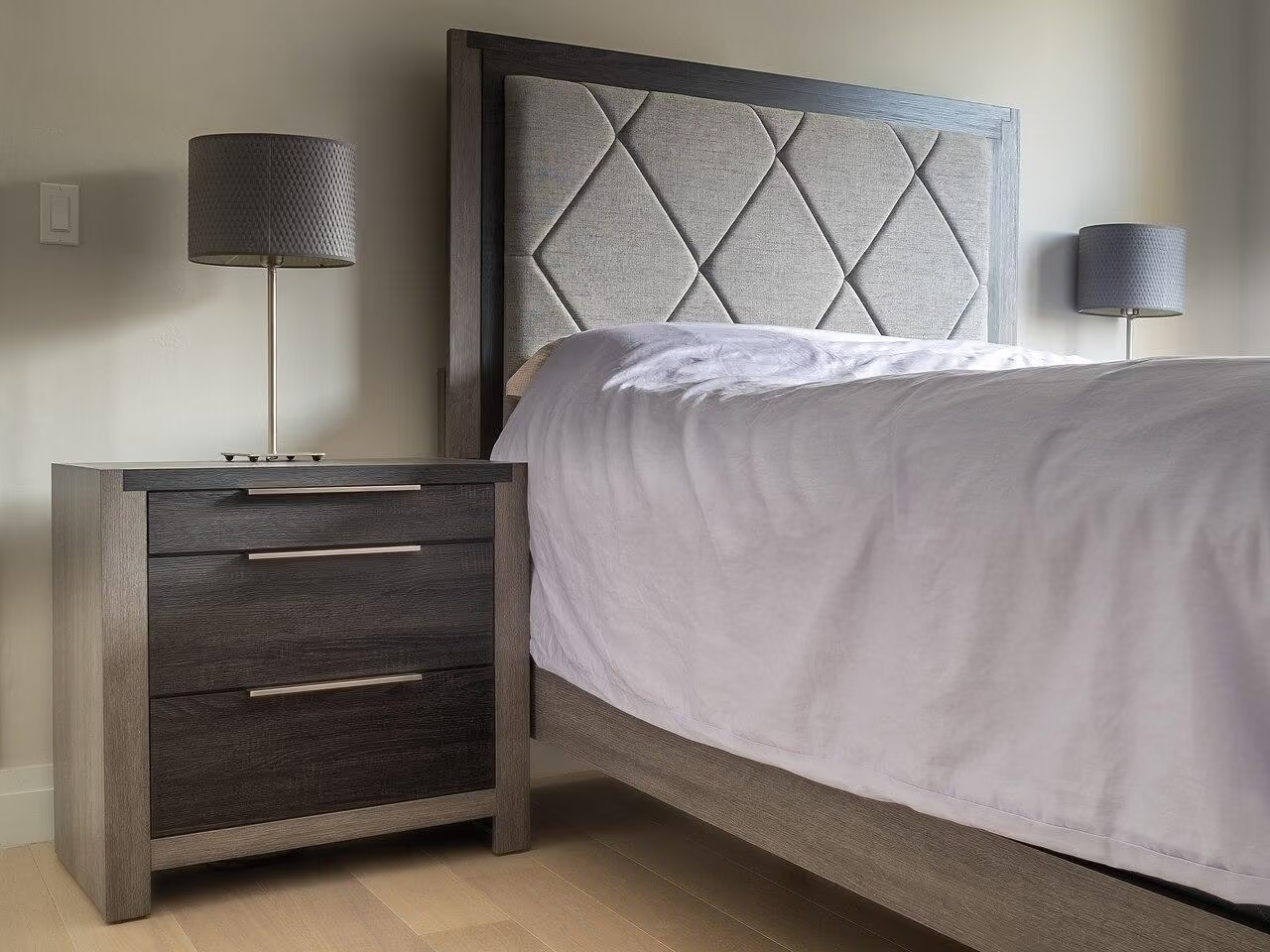
Bedside surfaces should accept water, glasses and a book without being crowded by ornaments. They need not match perfectly, but both used sides of a double bed should have a credible arrangement. A guest sleeping alone may choose either side. Check cable positions and avoid a lamp whose switch is hidden behind a heavy piece of furniture. The lighting should support reading and dressing as well as atmosphere. A soft rose shade is pleasant only if it does not make the room too dim to use.
A visitor's nighttime route should be as legible as the home's main passage. A Hallway That Makes Daily Movement Easier.
Choose comfort without prescribing it
A host cannot predict every temperature or bedding preference. Provide manageable layers rather than a single heavy arrangement, and make spare bedding easy to locate. Choose textiles with a care routine the household can reliably maintain between stays. A washable cover and clear laundering information are more useful than a luxurious fabric that is difficult to refresh. The bed itself deserves a real assessment; a rarely used guest mattress is not automatically comfortable simply because it looks new.
A stable chair can be helpful for dressing or setting down belongings, especially for visitors who prefer to sit while preparing for the day. Test whether the chair is actually usable in the available area. An elegant low accent chair may be less helpful than a straightforward supportive seat. Keep the room adaptable rather than overly personalized to one imagined guest. Warm pink, stone and brown can create a welcoming framework while allowing the visitor’s own belongings to become part of the room during the stay.
Keep the host’s systems discreet and understandable
If the guest room doubles as storage, use closed areas for the household’s possessions and leave the guest’s zone available before arrival. Do not make a visitor sleep beside a work surface full of urgent paperwork or equipment that must remain powered and exposed. Where the room also functions as an office, plan the transition in advance. The bed, chair and storage must work in guest mode without requiring the visitor to move heavy furniture.
Small information can prevent awkwardness. Explain any unusual window operation, heating control or household routine simply. A short personal note may be enough; the room does not need to resemble a hotel with invented service claims. Privacy is also part of hospitality. Make sure the window treatment works after dark and that the door closes properly. If those conditions cannot be provided, describe the arrangement honestly before the guest arrives rather than relying on decorative warmth to compensate for an unexpected lack of privacy. Check that a guest can reach an available socket if charging is expected, with a safe cable position that does not cross the path to the door. This is useful hospitality rather than another decorative amenity.
An office used for guests needs a deliberate transition before someone arrives with luggage. The Guest Room and Office: Giving Both Uses a Fair Share.
Prioritize the improvements a visitor will feel
Spend first on the bed’s actual comfort, useful lighting and clear movement. A luggage surface and empty drawer may improve the stay more than coordinated artwork. Compare purchases by use frequency and longevity. If guests are occasional, portable pieces that serve the home between visits can be sensible, provided their guest function is not compromised. A folding bed or sofa bed should be tried in its sleeping position and checked with the room fully occupied.
The proposal is unsuitable if the available plan cannot meet the expected guest’s access or privacy needs. A different sleeping arrangement may be kinder than insisting that this room will work for everyone. Before arrival, rehearse unpacking, nighttime movement and getting dressed. Clean the room, clear the guest storage and leave controls accessible. In an imagined scene, a visitor finds a clean glass, an available drawer and a lamp exactly where a hand expects it. The room feels thoughtful because the guest can settle independently, while the warmth of the welcome remains personal rather than staged.
Check, record, then decide.
A proposed worksheet for your own observations. Use consistent units for dimensions and keep the conditions with each record.
Arrival with luggage
Where to check From the guest-room door to the intended unpacking surface and empty storage.
- Record
- Use a representative bag; sketch its occupied footprint, open drawers and wardrobe doors, and note where the visitor must move belongings to proceed.
- Read the result
- A welcome includes available space, not merely attractive furniture already filled by the host.
- If it does not work
- Remove excess furniture or host possessions and provide a simpler stable luggage position.
Nighttime independence
Where to check At each usable bed side and along the route to the door after dark.
- Record
- Record lamp-switch reach, obvious main controls, floor obstacles and where a guest's glasses and water can sit with luggage present.
- Read the result
- A first-time visitor should not rely on a phone screen or household knowledge to navigate the room.
- If it does not work
- Simplify controls, relocate obstacles and add an appropriate reachable local light.
Expected guest suitability
Where to check At the bed approach, dressing seat and the room's privacy treatment.
- Record
- Ask the expected guest about relevant access needs; note bed and seat details with units where useful and their own response rather than age-based assumptions.
- Read the result
- A layout usable for one visitor cannot be assumed appropriate for every age or individual requirement.
- If it does not work
- Seek suitable adaptation advice or honestly offer a different sleeping arrangement before arrival.
A practical trial
- Walk the room as a visitor seeing it for the first time, carrying the likely bag and locating empty storage.
- Test window privacy with the room lights on and explain any unusual heating or window operation plainly.
- Prepare clean manageable bedding layers and confirm spares are available without searching through host storage.
Compare the same scope
- Existing guest bed with cleared storage and improved light
- A genuinely usable luggage surface and dressing seat
- More extensive bed or doorway changes for a known need
Cost drivers to discuss: Sleeping-surface comfort and maintenance; Appropriate local lighting and accessible controls; Individual access requirements beyond decorative additions.
Choose another route when: Do not describe the room as universally welcoming when a known guest cannot use its access, sleeping or privacy arrangement appropriately.
The download is a blank record template. Your completed notes remain wherever you choose to keep them; this page has no measurement-submission service.
Sources for this guide
Each reference’s supported point and limits appear beside the relevant passage above. Product documentation applies to the named product, rather than every similar item or the photographed room.
Source text checked November 4, 2026. Specifications can change; confirm the current instructions for the exact item before ordering.
Your questions, considered.
What should I remove from a guest room first?
Clear the guest's storage and circulation route before adding amenities. Excess cushions and the host's stored possessions can create nightly work or leave no place to unpack.
How do I check whether an older relative can use the room?
Discuss that person's needs and rehearse the actual movement, bed approach and controls. Seek appropriate advice for required adaptations. General styling ideas cannot establish individual accessibility.
Can a guest room also hold household storage?
Yes, if the guest's area remains clearly available and private belongings are handled appropriately. Close or separate the host's storage, leave usable guest capacity, and prepare the room before arrival.
About this guide: written with AI assistance for TIANLICHUJU. These are general design ideas, not a measured survey or a completed client project. Any domestic vignette is fictional. Confirm product specifications, site dimensions and local requirements before construction; use qualified professionals for regulated work. Read our editorial approach or suggest a correction.