The decision, with conditions
- Choose this route when
- Choose a shared guest-office arrangement when the daily workstation remains suitable and the guest layout includes a clear route, reachable light and genuine space for belongings.
- Use the alternative when
- If the opening bed requires carrying furniture into the hallway, compare a different bed form or reduce secondary storage before treating the room as a successful dual-purpose solution.
- Stop or change the plan when
- Do not order fitted work while either mode depends on an unassigned object having nowhere to go. Frequent changeovers that damage the working setup call for a different allocation of room functions.
Compare the practical options
| Configuration | What must work | Common hidden conflict |
|---|---|---|
| Normal working day | Desk, chair, equipment and useful light | A decorative chair chosen only to preserve bedroom styling |
| Guest sleeping arrangement | Open bed, luggage and clear door route | The bed fits only while the chair blocks another room |
| Work-to-guest transition | Closing storage and prepared bedding | Confidential work remains exposed or equipment has no safe home |
| Return to office | Manageable bedding and furniture storage | A complicated reset disrupts the following workday |
Give the daily use priority without making the guest an afterthought
Accept that work mode and guest mode each consume real space. A hidden mattress does not remove its open footprint, and a compact desk still needs an occupied chair and equipment. Decide which use happens most often, then test the less frequent mode completely so the guest does not inherit the unresolved furniture problem.
Begin with the frequency and duration of each use. Someone working there every weekday should not accept an uncomfortable chair solely to preserve a hotel-like appearance. Equally, a guest staying for a week should not sleep among exposed work equipment with nowhere for a bag. The brief may justify a permanent desk and convertible bed, or a real bed with a smaller office arrangement. The answer depends on the room and the people, not on a universal preference for multifunctional furniture.
Draw two complete floor plans
Draw work mode with the occupied chair, open drawers and active equipment; draw guest mode with the fully open bed, a bag and the route to the door. Assign every moved object a real destination on the second drawing. Then reverse the sequence and check that the worker’s setup can return without rebuilding cable arrangements or losing current documents. If the same chair has no home in either drawing, solve that conflict before ordering the bed rather than making the guest manage it at bedtime.
Test the conversion with temporary outlines before buying. If a sofa bed is proposed, use its actual open dimensions rather than an approximate rectangle. Consider who operates it and where bedding goes during the day. The mechanism should be manageable for the people expected to use it, and the sleeping surface deserves a real trial. A convertible label is not evidence of comfort. If the room cannot support the chosen bed when open, a different arrangement is needed rather than a smaller decorative side table squeezed into the remaining gap.
Studio zoning offers another way to think about distinct uses within one volume. A Studio Apartment with Two Distinct Evening Zones.
Protect the quality of the working day
The desk should support the actual job. List the equipment, documents and surfaces needed, then test the working position. Good task light, suitable seating and accessible power are more valuable than perfect visual symmetry. A compact desk may be sufficient for occasional laptop use but unsuitable for equipment-heavy work. General interior suggestions should not be treated as an individual ergonomic specification.
Give work materials a closing home before a guest arrives. A cabinet or drawer can conceal active papers and devices, but check equipment ventilation and storage guidance. Do not leave sensitive documents exposed in the room. Plan cable routes so the bed can open without pulling connections or trapping cords. If the worker needs to continue using the office during a guest’s stay, discuss that arrangement explicitly beforehand. A room cannot offer genuine guest privacy while remaining an unannounced shared workplace.
Closing office furniture should be tested as a working desk before its concealed appearance is judged. The Disappearing Desk in a Living Room.
Make guest mode feel intentional
The guest needs a reachable lamp, a surface for water and glasses, and some empty storage. Those functions should not depend on moving a printer or balancing a cup on work equipment. A folding bedside surface may be suitable if stable and easy to use, but a permanent modest shelf can be more welcoming where the room allows it. Check the route after dark with luggage present.
Provide window treatment that works for privacy and the expected sleeping conditions. The office may have been comfortable with daylight glare controlled only at the desk, while a guest needs a different level of screening. Bedding should be clean, easy to retrieve and stored dry when not in use. Avoid a scheme that requires the guest to assemble the room from several hidden components without explanation. A simple prepared arrangement is more hospitable than an ingenious system whose operation feels like a puzzle.
Use a shared visual language rather than disguising either function
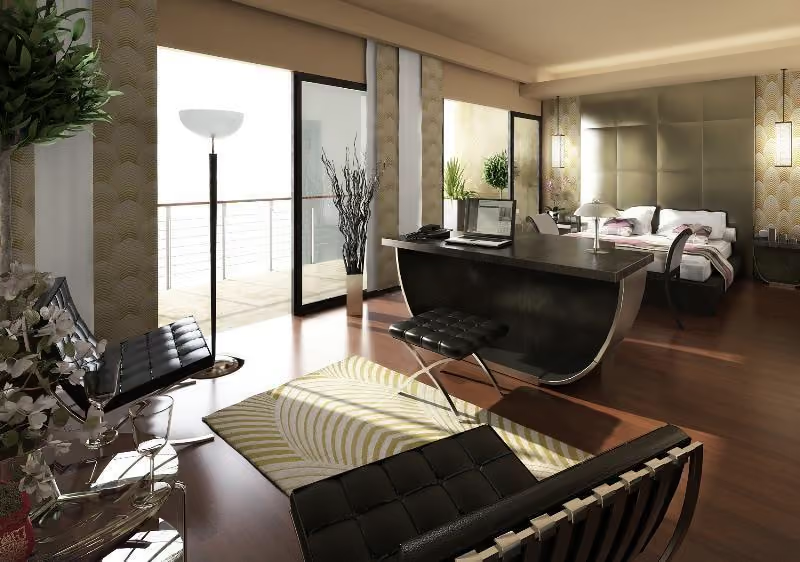
Dusty rose, stone and walnut can connect desk cabinetry, bedding and curtains into one calm room. The office need not look corporate, and the bed need not look like an ornamental sofa when not in use. Let useful objects be recognizable. A well-made desk can sit comfortably beside a guest bed if their proportions and finishes relate. Concealment is valuable when it reduces clutter, not when it makes everyday operation awkward.
Keep display limited to places that do not compete with either function. A guest should not have to relocate a collection before unpacking, and the worker should not clear decorative cushions from the chair each morning. Materials should tolerate repeated conversion and cleaning. Inspect hinges, bed mechanisms and moving parts according to the product guidance. Multifunctional furniture experiences more handling than static furniture, so maintenance and repairability deserve attention when comparing products and costs.
Rehearse the changeover from start to finish
Time the actual transition. Store work, open the bed, arrange bedding, place the guest lamp and make room for luggage. Then reverse it. Notice which object has no home in either mode. If the process is too complicated, simplify the scheme before investing in more cabinetry. A guest room that is easy to prepare is more likely to be used generously, while an office that is easy to restore supports the following working day.
Check the changeover again after equipment is added or replaced. A new monitor or printer may alter the storage and power arrangement, while a different mattress topper may need more space than the original plan allowed. Keep confidential work materials secured appropriately, and do not leave a guest responsible for moving or safeguarding them. The room should feel prepared before arrival, not like an office whose working contents have been hurriedly pushed aside.
Spend first on daily work comfort and a credible sleeping surface. Compare a high-quality convertible bed with simpler alternatives, including the complete storage and installation needs. This plan is unsuitable if guest mode blocks essential movement or if the job’s privacy requirements cannot coexist with hosting. The final checklist includes both floor plans, chair position, power, bedding storage, guest lighting and privacy. In an imagined weekend, the work cabinet closes and a friend finds a prepared bed rather than the remains of a working week. Both uses have been given a fair share of the room.
Check, record, then decide.
A proposed worksheet for your own observations. Use consistent units for dimensions and keep the conditions with each record.
Complete work configuration
Where to check At the desk with chair occupied, equipment operating appropriately and storage in use.
- Record
- Draw the chair's movement, open drawers and actual equipment; measure useful surface and remaining routes with units, noting user discomfort or displaced materials.
- Read the result
- Daily work deserves a functioning position rather than a decorative chair selected to resemble a guest suite.
- If it does not work
- Improve the workstation or reconsider the room's split before adding concealment.
Complete guest configuration
Where to check In the same room with the exact bed fully open and representative luggage present.
- Record
- Mark mattress, suitcase, bedside surface and route to the door; identify every item moved and where it must live during the stay.
- Read the result
- A sofa's closed dimensions do not establish whether guests can sleep, unpack and move comfortably.
- If it does not work
- Choose a different bed arrangement or reduce conflicting furniture instead of exporting obstacles to the hallway.
Changeover and privacy
Where to check From the working setup through storage of active work to the prepared sleeping room.
- Record
- List conversion steps, bedding destinations, confidential materials and equipment conditions; note any need for unannounced office access during a guest's stay.
- Read the result
- Hosting is credible only when the guest is not responsible for safeguarding or rearranging the office.
- If it does not work
- Provide suitable closing storage and agree access beforehand, or use another hosting arrangement.
A practical trial
- Test the actual sleeping surface and opening mechanism rather than relying on a convertible furniture label.
- Rehearse both directions of the transition, including the next workday's setup and where bedding dries or stores.
- Check guest light, window privacy and empty storage before considering decorative finishing purchases.
Compare the same scope
- Permanent desk with an appropriately tested convertible bed
- A real bed with a smaller credible office arrangement
- A different room allocation when privacy or access conflicts persist
Cost drivers to discuss: Daily chair and work-surface quality; Sleeping comfort, mechanism reliability and bedding storage; Qualified power alterations and closing storage for real equipment.
Choose another route when: The shared room is unsuitable if guest mode blocks essential movement or work confidentiality and ongoing use cannot coexist with hosting.
The download is a blank record template. Your completed notes remain wherever you choose to keep them; this page has no measurement-submission service.
Sources for this guide
Each reference’s supported point and limits appear beside the relevant passage above. Product documentation applies to the named product, rather than every similar item or the photographed room.
Source text checked November 4, 2026. Specifications can change; confirm the current instructions for the exact item before ordering.
Your questions, considered.
Should daily office use take priority over guest-room styling?
It should receive credible work comfort because it is frequent, while guests still need a genuine sleeping arrangement. Decide using the actual frequency and duration of each use rather than appearance alone.
How do I check whether a sofa bed fits?
Use its exact open dimensions, then include luggage, bedside access and the desk chair. Trial the complete guest configuration; the closed sofa footprint does not establish that the room works.
Where should work equipment go during a guest stay?
Provide closing storage that fits the equipment and follows its safety and ventilation guidance. Secure confidential material appropriately and agree any ongoing office access before hosting, rather than surprising the guest.
About this guide: written with AI assistance for TIANLICHUJU. These are general design ideas, not a measured survey or a completed client project. Any domestic vignette is fictional. Confirm product specifications, site dimensions and local requirements before construction; use qualified professionals for regulated work. Read our editorial approach or suggest a correction.