The decision, with conditions
- Choose this route when
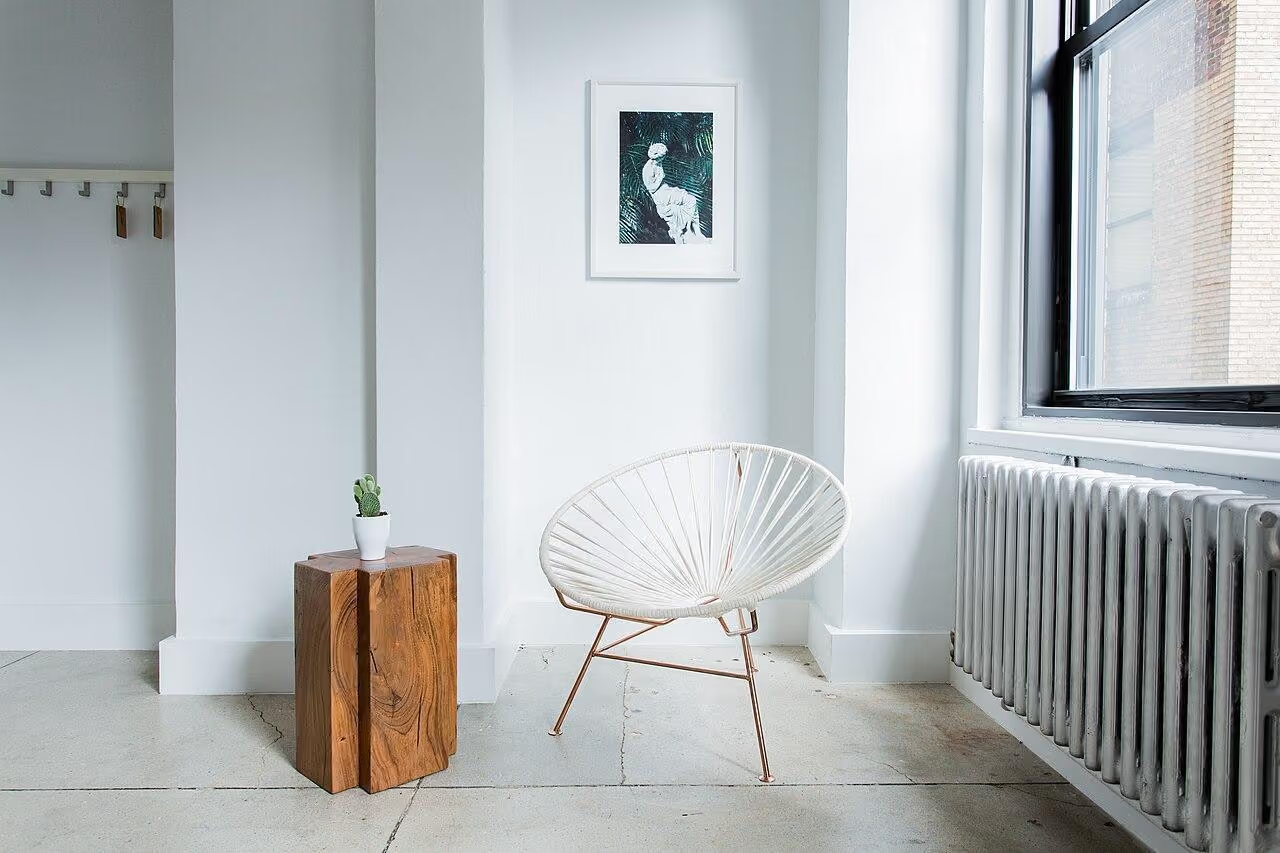
- Keep the radiator visible when editing nearby furniture and wall decoration can provide a coherent composition without obstructing its controls, airflow or service access.
- Use the alternative when
- Consider a cover only after the actual equipment requirements and maintainable access have been resolved for that design, rather than treating a perforated box as automatically suitable.
- Stop or change the plan when
- Reject any concealment that conflicts with the radiator's documented operation or requires inaccessible valves, unstable materials or difficult routine maintenance.
Compare the practical options
| Visual response | Potential benefit | Required check |
|---|---|---|
| Edit surrounding furniture | Calms a crowded wall without changing the equipment | Useful circulation and access remain |
| Adjust nearby color | Connects the wall composition | Any radiator coating is appropriate to the actual surface |
| Add a custom cover | May provide a more integrated appearance | Qualified consideration of system requirements and serviceability |
| Place a seat nearby | Uses a potentially comfortable part of the room | Actual heating-season comfort and required equipment conditions |
Treat the radiator as a service with a visible presence
Identify the radiator and its controls before treating the wall as a decorative problem. Mark the space needed for ordinary operation, cleaning and servicing, then place furniture outside those requirements. Compare that clear arrangement with the proposed cover. Keeping the equipment visible may be the more resolved design when concealment would add a maintenance obstacle or compromise the service the room needs.
Identify the heating system and obtain relevant information from the manufacturer, installer or a qualified professional. This article does not specify technical clearances or approve a custom cover. Those details depend on the equipment and setting. The design question is how to make the room feel composed while respecting a working service. In many homes, the best answer is a furniture adjustment, a simpler wall composition or an appropriate finish, with any alteration assessed for suitability.
Map access before mapping decoration
Locate valves, controls and points that may need maintenance. A sofa placed directly in front can make routine adjustment awkward even if it appears to fit. A cabinet beside the radiator may block access from the side. Draw the furniture with doors and drawers open, and consider how a technician would reach the equipment. Service access is part of the room’s long-term usability, not an inconvenience to solve after installation.
Check the requirements for nearby curtains, textiles and furniture through the relevant product and heating guidance. Do not drape fabric over equipment or assume that a decorative shelf can be installed at any distance. If a window seat or storage unit is proposed around the radiator, have airflow, access, materials and any other applicable conditions resolved professionally. A beautiful joinery elevation is not a technical assessment. If the detail cannot be made suitable, use a different furniture position rather than relying on the cover to conceal an unresolved conflict.
A window seat above heating equipment needs the same early access and service assessment. The Window Seat as a Small Home’s Second Living Room.
Compose the wall as a whole
Stand at the main entrance to the room and look at the entire wall. The radiator may feel visually awkward because several unrelated objects crowd around it: a narrow cabinet, a small picture, trailing cables and a curtain that stops at an uncertain height. Removing or relocating those elements can make the equipment feel more deliberate without altering it. A single useful adjacent piece often provides a calmer relationship than several decorative attempts to disguise the shape.
Blush, warm gray and existing metal finishes can work together if the palette is considered at room scale. Any repainting of the radiator itself must use appropriate products and preparation, with relevant guidance followed. Do not assume ordinary wall paint is suitable for every heated surface or finish. It may be preferable to leave the equipment unchanged and adjust the surrounding wall color. The goal is coherence, not forcing every functional object to disappear into one uniform surface.
Existing metal details can be integrated through a restrained finish relationship instead of wholesale replacement. Brass Details That Feel Warm Rather Than Showy.
Be cautious about covers that promise storage
Draw the actual cover as a service assembly, including removable sections and the route to every control. Ask the responsible heating professional to evaluate those details with the installed equipment. Record unresolved requirements before approving its appearance. If the assembly cannot be made appropriately accessible, edit the surrounding furniture and wall instead of using an attractive enclosure to postpone the problem.
The cover also needs to remain removable or accessible in the way the system requires. A fixed decorative front that must be dismantled for routine work can create avoidable cost. Ask how the equipment will be inspected, cleaned and serviced. The enclosure’s material, openings and fixing need suitable technical consideration. If the main aim is a landing surface, an independent table elsewhere may be a simpler and more useful solution than combining that function with heating equipment. Two apparently efficient uses do not always make a good shared detail.
Let furniture respect comfort as well as the wall
The favorite chair should not be placed where the resident experiences uncomfortable heat merely because the wall looks balanced. Test the actual sitting position during the heating season where possible. Similarly, do not push the sofa into a poor orientation solely to expose the radiator. The room should support conversation, reading and movement while the heating system works as intended.
An adjacent lamp can help the wall feel inhabited, provided its placement and materials are suitable and its cord remains safely routed. Avoid turning the radiator zone into a cluster of heat-sensitive objects. Keep the main walking route clear and do not use the service area as an overflow place for bags or drying belongings unless the equipment guidance specifically supports that use. A room feels more considered when functional boundaries are clear rather than blurred by decorative convenience.
Compare editing with custom construction
First try the least invasive version: move nearby furniture, simplify the wall and review the palette. This can reveal whether the radiator was truly the problem or merely one element in a crowded composition. If a cover is still desired, obtain a properly considered proposal and compare the complete cost, including access and any necessary professional work. A low-cost decorative enclosure may become poor value if it complicates maintenance or needs replacement.
Review the detail during the season of use
A summer room assessment may not reveal how the chosen seat feels beside an operating radiator. Review the arrangement when the system is normally used, without making unauthorized changes to its operation. Ask whether controls remain convenient and whether nearby belongings are gradually encroaching on the intended clear area. Keep the manufacturer’s information with the household’s maintenance records. If a future radiator replacement has different requirements or dimensions, the surrounding furniture and any cover need to be reconsidered. A fitted decorative solution should not make ordinary service work unnecessarily difficult or expensive.
This approach is unsuitable when visual changes conflict with the heating system’s requirements. Keep technical information available and revisit the arrangement if the equipment changes. Cleaning should remain possible without moving heavy furniture or reaching through a delicate display. In an imagined winter evening, the room feels warm and composed, and nobody has to move a cabinet to reach a control. The radiator remains a working part of the home, integrated through restraint and informed planning rather than hidden behind a promise the detail cannot support.
Check, record, then decide.
A proposed worksheet for your own observations. Use consistent units for dimensions and keep the conditions with each record.
Heating service information
Where to check At the radiator, valves and points identified for operation and maintenance.
- Record
- Identify the actual system and collect relevant maker or installer guidance; draw controls and unresolved service requirements before locating furniture or designing a cover.
- Read the result
- A decorative enclosure cannot establish its own suitability for unknown heating equipment.
- If it does not work
- Keep the service visible and accessible until an appropriate technical proposal is resolved.
Surrounding furniture in use
Where to check At the nearby chair, cabinet doors, curtain movement and actual walking route.
- Record
- Record useful furniture positions with units, access conflicts and the resident's comfort during normal heating-season use; include open doors rather than a closed elevation.
- Read the result
- Wall symmetry is not worthwhile if controls become awkward or the preferred seat experiences uncomfortable conditions.
- If it does not work
- Rearrange adjacent furniture and simplify the wall before paying for a cover.
Cover operation and care
Where to check At the proposed enclosure's openings, fixing and removable service sections.
- Record
- Ask how inspection, cleaning and future replacement occur; list intended objects on any top surface and unresolved material or equipment compatibility questions.
- Read the result
- An attractive top does not become ordinary storage automatically, and fixed concealment can add maintenance cost.
- If it does not work
- Use a separate table elsewhere or redesign the cover with competent heating consideration.
A practical trial
- Try the wall without its incidental clutter to determine whether the radiator itself is the visual problem.
- Compare retained finishes with any proposed appropriate coating; do not assume ordinary wall paint suits the equipment.
- Review the arrangement when the heating system operates normally and again if the radiator or controls are replaced.
Compare the same scope
- Furniture editing and a calmer surrounding wall
- An appropriate finish change without enclosure
- A technically considered cover with maintainable service access
Cost drivers to discuss: Existing equipment requirements and professional input; Cover fabrication, suitable materials and access details; Future servicing, cleaning and replacement flexibility.
Choose another route when: Reject any visual treatment that conflicts with the actual heating system's operation, materials, access or maintenance requirements.
The download is a blank record template. Your completed notes remain wherever you choose to keep them; this page has no measurement-submission service.
Sources for this guide
Each reference’s supported point and limits appear beside the relevant passage above. Product documentation applies to the named product, rather than every similar item or the photographed room.
Source text checked November 4, 2026. Specifications can change; confirm the current instructions for the exact item before ordering.
Your questions, considered.
Is a radiator cover always the best way to improve the wall?
No. A cover can add bulk and complicate access. Try simplifying nearby furniture and the wall composition first. If a cover is still wanted, have its technical suitability properly resolved.
Can I use a radiator-cover top as ordinary storage?
Do not assume so. Heat, materials and equipment requirements may make particular objects unsuitable. A separate table elsewhere may provide a simpler useful landing surface without combining conflicting functions.
When should I review furniture placed near a radiator?
Check during normal heating-season use where possible, including seated comfort, controls and maintenance access. Revisit the arrangement if the heating equipment changes or belongings begin encroaching on its intended area.
About this guide: written with AI assistance for TIANLICHUJU. These are general design ideas, not a measured survey or a completed client project. Any domestic vignette is fictional. Confirm product specifications, site dimensions and local requirements before construction; use qualified professionals for regulated work. Read our editorial approach or suggest a correction.