The decision, with conditions
- Choose this route when
- Choose the cabinet after confirming its internal job, exact construction, and full front-area effect beside actual seating and flooring; let surrounding pieces provide a deliberate lighter or quieter counterpoint.
- Use the alternative when
- Keep a smaller retained cabinet, reduce another dark element, or use different supporting finishes when several near-matching timber pieces compete.
- Stop or change the plan when
- Stop restoration or equipment adaptation when the finish, veneer condition, access, or intended loading is uncertain and the proposed work cannot be reliably specified.
Compare the practical options
| Cabinet question | Useful check | Design consequence |
|---|---|---|
| Will it feel too heavy? | Mock up the full front area with brown paper | Compare surrounding pale space before adding more dark units |
| What does walnut describe? | Confirm solid timber, veneer, or another construction | Assess edges and restoration possibilities accordingly |
| Will equipment work inside? | Check product access, ventilation, and connectors | Plan removable backs or another appropriate service route |
| Can the finish be maintained? | Read care information and inspect existing damage | Choose informed repair rather than indiscriminate sanding |
Let one walnut piece establish the room
A long walnut cabinet can give a living room the warm horizontal emphasis associated with mid-century modern interiors. Its usefulness is not limited to a period-inspired scheme: it can hold books, equipment, and everyday objects while making the main wall easier to read. The risk in a modest room is not walnut itself, but the accumulation of several dark, substantial pieces with no clear hierarchy.
Assign the cabinet its real storage role before selecting its silhouette. Books, textiles, and equipment require different openings and access; measure those needs before comparing walnut tones.
Compare surface area rather than furniture count
Compare the complete cabinet front and depth with the occupied room. One continuous low piece may simplify a wall, but a deep run in the wrong location can still narrow everyday movement.
Use brown paper or fabric to represent the intended front area. View it from the entrance and the main seat at different times of day. This reveals whether the room has enough lighter surrounding surface to support the walnut. A tiny finish sample can establish color, but it cannot communicate the visual weight of an entire cabinet.
Know what the material description means
Walnut may refer to solid timber, veneer over a substrate, or an oak or other surface stained to a walnut-like tone. These are not interchangeable constructions. Ask which parts use which material, how edges are made, and whether the stated finish applies to the inside as well as the visible front. The answer affects weight, movement, and repair options.
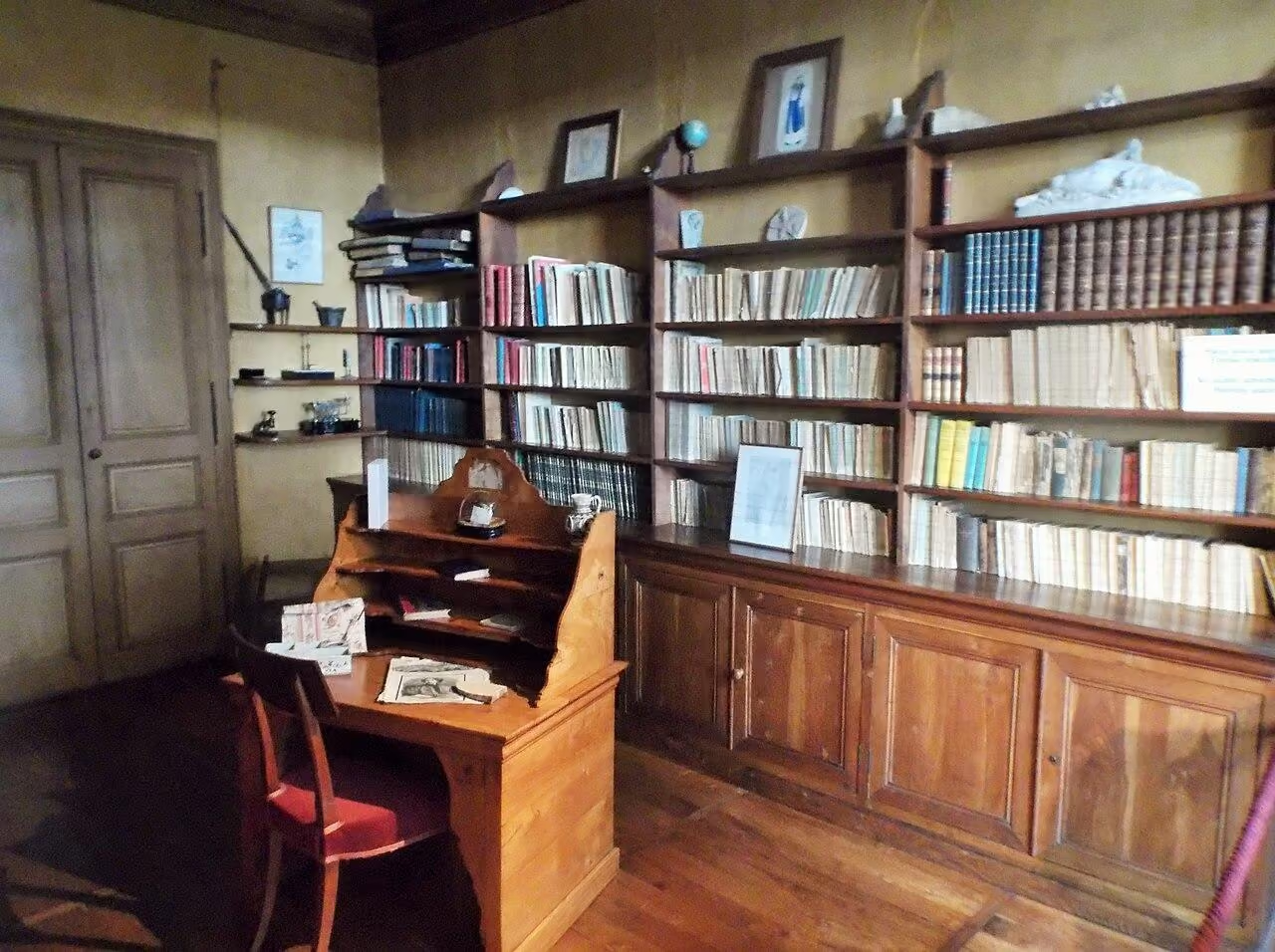
Veneer is not automatically inferior to solid wood. It can use timber efficiently and provide a stable large surface, but its thickness and condition affect restoration. An old veneer should not be aggressively sanded without understanding the construction. If buying vintage furniture, inspect lifting edges, missing areas, water damage, and earlier repairs. Seek competent restoration advice when the condition is uncertain.
If an older cabinet needs a sound repair before use, compare A wabi-sabi living room with a sound repaired centerpiece.
Balance the cabinet with seating, not more cabinetry
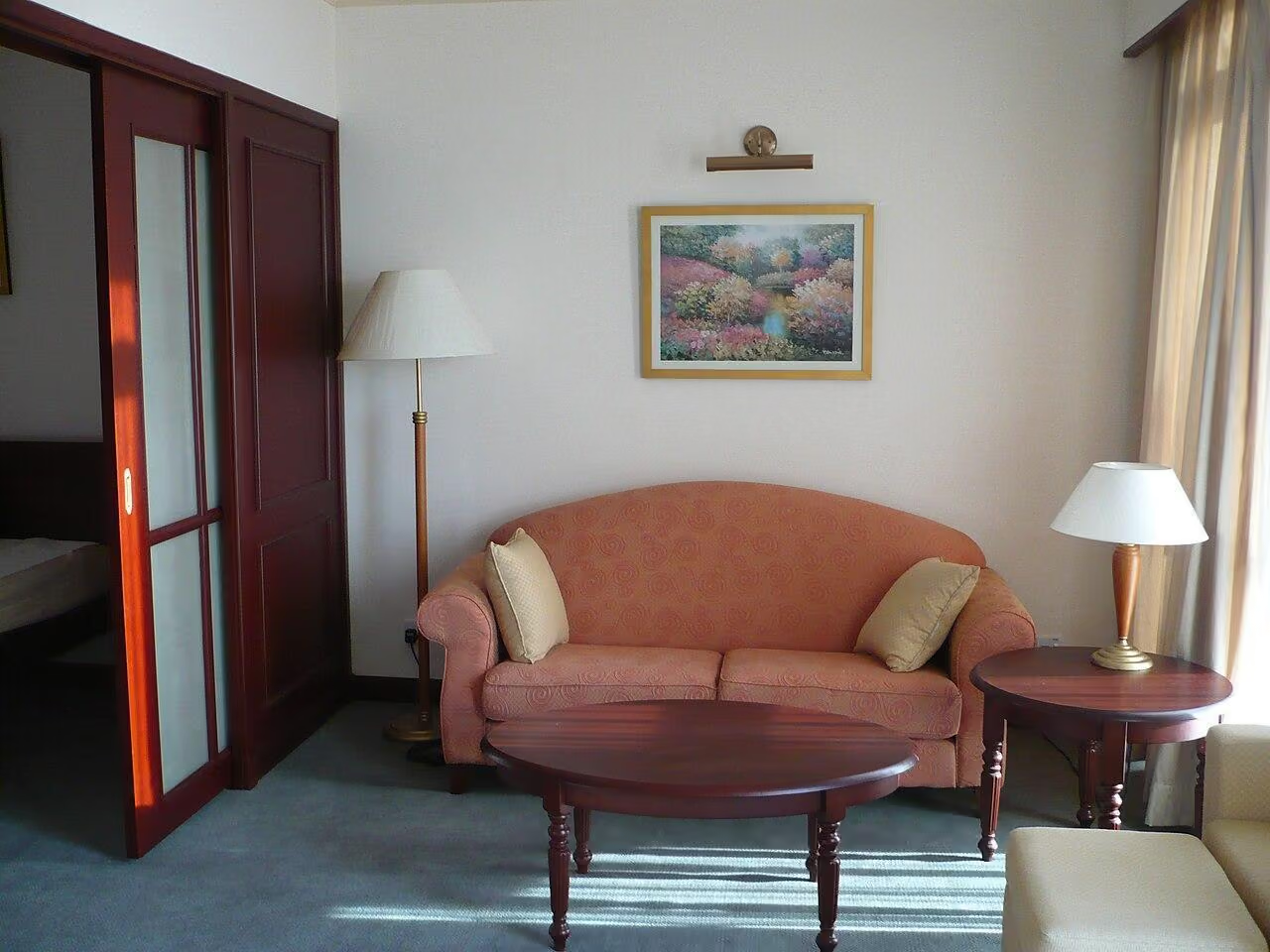
A lighter upholstered sofa or a chair with visible space beneath it can keep the cabinet from becoming part of an unbroken dark band. The relationship need not reproduce an entire mid-century furniture set. One angled chair, a plain rug, and a small table can make the room feel sociable while letting the timber remain the lead material.
Avoid choosing every secondary timber piece in an attempted exact match. Different products and ages rarely agree perfectly. A deliberately lighter table or a painted side surface may be more coherent than several almost-matching browns. Repeat a shape, fabric color, or modest dark detail instead. The room needs relationships, not a catalog page.
For an inherited dark piece beside newer seating, explore Combining an inherited cabinet with a contemporary sofa.
Set the height through real use
A low top can provide a landing place, but the storage beneath must remain accessible. Test bending, opening doors, and taking out heavy objects. A very low cabinet may suit lightweight media equipment while being inconvenient for frequently used cookware or craft materials. The attractive silhouette does not remove those physical differences.
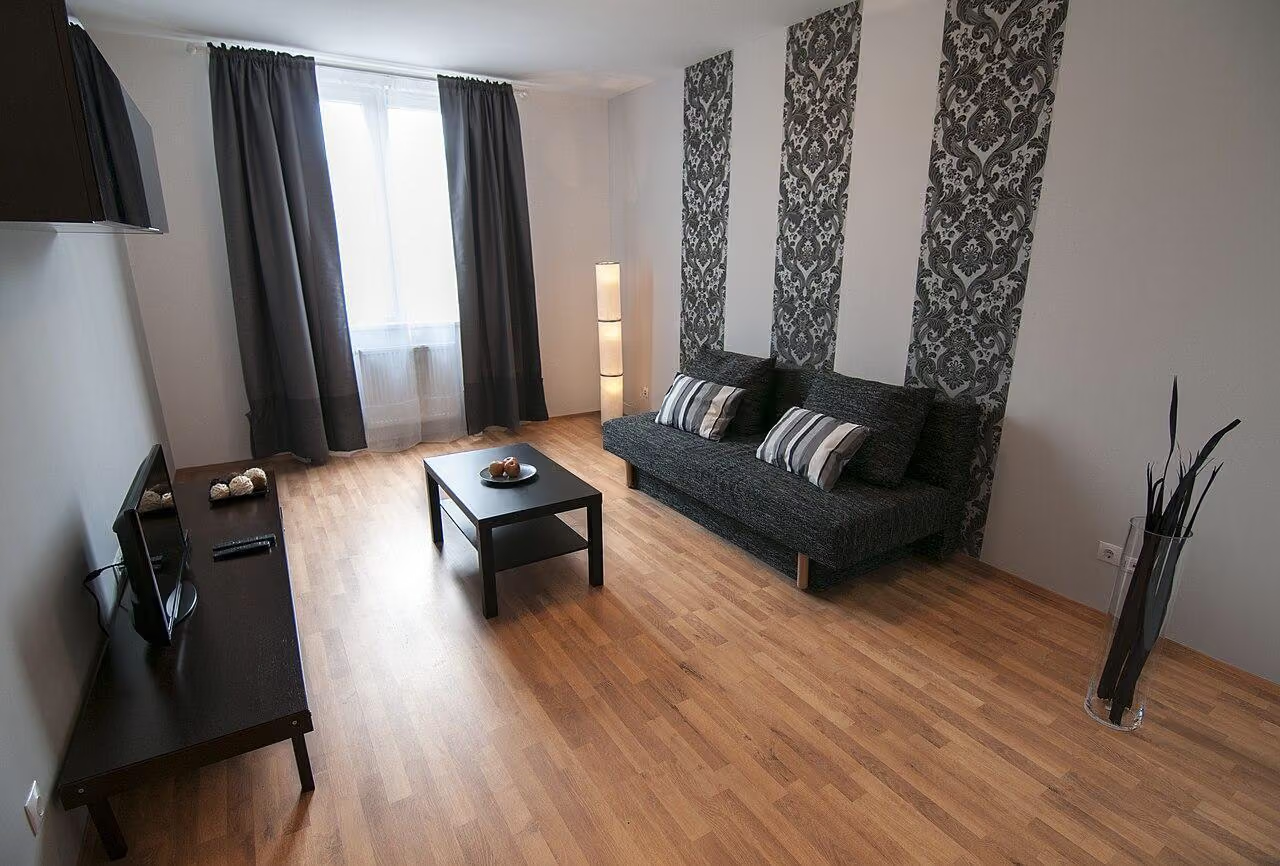
If a television is involved, determine its position from the seated viewing experience and product guidance rather than assuming the cabinet top establishes the correct height. Include cables, ventilation, remotes, and access to power. Equipment should not overheat in a closed compartment or require a cabinet to be moved whenever a connection changes. Ask for a practical cable route before commissioning the back panel.
Treat the upper wall as part of the decision
The wall above a long cabinet can remain quiet, hold one artwork, or support a limited grouping. Do not fill it immediately because it appears unfinished. The empty field may be what lets the cabinet and seating breathe. Live with the arrangement before buying additional shelves.
If artwork is added, check reflections from lamps and the window. A large glossy frame can compete with a television or create another bright rectangle. Position it in relation to the whole cabinet rather than centering several unrelated objects separately. The result should look intentional from the occupied room, not only from a straight-on photograph.
Light the timber gently
Walnut can look rich under a warm shaded lamp, but a strong spotlight may exaggerate scratches, gloss differences, or an orange cast. Test the actual finish under the intended source. A lamp beside a useful seat may provide a better evening atmosphere than a decorative light directed solely at the cabinet.
Keep enough light on the room's other activities. If the cabinet wall becomes the only illuminated area, the living room may feel like a display rather than a place to stay. Reading, conversation, and walking need their own support. An attractive grain pattern should not become an excuse to underlight the people using the room.
Plan maintenance without promising invisibility
Ask about permitted cleaners, sunlight exposure, and the use of protective pads beneath lamps or objects. Finishes vary, and a general statement about walnut cannot substitute for the manufacturer's instructions. If a vintage finish is uncertain, obtain advice before applying a household polish or oil. A well-meant treatment can complicate future restoration.
Consider how a damaged door, runner, hinge, or top would be repaired. Standard hardware can help, but only when the surrounding construction permits replacement. Keep photographs and measurements of fittings. For a new piece, ask whether spare finish material or replacement fronts are available. Expect natural variation rather than a guarantee that a later panel will be visually identical.
Make the final choice in the occupied room
Compare the full installed cost with the value of retaining an existing cabinet. Delivery, access through stairs, restoration, and adaptation can change the calculation. A beautiful vintage bargain is not necessarily inexpensive once structurally repaired and transported. A new piece is not necessarily more durable simply because its surface is unmarked.
Before ordering, confirm the inventory, front-area mockup, occupied route, equipment access, material construction, and maintenance method. In an imagined evening, a record and a book share the cabinet while the seating supports conversation. The warm timber gives the room a center, but it does not demand attention from every other object. That balance is more lasting than a room filled with recognizable silhouettes.
Check, record, then decide.
A proposed worksheet for your own observations. Use consistent units for dimensions and keep the conditions with each record.
Full walnut front area
Where to check On the intended wall, viewed from the entrance and the main occupied seat.
- Record
- Use paper representing the cabinet's complete width and height in centimeters; note daylight, evening light, and surrounding dark furniture.
- Read the result
- The mockup compares visual mass, not actual timber color, craftsmanship, or a measurable improvement in room size.
- If it does not work
- Choose a shorter or lower piece, lighten supporting furniture, or leave more wall clear rather than adding matching dark cabinets.
Interior and connector fit
Where to check Inside the actual cabinet opening or a dimensioned representation, including hinges and the back panel.
- Record
- Measure stored objects and connectors in centimeters; list equipment access, cable passage, and product ventilation requirements separately.
- Read the result
- A box fitting inside does not prove that an electronic device can operate in the closed compartment.
- If it does not work
- Give devices another appropriate location or specify a documented removable back and access arrangement before modifying timber.
Material and finish condition
Where to check At door edges, top corners, veneer joints, hardware, and areas exposed to the window.
- Record
- Photograph lifting, water marks, repairs, and gloss differences; ask which parts are solid timber, veneer, or another construction.
- Read the result
- Visible clues can frame restoration questions but cannot establish veneer thickness, hidden damage, or a safe sanding method.
- If it does not work
- Obtain a condition-based restoration scope or choose a different piece when the intended work cannot be reliably described.
A practical trial
- Place large sofa samples beside the cabinet rather than matching from a phone image.
- Open the loaded doors with the seating and walking route in use.
- Ask how a runner, hinge, and damaged front could be renewed independently.
Compare the same scope
- Exact timber construction and restored condition
- Clear storage dimensions and equipment access
- Delivery, finish care, hardware, and repair scope
Cost drivers to discuss: Veneer repair or uncertain prior coatings; Transport of a long assembled cabinet; Custom cable and removable-back work.
Choose another route when: A cabinet is unsuitable for enclosed equipment when its construction cannot provide the relevant product access and ventilation without unacceptable alteration.
The download is a blank record template. Your completed notes remain wherever you choose to keep them; this page has no measurement-submission service.
Sources for this guide
Each reference’s supported point and limits appear beside the relevant passage above. Product documentation applies to the named product, rather than every similar item or the photographed room.
Source text checked November 4, 2026. Specifications can change; confirm the current instructions for the exact item before ordering.
Your questions, considered.
How can I tell whether a walnut cabinet will dominate?
Represent its entire front and footprint in the room, then view it from the entrance and main seat. A finish swatch cannot communicate the visual mass of a full cabinet.
Is walnut veneer automatically worse than solid wood?
No. Construction, condition, veneer thickness, edges, and repair options matter. Ask what each part is made from before deciding how it can be used or restored.
Should every timber piece match the walnut cabinet?
Not necessarily. A lighter table, painted surface, or related textile can provide a deliberate contrast. Several almost-matching browns may be less coherent than an acknowledged difference.
About this guide: written with AI assistance for TIANLICHUJU. These are general design ideas, not a measured survey or a completed client project. Any domestic vignette is fictional. Confirm product specifications, site dimensions and local requirements before construction; use qualified professionals for regulated work. Read our editorial approach or suggest a correction.