The decision, with conditions
- Choose this route when
- Choose a layered arrangement when the main route stays clear, useful tables remain available, and one leading pattern gives smaller groups a legible background.
- Use the alternative when
- Rotate meaningful textiles and objects from protected storage when showing everything at once crowds the room or adds more care than the household wants.
- Stop or change the plan when
- Stop adding layers when chairs cannot be used comfortably, plants or cloth obstruct movement, or another purchase merely imitates an unsupported story of travel and craft.
Compare the practical options
| Layer that needs editing | Practical boundary | What to preserve |
|---|---|---|
| Baskets, plants, and trailing cloth | One clear entrance-to-seat route | Meaningful objects relocated rather than automatically discarded |
| Several strong textiles | A leading pattern with quieter supporting surfaces | Color relationships without equal competition |
| Small collected objects | A grouped tray or shelf with breathing room | A reachable surface for cups and books |
| An expanding collection | A reserve and rotation system | Personal associations without endless new shelving |
Make abundance a choice rather than an obstacle
A bohemian living room can feel personal through books, woven textiles, handmade objects, and pieces gathered over time. Its appeal comes from visible associations rather than obedience to one furniture period. The challenge is to preserve that abundance without turning every surface and route into storage. A room can be richly layered and still give a person a clear place to walk, sit, and put down a cup.
Begin with objects the household actually values. Keep known maker or origin information accurate, then decide where each useful display can sit without taking over the route or landing surfaces.
Draw the route before arranging the collection
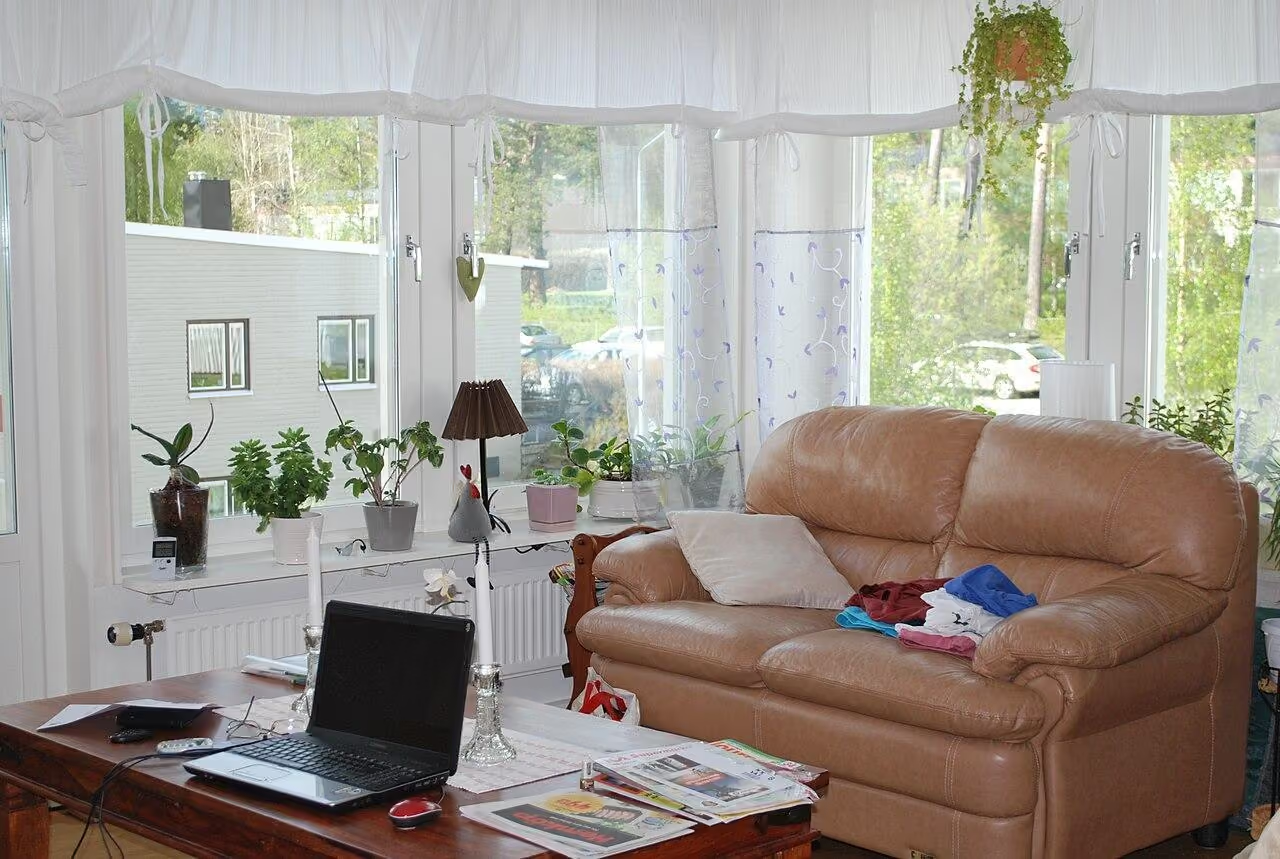
Trace the paths from the entrance to seating, windows, doors, and frequently used storage. Walk them carrying something ordinary, such as laundry or a tray. Note where a small stool, basket, trailing cloth, or plant pot narrows the movement. These are not necessarily objects to discard; they may simply need a different position.
Keep the main route visually understandable as well as physically clear. Several small rugs, cables, and low objects can create a complicated floor even when there is technically enough space. A continuous path gives the layered areas a useful boundary. The room can feel abundant beside the route without asking every person to navigate a collection to reach a chair.
Give the largest pattern a leading role
Choose one substantial patterned element, such as a rug, curtain, or upholstered piece, and identify the colors that connect it to the room. Smaller textiles can repeat part of that palette without copying every motif. This gives variety a common framework and reduces the sense that each new object is competing to become the focus.
Scale matters as much as color. Several equally strong small patterns can create a restless field. A larger pattern beside a plain woven surface may feel calmer while remaining expressive. Test actual samples together at the size they will occupy. A tiny swatch does not reveal the rhythm of a curtain across a whole window or a rug beneath several seats.
Group small objects so they can be understood
Group small objects on a defined tray or shelf, leaving space around the group. Then put a cup and book on the nearest table without moving the display.
Keep the most frequently used surfaces available. A side table beside a chair should still accept a drink and book. A central table may need room for a game or shared food. If a display occupies all of those areas, introduce a more suitable shelf or reduce the visible group. Personal objects deserve a position where they can be enjoyed rather than repeatedly moved out of the way.
If the collection itself needs a larger display plan, compare A Living Room for Collectors Who Want to See What They Own.
Layer seating around actual comfort
Different chairs can coexist when their scale and roles make sense. A generous upholstered seat, a lighter woven chair, and a plain timber stool need not match. The stool, however, should not be the only option offered to someone expected to stay through a long conversation. Variety should create choices rather than unequal comfort.
Try every seat with its nearby surface and lamp. Check back support, ease of rising, and the ability to join the conversation. Low floor seating may appeal to some occupants and be unsuitable for others. Retain an alternative that suits regular users and guests. A relaxed atmosphere is more convincing when nobody has to apologize for needing a different kind of seat.
Give plants and textiles a maintenance map
Plants need conditions appropriate to the actual species and room, not simply a visually appealing corner. Consider watering access and the protection of nearby timber or fabric. A trailing plant beside a route may require relocation rather than repeated careful avoidance. If there are children or pets, check suitable plant choices with reliable guidance before bringing them home.
Textiles also need an agreed care routine. Washable covers may be useful, but only if their instructions fit the household's facilities. Deep layers collect dust and require somewhere to go during cleaning. A few well-used pieces can provide more warmth than a large collection that remains permanently piled. The room should feel lived in without depending on neglected maintenance.
For plant placement that includes everyday care access, explore A Plant Corner with Space for the Person Who Cares for It.
Use light to connect the layers
Several shaded lamps at useful heights can make the room feel intimate while supporting reading and movement. The fittings can differ in shape, but their light character should work together. Avoid exposing bright lamps directly toward the seats. A decorative lantern that provides little usable light should not be expected to replace a reading source.
Check cables as part of the route plan. A relaxed arrangement does not justify leads stretched across the floor or hidden beneath unsuitable materials. Fixed electrical work needs appropriate installation. If a collection changes frequently, ordinary plug-in lamps with safely managed routes may offer more flexibility than permanent lights tied to a particular shelf composition.
Create a rotation rather than endless addition
Not every meaningful object needs to be visible at once. A small reserve collection allows displays to change without increasing the total visual load. Keep stored pieces accessible and protected according to their needs. Rotation can renew the room while preserving breathing space around the objects currently shown.
Before buying another decorative piece, ask which existing relationship it strengthens. Does it add a useful surface, a missing color, or a personal association? If its only purpose is to make the room look more bohemian, pause. The most individual interiors often grow through editing and use rather than continuous purchasing. Repaired or repurposed furniture can contribute when its condition and suitability are clear.
Review the room after a normal evening
Notice what people move before sitting, where cups land, and which objects remain in the route. Those actions reveal the difference between a composed display and a usable room. Adjust the layout before assuming another basket or shelf is needed. The daily pattern is a more reliable guide than a single carefully styled photograph.
In a fictional evening, a letter, a book, and a ceramic cup share a reachable table while the room's textiles and collections remain around them. The abundance supports the moment instead of obstructing it. Confirm the clear route, pattern hierarchy, grouped displays, comfortable seats, care, light, and rotation. A bohemian room works best when personality has space to be noticed.
Check, record, then decide.
A proposed worksheet for your own observations. Use consistent units for dimensions and keep the conditions with each record.
Collection beside the route
Where to check From the entrance to preferred seats, windows, and frequently opened storage.
- Record
- Draw the occupied path and note every basket, trailing cloth, low object, or plant that requires avoidance; measure pinch points in centimeters.
- Read the result
- The map records movement conflicts, not a judgment that personally meaningful objects are inherently clutter or should be discarded.
- If it does not work
- Relocate groups beside the route and remove unnecessary floor boundaries before buying more display furniture.
Pattern hierarchy at room scale
Where to check From the entrance and main seat with the largest rug, curtain, or upholstery represented.
- Record
- Photograph one leading textile with quieter companions, then compare the same view with competing samples; note repeated colors and scale changes.
- Read the result
- The comparison supports a visual preference, not an objective pattern limit or proof that a cultural textile belongs to a particular tradition.
- If it does not work
- Rotate one favorite textile to another location instead of giving every pattern equal area and intensity.
Display versus usable landing
Where to check At each side table and the main surface used for drinks, books, or games.
- Record
- Place ordinary activity objects without first removing the collection; note displaced pieces and whether a grouped tray makes cleaning or return easier.
- Read the result
- A deliberate group can still occupy needed surface; the trial does not establish a permanent ideal number of displayed objects.
- If it does not work
- Move the display to a suitable shelf or reserve rotation while keeping an actual reachable landing place.
A practical trial
- Carry a normal laundry basket through the layout without clearing it first.
- Test every different seat for a realistic conversation, not just visual variety.
- Keep known maker and origin information rather than inventing stories for objects.
Compare the same scope
- Useful seating and clear continuous routes
- Display grouping, reserve storage, and textile care
- Lighting positions, plant access, and reversible changes
Cost drivers to discuss: Custom shelving for an expanding collection; Special care for delicate layered textiles; Restoring varied secondhand furniture.
Choose another route when: Further layering is unsuitable when existing meaningful objects already displace everyday movement, useful surfaces, or the cleaning routine the household can sustain.
The download is a blank record template. Your completed notes remain wherever you choose to keep them; this page has no measurement-submission service.
Sources for this guide
Each reference’s supported point and limits appear beside the relevant passage above. Product documentation applies to the named product, rather than every similar item or the photographed room.
Source text checked November 4, 2026. Specifications can change; confirm the current instructions for the exact item before ordering.
Your questions, considered.
How do I keep a bohemian room from feeling obstructed?
Walk the main routes carrying an ordinary tray or laundry. Relocate low objects, fabric, and cables that narrow movement, then give the layered areas clear boundaries.
Can different patterns work without matching?
Yes. Let one larger pattern lead and repeat selected colors in quieter textiles. Compare scale and full-room coverage rather than combining every favorite pattern at equal intensity.
Should every meaningful object remain on display?
No. A manageable reserve lets displays rotate without increasing visual load. Keep accurate maker or origin information where known rather than inventing decorative provenance.
About this guide: written with AI assistance for TIANLICHUJU. These are general design ideas, not a measured survey or a completed client project. Any domestic vignette is fictional. Confirm product specifications, site dimensions and local requirements before construction; use qualified professionals for regulated work. Read our editorial approach or suggest a correction.