The decision, with conditions
- Choose this route when
- Choose a limited shelf when its real daily inventory is comfortably reachable, the complete support is appropriately specified, and its exposed location and cleaning method suit the kitchen routine.
- Use the alternative when
- Keep occasional dishes and reserve stock behind doors while showing only the small working group that proves useful during a normal week.
- Stop or change the plan when
- Stop replacing cupboards when displaced belongings have no adequate home, shelf loading remains unresolved, or the location repeatedly requires rewashing seldom-used objects.
Compare the practical options
| Proposed shelf contents | Best design test | Reason to reconsider |
|---|---|---|
| Daily bowls and mugs | Track actual use for one week | Most displayed pieces remain untouched |
| Heavy stacked crockery | Provide the intended load to the installer | Support or wall suitability is not established |
| Items in a high back row | Retrieve the largest object naturally | Several pieces must move to reach one bowl |
| Objects beside cooking | Observe ordinary grease and steam exposure | The cleaning routine outweighs the open-storage benefit |
Give an open shelf a working inventory
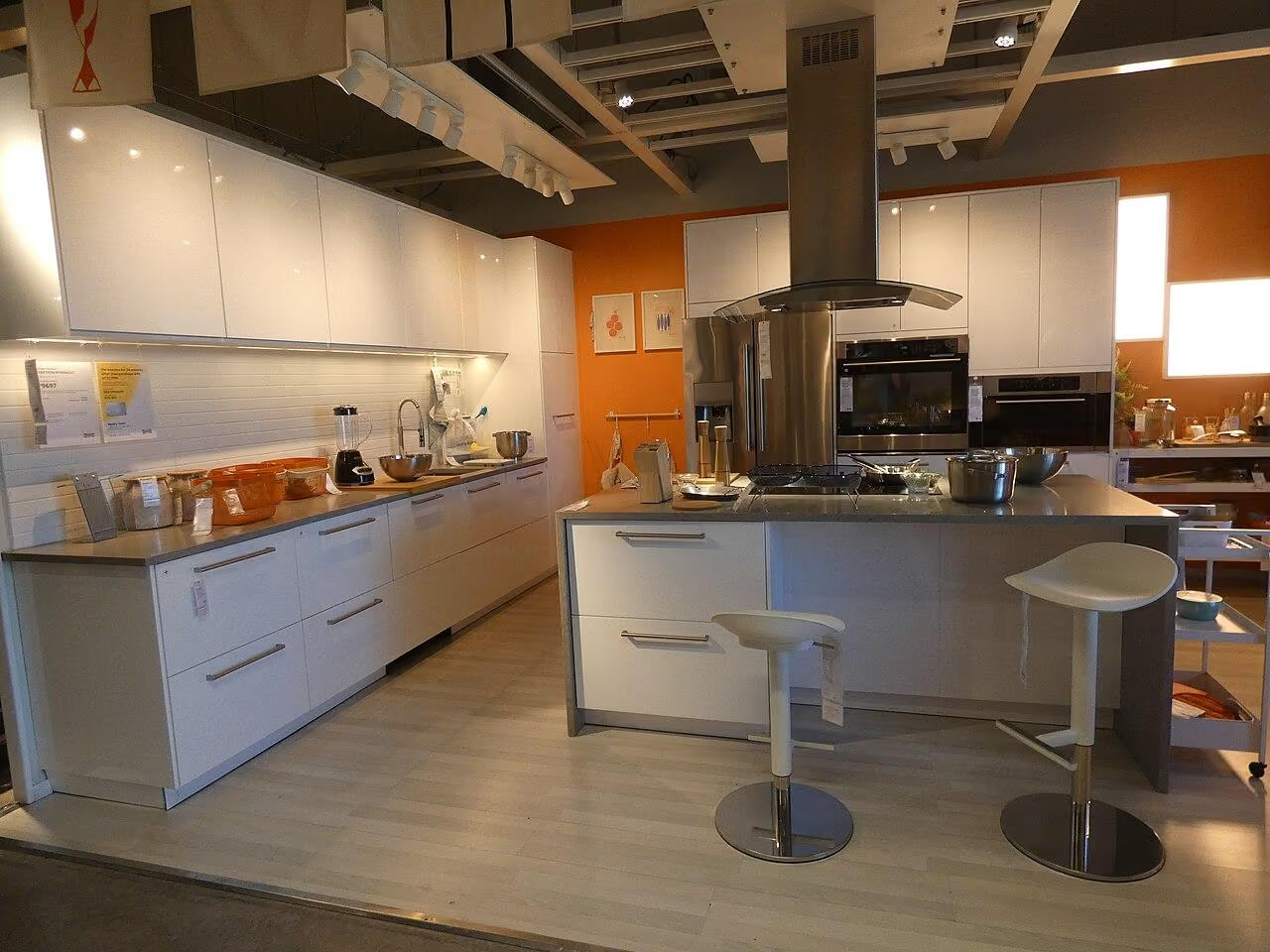
An open kitchen shelf can make everyday bowls easy to reach and give a Scandinavian-inspired room a lighter outline. The useful version is usually more selective than the photograph suggests. One short shelf carrying objects used every day is a different proposition from replacing most upper cupboards with a display of occasional tableware. Both may look airy when new; only one may suit the household's cooking and cleaning habits.
Define the shelf's task before its appearance. Daily bowls and an occasional display collection have different return, exposure, and cleaning patterns; size and locate them accordingly.
Run a week-long inventory test
Keep the proposed contents on a tray for an ordinary week. Tally actual use and rewashing, then retain only the pieces whose easy access justifies their open position.
At the end of the week, review duplicates and reserve pieces. A large salad bowl needed only for visitors might be better in a cupboard than in the most accessible position. Objects that stay still collect dust, while frequently handled pieces may be washed as part of normal use. The relevant distinction is frequency and exposure, not whether an object is attractive enough to remain visible.
Position the shelf around water and grease
Map the sink, cooking surface, kettle, and usual food preparation area. An open shelf directly beside grease-heavy cooking may create more maintenance than one on a dry wall. A location near the sink can make crockery easy to put away, but it may also receive splashes. Observe the room during the meals actually prepared there before choosing the apparently convenient spot.
Keep relevant appliance guidance and local installation requirements in view. A shelf must not interfere with extraction, safe clearances, access, or the operation of doors. The design should be reviewed with appropriate installers where services or fixed appliances are involved. An attractive gap in an elevation is not proof that it is a suitable place to add timber storage.
Measure the contents and the person reaching
The shelf depth should accommodate the intended objects without their edges projecting precariously. Its height should allow the regular user to take down the largest piece without an awkward overhead lift. Heavy dishes placed high are not made convenient merely because the shelf is open. Put weight and reach ahead of a symmetrical arrangement.
Try the movement with an existing safe shelf or a measured mockup that does not carry loads. Consider two hands, wet hands, and the need to see the back row. A deep shelf can hide objects even without a door. If the contents require moving several pieces to reach one bowl, the open arrangement has lost much of its practical advantage.
Specify the support, not just the board
A floating shelf can look exceptionally light, but the bracket system, wall substrate, and intended loading determine whether it is appropriate. Give the installer a real inventory rather than saying it will hold a few dishes. Ask how the support is fixed and how the finished shelf is checked for the expected use. Do not assume a decorative shelf product is suitable for heavy stacked crockery.
Visible brackets may offer a clear and repairable construction, and they can fit the room's visual language when their scale is modest. Concealed supports may work well too, but they should remain understandable to the person maintaining the kitchen. Keep the fixing information with other handover documents. Future owners should not have to guess which parts are structural before removing a board.
To brief the installer on contents and wall support, use An industrial kitchen shelf that is specified for its load.
Keep the visual treatment restrained
Pale oak or birch can provide warmth against a painted wall, while one muted textile or a small colored object gives the room a gentle accent. The shelf need not introduce another timber species if the kitchen already has a strong floor and worktop. Compare the actual finishes together rather than expecting all light wood to match.
A simple shelf thickness and a quiet edge often give the objects enough presence. Avoid adding several decorative rails, hooks, and miniature shelves merely to make one short run feel designed. Every additional element creates another surface to clean and another chance to crowd the worktop below. Let the daily objects establish the rhythm, with a little unused space rather than a tightly packed display.
Decide how cleaning will happen
Read the finish instructions for the shelf and the wall behind it. A washable background is useful, but the exact product and preparation matter. Rough timber, deep grain, and heavily textured paint may demand more effort in a kitchen than in a dry living room. A smooth practical finish can preserve the natural appearance without celebrating every recess.
Consider removal as well as wiping. Can the board be taken down if it needs refinishing? Can brackets be cleaned without disturbing fragile objects? Will an under-shelf light have accessible components? Make those questions part of the specification. If caring for the arrangement sounds unreasonable during the design stage, it will not become easier after installation.
Preserve enough closed storage
The limited open shelf works best when the remainder of the inventory has a suitable home. Food packets, spare mugs, cleaning materials, and small appliances do not disappear because the upper wall looks light. Check the full storage plan before removing a cupboard. A short attractive shelf can be a successful addition while a whole wall of open storage would be a poor fit.
In a fictional morning, two bowls come down from the same easy position and return after breakfast. The shelf feels light because its job is small and clear. Before construction, confirm the week-long inventory, exposure to cooking, safe reach, intended load, fixing method, cleanable finish, and reserve storage. The result should make an ordinary task simpler, not make the kitchen depend on continuous display maintenance. Do not fill the shelf's last available space simply because it remains visible. A small clear area makes taking down and returning a bowl easier, and it leaves capacity for the inventory to change. If the shelf must be packed edge to edge to hold the proposed contents, it is probably being asked to do the work of a larger cupboard.
For a light kitchen that retains mostly closed capacity, compare A light coastal kitchen with mostly closed storage.
Check, record, then decide.
A proposed worksheet for your own observations. Use consistent units for dimensions and keep the conditions with each record.
Daily shelf inventory
Where to check On a tray near the intended shelf during an ordinary week of kitchen use.
- Record
- List each proposed bowl or mug, tally actual uses, and note pieces that require rewashing before being used.
- Read the result
- The tally distinguishes active storage from display for that week; it does not establish an annual cleaning frequency.
- If it does not work
- Keep only frequent items open and move occasional pieces behind doors rather than extending shelving to fit the display.
Reach and clear depth
Where to check At an existing safe shelf or unloaded mockup matching the proposed front edge and height.
- Record
- Measure the largest item's depth and grip clearance in centimeters; note whether taking it down displaces other objects or requires a stretch.
- Read the result
- The trial evaluates retrieval for its participants, not the proposed board's loading or the wall's ability to carry it.
- If it does not work
- Lower or shorten the working group, use a shallower layout, or store heavy stacks in a more accessible cupboard.
Exposure and wipe access
Where to check At the proposed wall beside ordinary cooking, washing, and kettle use without introducing unsafe temporary objects.
- Record
- Note observed splash or grease directions, access for wiping the rear edge, and the exact sample finish's permitted cleaning method.
- Read the result
- Observation can challenge the assumed dry location; it cannot demonstrate long-term coating resistance or verify structural support.
- If it does not work
- Relocate the shelf, simplify its edge, or retain a closed cupboard if visible storage adds disproportionate cleaning.
A practical trial
- Provide the installer with the real contents and intended use before choosing brackets.
- Test the back item as well as the easy front bowl.
- Confirm where displaced packets and reserve dishes will remain after removing any cupboard.
Compare the same scope
- Shelf board, supported span, brackets, and installation
- Useful internal capacity lost from closed storage
- Cleanable wall background and removable parts
Cost drivers to discuss: Wall preparation or concealed support work; Custom board depth and finished edges; Integrated lighting and accessible electrical components.
Choose another route when: Open shelving is a poor substitute when most contents are seldom used, the position receives heavy cooking exposure, or reserve storage has no alternative home.
The download is a blank record template. Your completed notes remain wherever you choose to keep them; this page has no measurement-submission service.
Sources for this guide
Each reference’s supported point and limits appear beside the relevant passage above. Product documentation applies to the named product, rather than every similar item or the photographed room.
Source text checked November 4, 2026. Specifications can change; confirm the current instructions for the exact item before ordering.
Your questions, considered.
What should go on a practical open kitchen shelf?
Begin with daily pieces that are easy to reach and regularly washed. Measure the real contents and leave room for hands rather than packing the shelf as a display.
Can I replace every upper cupboard with shelves?
First check where reserve dishes, packets, appliances, and other belongings will go. A short useful shelf may succeed where a full wall of exposed inventory would add excessive care.
How do I choose a shelf's brackets and fixings?
Give a competent installer the actual inventory and wall conditions so the complete support system can be specified. A light visual profile does not establish its load capacity.
About this guide: written with AI assistance for TIANLICHUJU. These are general design ideas, not a measured survey or a completed client project. Any domestic vignette is fictional. Confirm product specifications, site dimensions and local requirements before construction; use qualified professionals for regulated work. Read our editorial approach or suggest a correction.