The decision, with conditions
- Choose this route when
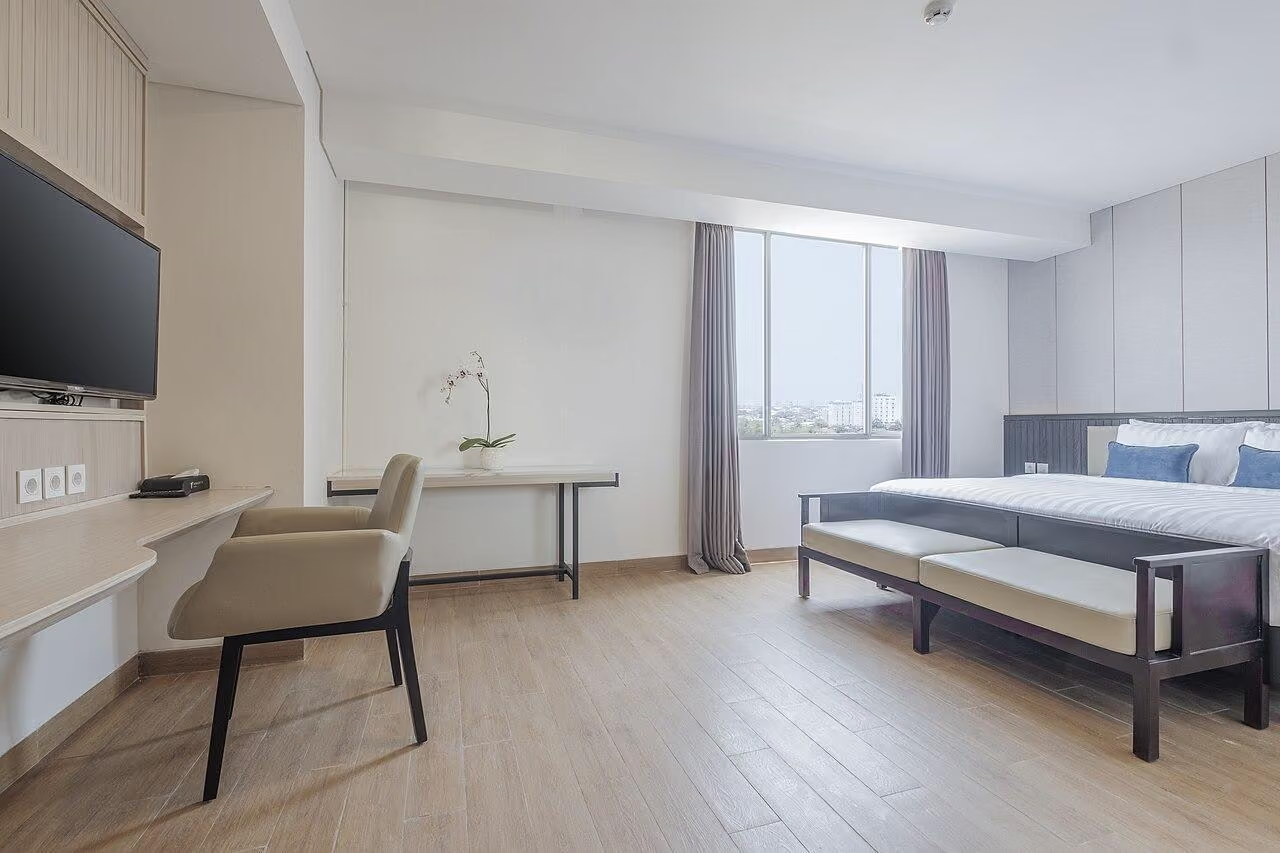
- Choose a conventional frame with a broad quiet headboard when it gives each sleeper a comfortable tested approach and standing movement while retaining the desired horizontal composition.
- Use the alternative when
- Use a simple independent headboard and movable bedside tables if a fixed platform or extended surround would consume the room's useful access or complicate later changes.
- Stop or change the plan when
- Stop before ordering if the exact mattress and base are incompatible, projecting rails obstruct the night route, or either sleeper finds the assembled height unsuitable.
Compare the practical options
| Bed choice | Potential benefit | Practical qualification |
|---|---|---|
| Conventional frame plus broad headboard | Quiet horizontal composition | Test the finished mattress height with its regular users |
| Wide projecting platform | Strong low outline | Draw the outer frame and check the night route |
| Independent bedside pieces | Adjustable reach for each sleeper | Allow drawers and wardrobe doors to open |
| Solid or slatted base | Support matched to the mattress | Follow the mattress manufacturer's support and ventilation requirements |
A low horizon does not require a low mattress
Photographs of Japandi bedrooms often show a mattress close to the floor, a broad platform, and almost no visible furniture. Those choices can produce a quiet composition, but they are not a definition of the style and they do not suit every sleeper. A person who finds a low chair difficult may find a low bed inconvenient every morning. Making the room look calm should not introduce a daily physical obstacle.
Let the headboard, bedding, and background establish the horizontal rhythm. Choose mattress height through the assembled bed and its users, then protect both bedside approaches.
Test the movement that matters
Begin with the existing bed if it is safe and structurally sound. Observe sitting down, turning onto the mattress, standing again, and getting in during a tired evening. Consider all regular users. The preferred height may differ between them, and a bed must also work with the chosen mattress thickness. A frame specification alone does not tell you the final sitting height.
If a change is being considered, test suitable showroom examples or another safe bed rather than improvising unstable blocks beneath furniture. Personal mobility needs deserve individual advice where appropriate. The designer's task is to preserve clear access and avoid treating one aesthetic proportion as universally comfortable. A lower-looking headboard or quieter frame color can often achieve the desired effect without changing the mattress position.
Draw the outer frame, not just the mattress
Mark the frame's full outside width and length, including rails and bedside wings. Open nearby storage and walk the usual route; do not substitute mattress dimensions for the furniture envelope.
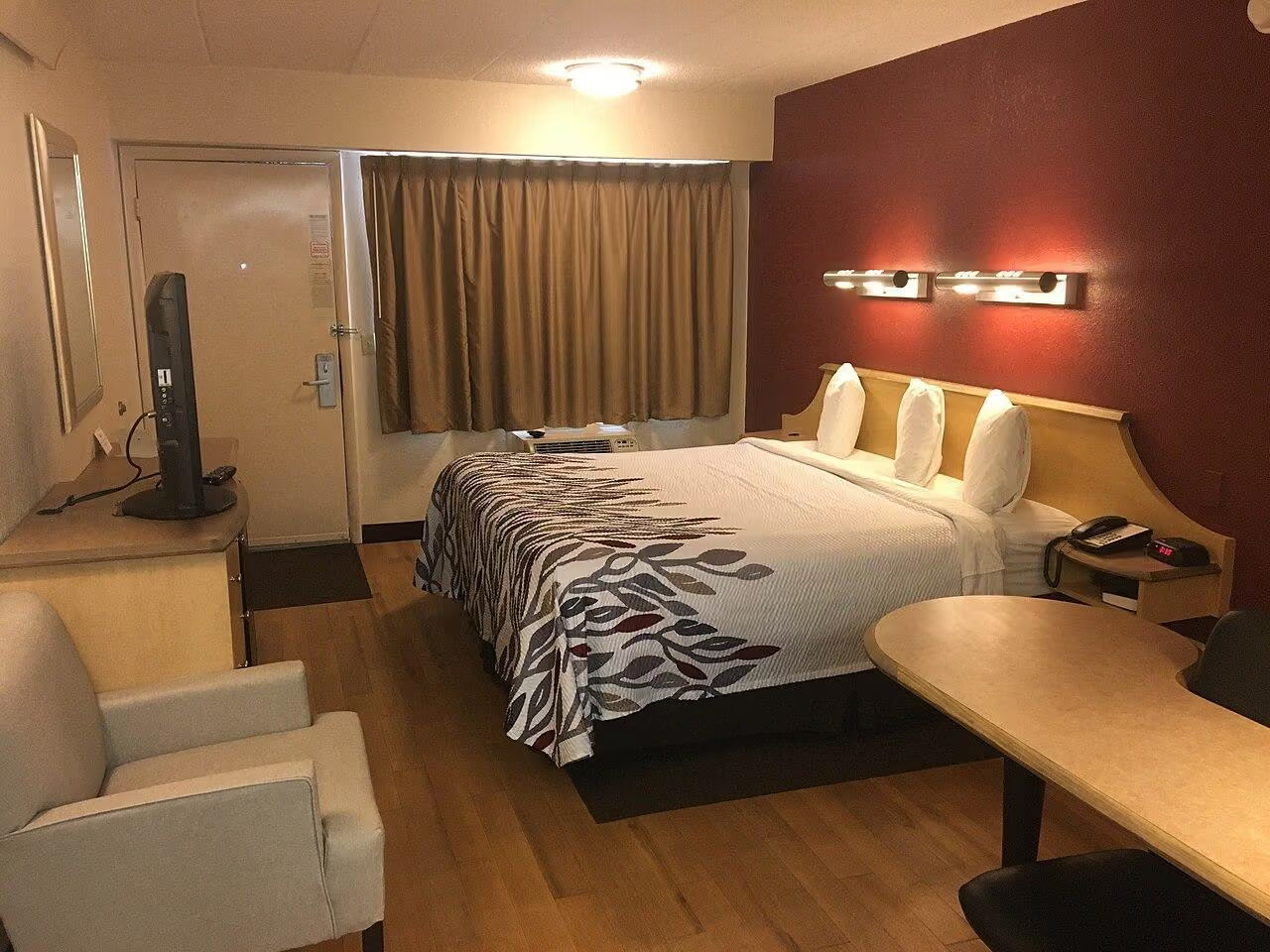
Where the room is compact, a simple frame close to the mattress dimensions usually leaves more choice for bedside furniture. It also makes bedding and cleaning easier than a deep surround with narrow recesses. Do not assume that an integrated bedside wing is efficient: it fixes the distance and height of a surface that might otherwise be adjusted to the occupant.
For a closer check of projecting rails and the full bed footprint, see A mid-century bed frame judged by access rather than silhouette.
Let the headboard carry the composition
A broad headboard can provide the horizontal reference associated with the style. It might be a timber panel, a plain upholstered form, or a painted area framed by useful bedside pieces. Keep its thickness and projection visible in the drawing. A thin-looking front can conceal substantial battens or a construction that narrows the available room.
If the headboard extends behind bedside tables, plan lamp wiring and outlets before installation. Avoid trapping cables behind a fixed panel with no accessible route. A separately mounted headboard is often easier to replace, repaint, or reupholster than a complete bespoke bed surround. Its fixing must suit the wall and the expected use; a decorative panel is not automatically a support rail.
Choose calm materials at the touch points
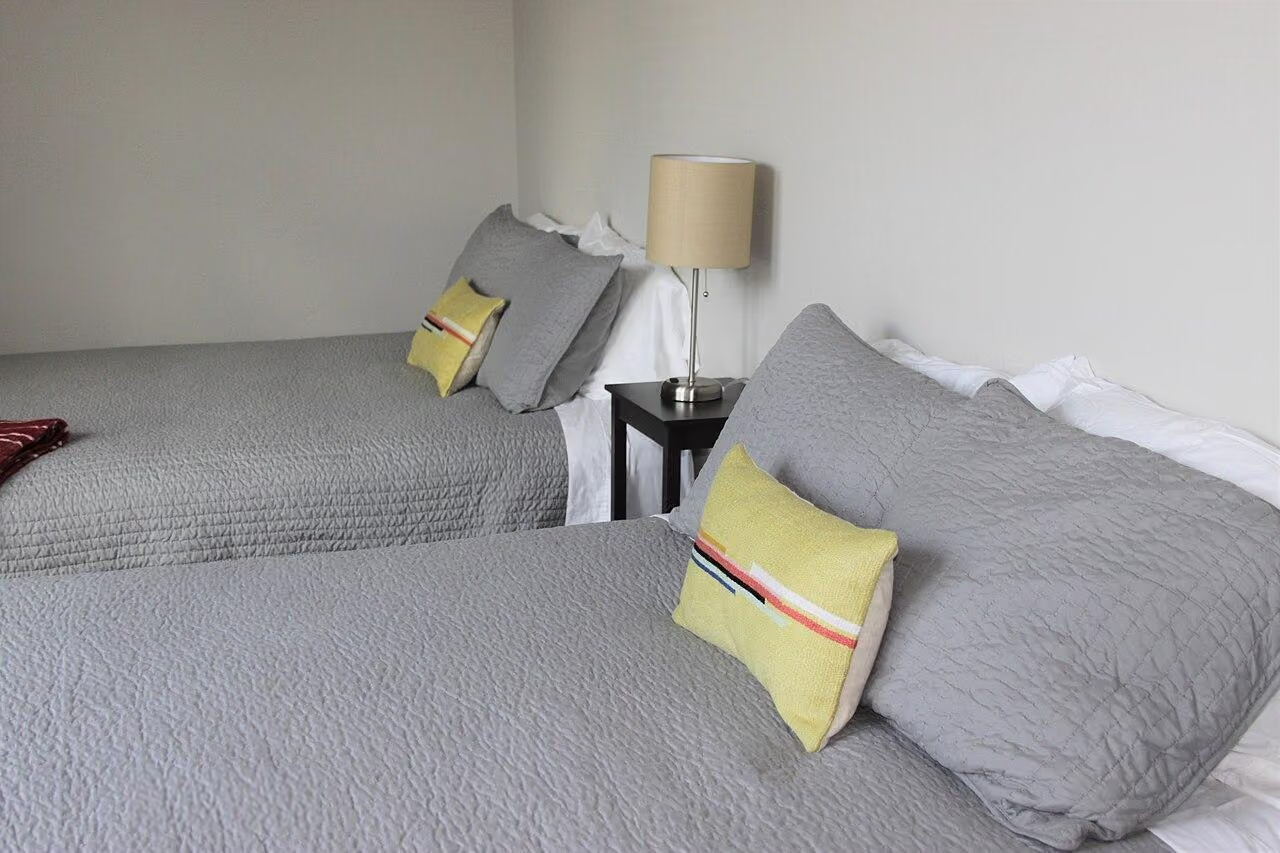
Oak, washed linen, and matte painted surfaces can offer a tactile palette without making the bedroom visually busy. The most important edges are the ones touched in half-light: the bedside surface, the frame corner, and the wardrobe handle. Ask for properly finished samples. Rough grain may photograph attractively while catching fabric or feeling unpleasant against bare skin.
Keep a distinction between the bed, floor, and wall where that helps the occupants read the room. A scheme of nearly identical pale surfaces can become indistinct in weak light. A modest difference in value, a darker bedside edge, or a clear fabric outline can preserve the calm while making the arrangement easier to understand. Strong contrast is not required everywhere.
Give each sleeper independent control
One central decorative light cannot provide every bedroom function. Clothing selection needs useful illumination, while reading benefits from a source that can be controlled without disturbing another sleeper. Place switches where the actual pillow and seated positions make them reachable. Test the reach with a paper marker before a headboard is manufactured.
Keep a straightforward night route. A gentle light may be useful, but avoid assuming that hidden LED strips are the only answer. An accessible small lamp or conventional fitting can be easier to maintain. If integrated lighting is chosen, the driver and light source should be replaceable without dismantling the bed. Any electrical alterations need appropriate professional work and local compliance.
To test independent bedside switches from the pillow, use A contemporary headboard wall with readable bedside controls.
Count the work created by the detail
Wide platforms collect dust and provide tempting landing places for objects that have no permanent home. A recessed plinth can make a bed appear light, yet it may also be difficult to clean under. Compare the proposed gap with the actual vacuum or mop. If the room depends on a cleaning tool reaching an inaccessible strip, the visual trick may not be worth it.
Check how the bed can be disassembled for a move and whether slats, fittings, and upholstery can be replaced separately. Bespoke work may be justified by an unusual room, but it is not intrinsically more lasting. A standard frame with a thoughtful independent headboard can be a better use of the budget, particularly when the mattress or occupants' needs may change.
Decide with the morning in mind
An imagined evening might involve a book, a warm bedside lamp, and the quiet of a newly closed curtain. The design should support that atmosphere, but its final test is the next morning: getting up, reaching a robe, opening storage, and making the bed without navigating a sculptural obstacle course. Romance and practicality can share the same room.
Before choosing the frame, confirm finished mattress height, outer dimensions, night circulation, bedside reach, cleaning access, and replacement parts. Use the headboard, color, and texture to carry the visual language. The most convincing quiet bedroom is one in which the occupant does not have to think about the furniture every time they stand.
Check the base as a system
The bed base and mattress need to be compatible, including the manufacturer's support and ventilation requirements. A solid platform should not be assumed suitable for every mattress merely because it appears simple. Ask about the spacing and replacement of slats, the center support, and the assembled frame's stability. Keep the relevant instructions with the purchase record. These hidden details have more bearing on a dependable sleeping surface than whether the timber appears continuous in a photograph.
Check, record, then decide.
A proposed worksheet for your own observations. Use consistent units for dimensions and keep the conditions with each record.
Finished sitting position
Where to check At the edge of a safe existing or showroom bed with a comparable mattress configuration.
- Record
- Write the floor-to-mattress-top height in centimeters and each sleeper's comments when sitting, turning, and standing normally.
- Read the result
- The trial describes that person's movement with that assembly; it does not prescribe a clinically suitable height for another user.
- If it does not work
- Keep a conventional raised frame and obtain individualized advice where mobility needs make the selection uncertain.
Outer frame route
Where to check Along both bedside approaches and the path from the bed to the room door.
- Record
- Tape the full outside footprint, including projections; record rail heights and any route narrowed by a corner or bedside extension.
- Read the result
- The outline distinguishes mattress size from occupied furniture space, but tape alone cannot reproduce contact with a real projecting rail.
- If it does not work
- Choose a frame closer to the mattress envelope or a separate headboard rather than accepting a persistent obstacle.
Reach and base access
Where to check From the normal pillow position and at the floor gap beneath the proposed bed.
- Record
- Mark switch and tabletop positions, then note whether the actual cleaning tool reaches underneath; retain the mattress support instructions.
- Read the result
- Reach and cleaning observations do not verify structural support or ventilation compatibility; the manufacturer's requirements remain a separate check.
- If it does not work
- Use movable bedside furniture, an accessible lamp, or a different base when integrated details obstruct ordinary use.
A practical trial
- Confirm outer dimensions and finished mattress height for the exact frame size.
- Try both sleepers' movements rather than approving the bed from its doorway view.
- Compare base construction with the intended mattress instructions before ordering.
Compare the same scope
- Frame, mattress support, and center components
- Separate versus integrated headboard and bedside surfaces
- Delivery, assembly, disassembly, and replacement parts
Cost drivers to discuss: Wide custom platforms and projecting joinery; Integrated lighting and concealed cable access; Large headboards that complicate delivery.
Choose another route when: A low platform is a poor choice when its entry, standing movement, or projecting surround conflicts with the regular sleepers' access needs.
The download is a blank record template. Your completed notes remain wherever you choose to keep them; this page has no measurement-submission service.
Sources for this guide
Each reference’s supported point and limits appear beside the relevant passage above. Product documentation applies to the named product, rather than every similar item or the photographed room.
Source text checked November 4, 2026. Specifications can change; confirm the current instructions for the exact item before ordering.
Your questions, considered.
Can a Japandi bedroom use a higher bed?
Yes. Simple bedding, a restrained palette, and a horizontal headboard can provide the visual character while the mattress height suits the sleepers.
What dimensions matter beyond the mattress size?
Include the frame's outer width and length, projecting corners, headboard thickness, and bedside extensions. Test those dimensions with doors, drawers, and the night route.
Is a solid platform suitable for any mattress?
No universal assumption is appropriate. Check the mattress manufacturer's required support, ventilation, and slat arrangement before choosing the base.
About this guide: written with AI assistance for TIANLICHUJU. These are general design ideas, not a measured survey or a completed client project. Any domestic vignette is fictional. Confirm product specifications, site dimensions and local requirements before construction; use qualified professionals for regulated work. Read our editorial approach or suggest a correction.