The decision, with conditions
- Choose this route when
- Choose adaptable core pieces when they are appropriate now, their claimed adjustment is documented and the child can make meaningful small choices without carrying technical responsibility.
- Use the alternative when
- If a complex conversion adds cost without solving the present routine, compare a simpler suitable piece and reserve flexibility for paint, bedding and accessible storage categories.
- Stop or change the plan when
- Reject future-proofing that overrides current age guidance, safe use or required anchoring. A room intended to last must still work safely at the child’s actual stage today.
Compare the practical options
| Room layer | Plan for the present | Allow for change |
|---|---|---|
| Bed and core storage | Appropriate current stage, use and fixing | Repairable parts and useful adaptable interiors |
| Color and interests | Choices the child can meaningfully make | Movable pictures and replaceable selected textiles |
| Daily belongings | Accessible manageable broad categories | Spare capacity and periodic content review |
| Detailed activities | Useful light for what happens now | A credible future desk position without premature clutter |
Build the lasting room around functions, not a temporary theme
Separate long-lasting room functions from short-lived themes. A bed and storage need to suit the current stage safely, while bedding, artwork and suitable color choices can express changing interests. Do not buy a complicated future conversion merely because it sounds economical; identify the present benefit and the actual steps needed to change it.
Begin by asking what the child actually does in the room. Some children play mainly in the living room; others need floor space here for building or imaginative games. Reading, dressing and sleeping may be the most consistent activities. Plan those first. A decorative tent that occupies the only clear floor area may be less useful than an open space that accepts many kinds of play. The room should support the present child while leaving reasonable options for the future, rather than sacrificing current comfort to an imagined teenage layout.
A later teenage room will add privacy and study needs without necessarily requiring a complete replacement. A Teen Bedroom with Privacy and Shared-Household Practicality.
Make choices with the child at an appropriate scale
Offer the child a small set of choices that are genuinely available within the plan, such as suitable bedding or an artwork location. Keep technical decisions about safety, installation and budget with the responsible adult. Ask which familiar possessions should remain visible, even when they do not match the proposed palette. Record those commitments before ordering. Adaptability is easier to preserve when personal expression can change without replacing a bed or cabinet, and when today’s resident recognizes the room as theirs.
Keep changeable interests in reversible layers. A poster, cover or small display can express a current enthusiasm without requiring themed joinery. Blush, chalk and one stronger accent chosen together can create a flexible background, but there is no requirement that a child’s room remain pastel. The useful principle is that the large surfaces can accept different future objects. Avoid buying a whole coordinated collection simply because it appears complete. A room assembled thoughtfully over time can feel more personal and be easier to adapt.
Choose core furniture for its real stage of use
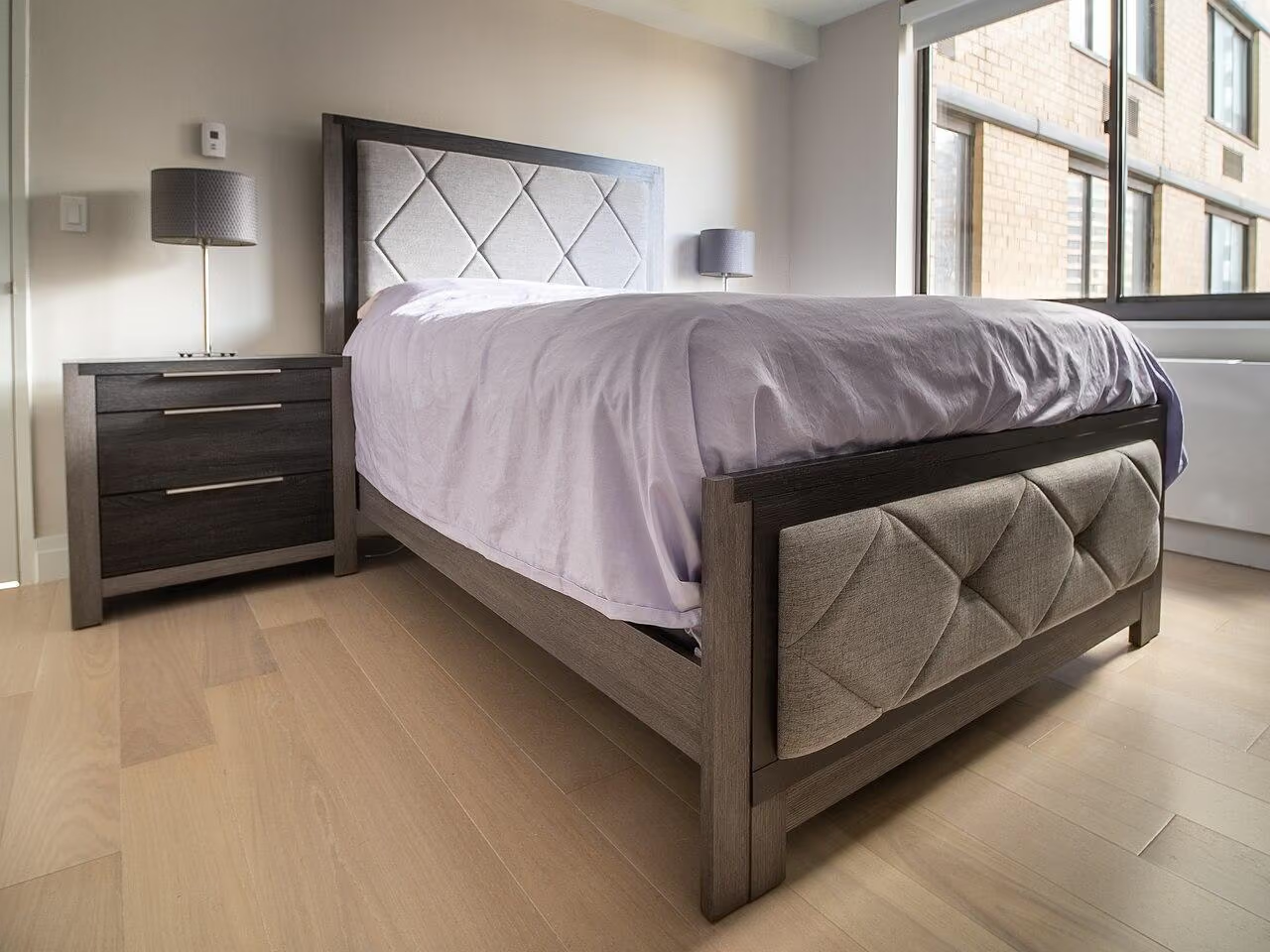
Furniture must be appropriate for the child’s age, intended use and the product’s safety guidance. Adaptable does not mean buying an adult-sized solution prematurely or using a convertible product outside its instructions. Check load limits, assembly, fixing and any age restrictions. Heavy or climbable storage may require anchoring. A design that looks calm in a photograph is not evidence of safe construction or placement.
Think about replacement and repair. Simple drawers, accessible hardware and replaceable parts can extend a piece’s usefulness. A highly specific built-in shape may be difficult to change when clothing or storage needs grow. Standard furniture may offer more flexibility if it fits the room safely. Conversely, a carefully planned fitted unit can recover an awkward space, provided the internal arrangement can evolve. The decision should follow the room and the household, not the assumption that bespoke work is automatically more lasting.
Give daily belongings an accessible home
Storage should match the tasks the child is expected to do independently. A low drawer may be useful for everyday clothing, while adult-controlled storage may be necessary for unsuitable small items or supplies. Broad categories are often easier to maintain than many precise compartments, but test the system with the actual child. The ability to reach a container does not guarantee that its lid, weight or opening is manageable.
Leave some capacity unassigned. Interests change, school brings new materials and gifts arrive. A storage system filled completely at installation has little tolerance for ordinary growth. Review contents periodically rather than solving every accumulation by adding another cabinet. Keep a clear route between the bed, door and storage. Floor baskets should not become permanent obstacles simply because they look soft. The room should be easy for an adult to clean and for the child to understand without a complex set of rules.
Broad storage categories are equally useful when daily play happens in the shared living room. A Family Living Room with Toys but No Permanent Mess.
Plan useful light before decorative effects
General light should support safe movement and ordinary activity. A reading or study position may need its own task source, chosen and placed appropriately for the child’s use. Keep lamps stable, cords managed and products used according to their guidance. Decorative string lights or themed fittings should not be the only way to see the room. Their appearance is secondary to suitable installation and operation.
As the child grows, the location of detailed tasks may change. Preserve the possibility of a desk or reading position where the room can support it, without filling that space prematurely. A useful socket arrangement can be considered during qualified electrical work, but avoid elaborate technology intended to predict future habits. Simple understandable controls often remain valuable. The child should be able to use the intended light without moving furniture or reaching through a crowded shelf.
Compare gradual change with repeated complete makeovers
Spend on the core pieces that are used daily and suitable now. Washable, repairable textiles and sound storage may offer better long-term value than a large themed set. Future flexibility is valuable only when it is credible. Do not pay for a complicated conversion that is difficult to perform, requires unavailable parts or makes the present arrangement uncomfortable. Ask how the furniture actually changes and where unused components will be stored.
Reversible layers can be changed gradually rather than all at once. Keeping the same bed and storage while replacing a cover or picture can preserve familiarity through a new stage. This also makes it easier to identify what the child genuinely wants to change. A room need not be visually frozen to be economical, and it need not be completely replaced to feel fresh. The financial aim is to direct money toward useful adaptation rather than repeated decorative completeness.
Test the room as a daily routine
Before ordering, rehearse waking, dressing, playing and bedtime with the proposed furniture positions. Include open drawers and the objects actually used. This approach is unsuitable when future-proofing overrides age-appropriate safety or the child’s present needs. Review the room after ordinary use and adjust the storage categories as routines change.
In an imagined weekend scene, a child chooses a new picture while a favorite blanket remains on the bed. The room feels different without becoming unfamiliar. That is the useful meaning of growing with its resident: the stable parts continue to work, the expressive parts can change and the child can recognize a place that has listened to them at each stage.
Check, record, then decide.
A proposed worksheet for your own observations. Use consistent units for dimensions and keep the conditions with each record.
Present-day functions
Where to check At the bed, dressing storage and floor activities the child actually uses.
- Record
- List daily actions and furniture used, noting blocked routes and unsuitable reach; distinguish current requirements from imagined future hobbies or study equipment.
- Read the result
- Adaptability should not sacrifice the child's present comfort to an untested future layout.
- If it does not work
- Remove speculative furniture and improve the core functions that are already part of the routine.
Meaningful reversible choices
Where to check At the wall, bedding and personal display areas chosen with the child.
- Record
- Record the child's actual preferences, which existing objects matter and what can change without replacing core furniture; identify permission and fixing limits.
- Read the result
- Ownership can come from genuine limited choices rather than a complete short-lived themed furniture set.
- If it does not work
- Keep durable surfaces adaptable and express interests through suitable movable pictures or textiles.
Core furniture suitability
Where to check At the exact bed and storage products before purchase or rearrangement.
- Record
- Collect intended age, use, assembly, load and fixing guidance; record whether daily drawers and containers can be operated appropriately by this child.
- Read the result
- Future flexibility is credible only if the furniture is suitable now and its conversion is genuinely manageable.
- If it does not work
- Choose an appropriate present-stage piece rather than prematurely using an adult or incorrectly converted product.
A practical trial
- Rehearse waking, dressing, play and bedtime with drawers open and the child's normal belongings present.
- Trial one reversible expressive layer together while retaining familiar items the child values.
- Review storage contents periodically and leave capacity for actual growth rather than filling every compartment at installation.
Compare the same scope
- Suitable core furniture with changeable personal layers
- Adaptable standard storage with accessible daily categories
- Fitted pieces only where their interiors and future use are credible
Cost drivers to discuss: Age-appropriate construction and required fixing; Repairable hardware and genuinely available conversion components; Repeated theme replacement versus limited textile or picture changes.
Choose another route when: Do not call a room future-proof when its furniture or access is unsuitable for the child's current stage and everyday use.
The download is a blank record template. Your completed notes remain wherever you choose to keep them; this page has no measurement-submission service.
Sources for this guide
Each reference’s supported point and limits appear beside the relevant passage above. Product documentation applies to the named product, rather than every similar item or the photographed room.
Source text checked November 4, 2026. Specifications can change; confirm the current instructions for the exact item before ordering.
Your questions, considered.
Should I buy adult furniture to future-proof a child's room?
Not if it compromises current suitability or safety. Follow the exact product's intended age, use and assembly guidance. Future flexibility is valuable only when the present arrangement works well.
How can a themed interest appear without a complete refit?
Use reversible layers such as pictures, bedding or a selected color, chosen with the child. Keep the large useful pieces adaptable so a new interest does not require replacing everything.
What makes children's storage genuinely independent?
The child should be able to identify and operate appropriate daily storage, not merely reach it. Test container weight, lids and drawer use, while keeping unsuitable items under adult control.
About this guide: written with AI assistance for TIANLICHUJU. These are general design ideas, not a measured survey or a completed client project. Any domestic vignette is fictional. Confirm product specifications, site dimensions and local requirements before construction; use qualified professionals for regulated work. Read our editorial approach or suggest a correction.